
Film · 2016
Christ The Lord
The childhood of Jesus as told by Anne Rice, sculpted by Creation Art, lived between Cinecittà and the Sassi of Matera.
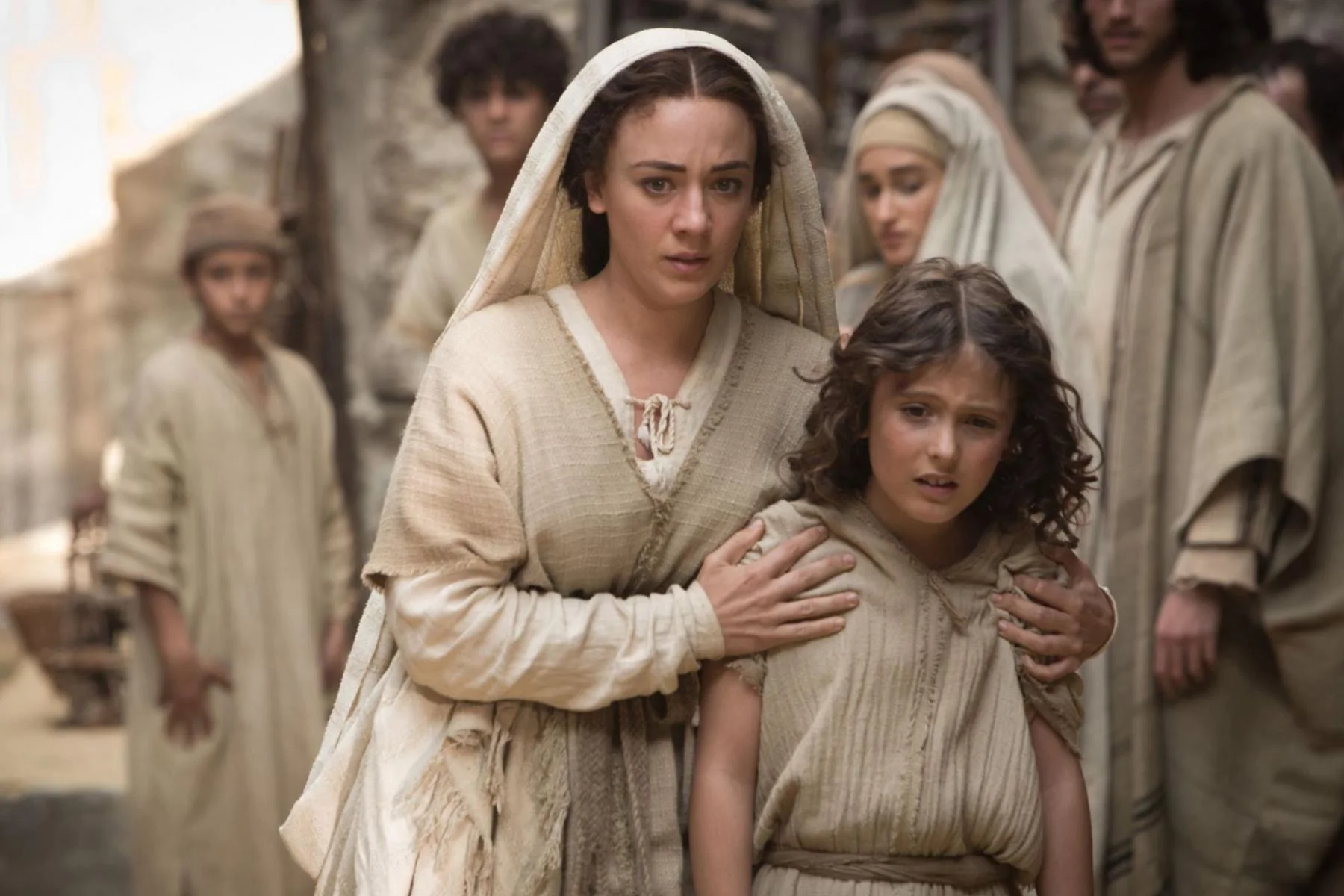
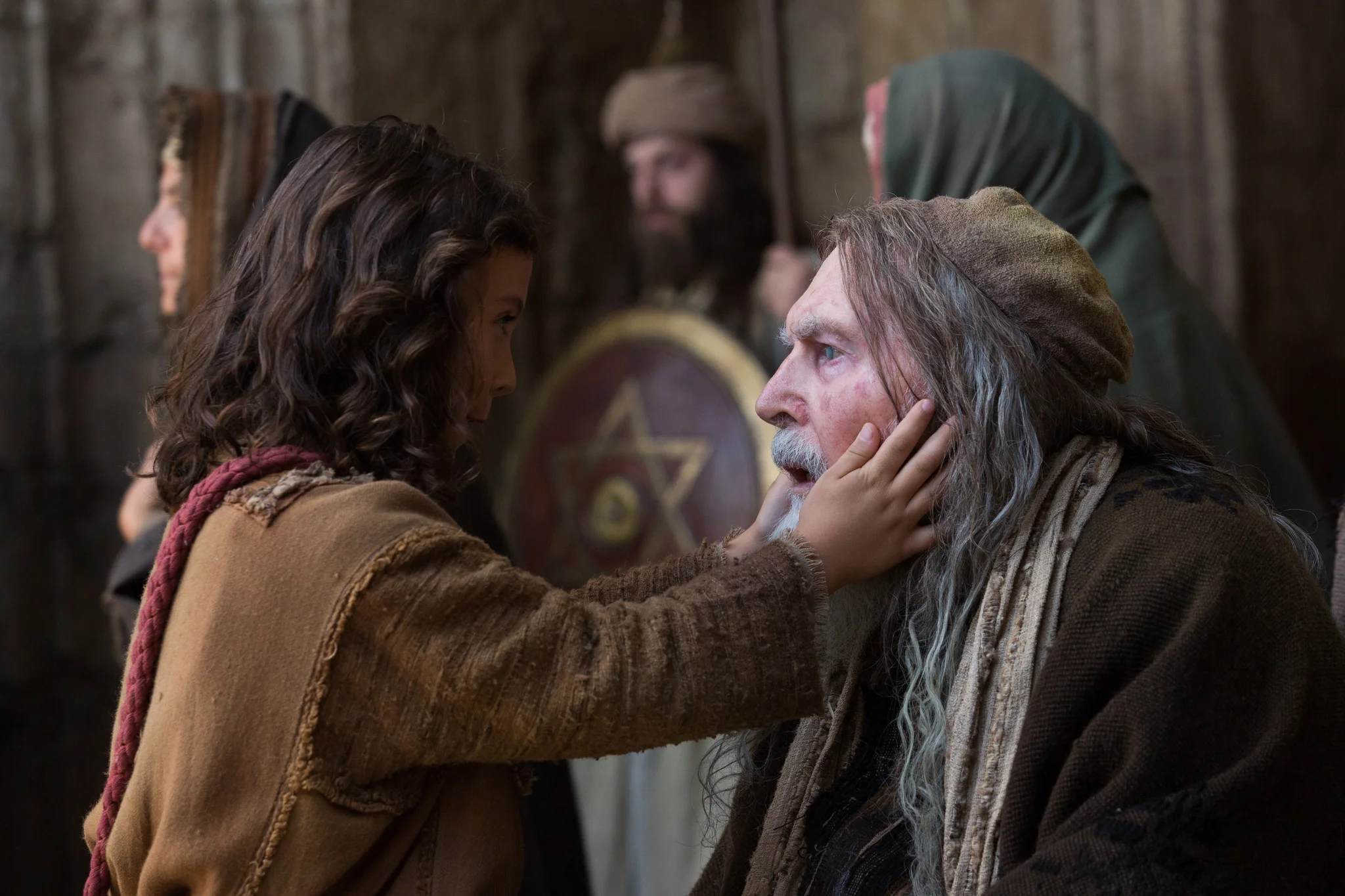
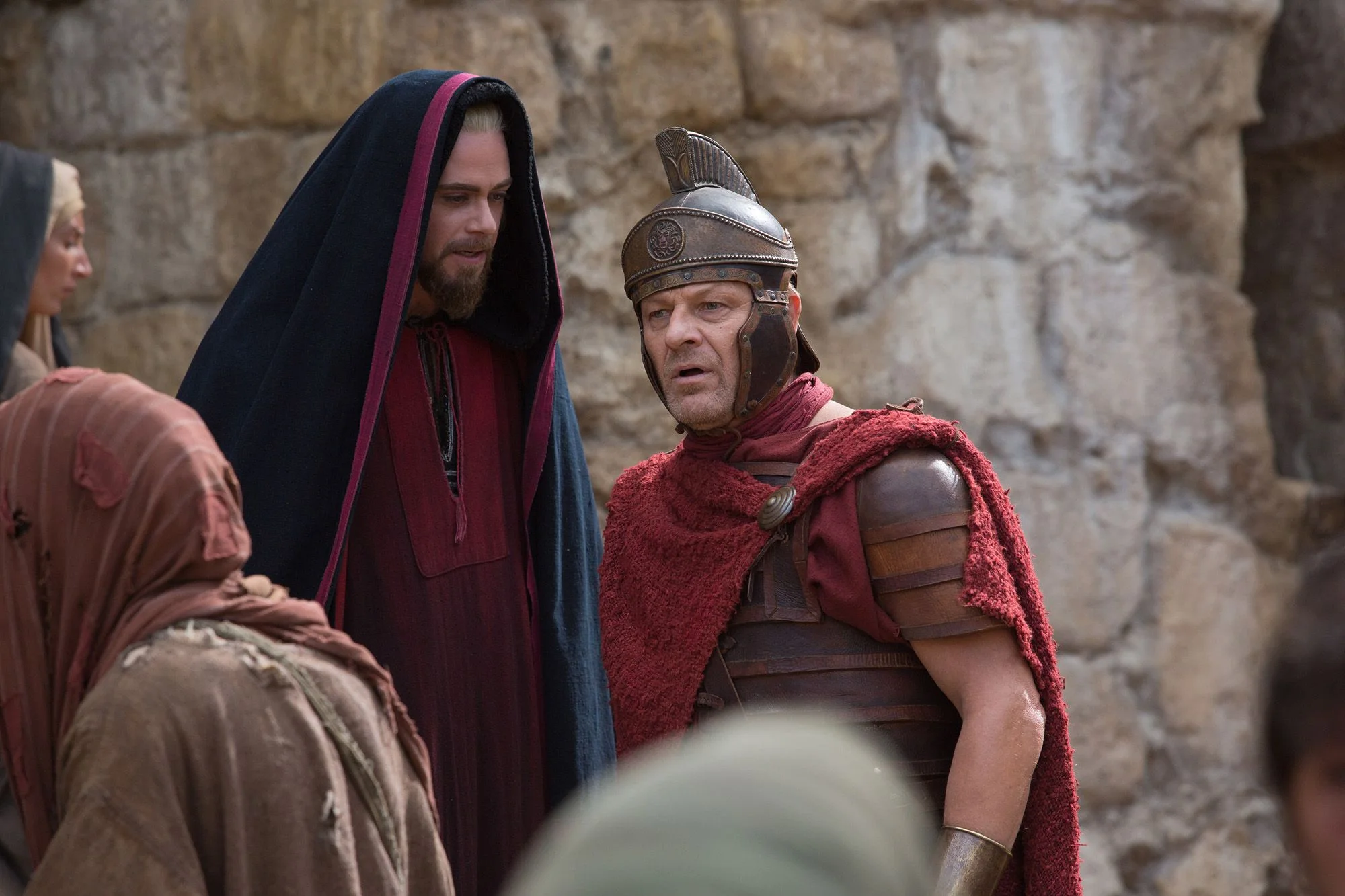
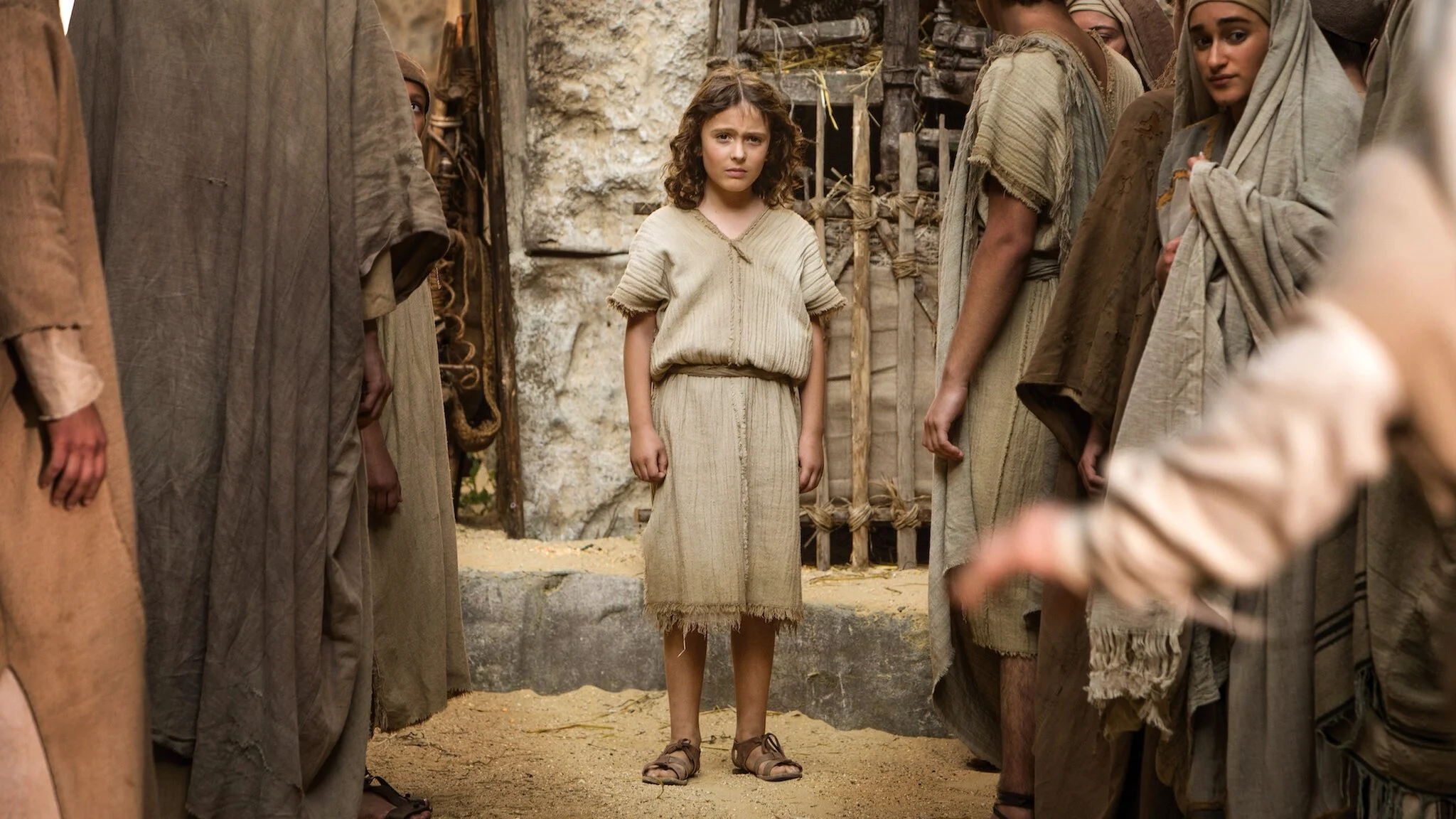
Behind the scenes
Between the Sassi and the Studios.
Fibreglass that travels.
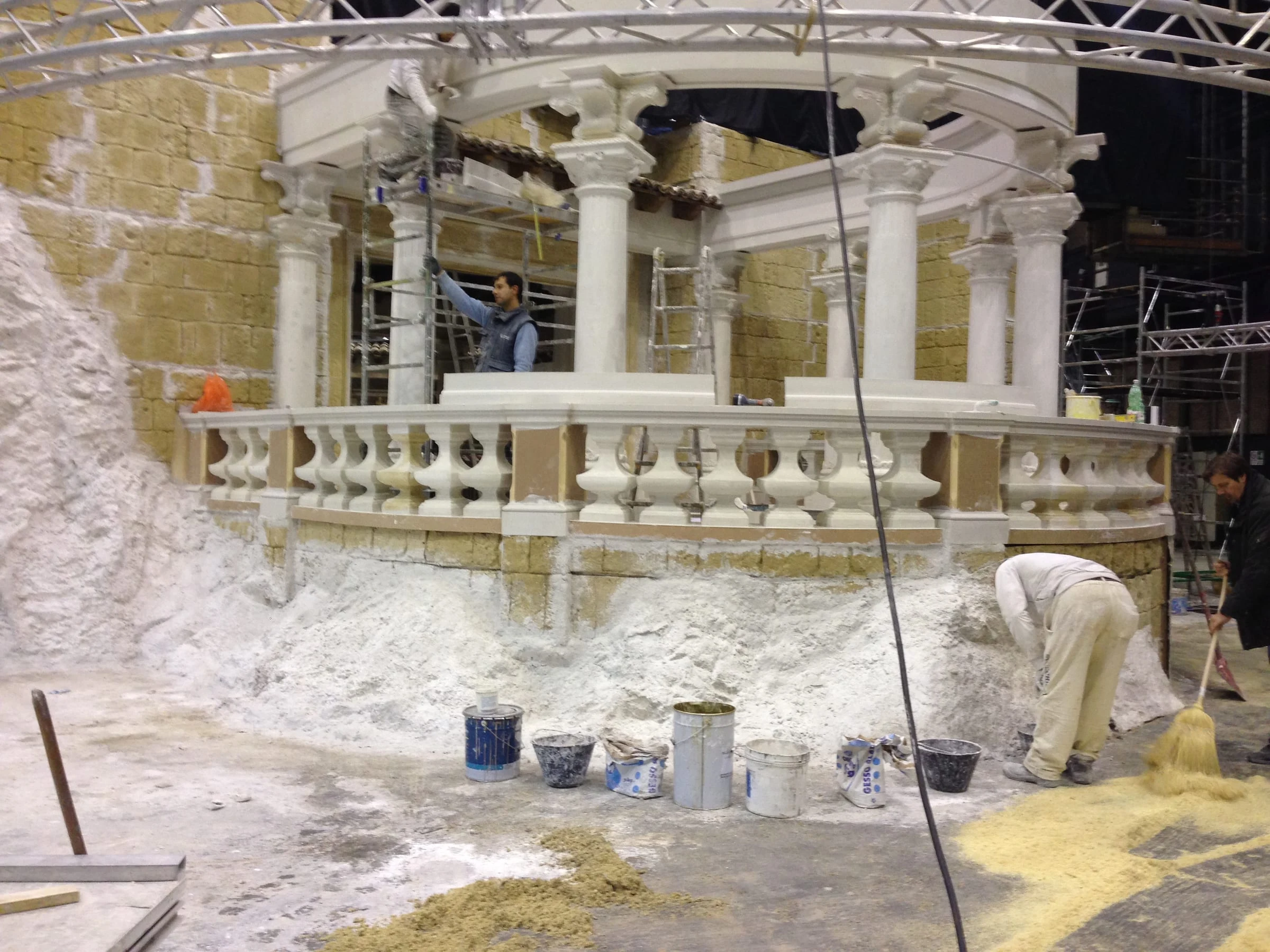
First-Century film scenography is not improvised: it has to be sculpted to the camera and transportable wherever needed. For The Young Messiah we worked in our workshop sheds between August and October 2014, and delivered two kinds of set: one for the exterior shoots in Matera, where the Sassi stand in for Nazareth and Galilee, and one for the monumental interiors rebuilt at Cinecittà Studios — the Temple of Jerusalem, the houses of the Pharisees, the Roman courtyards. Materials: fibreglass for the parts that travel, polystyrene + fibre-reinforced mortar for the fixed monumental parts.
The ancient doors
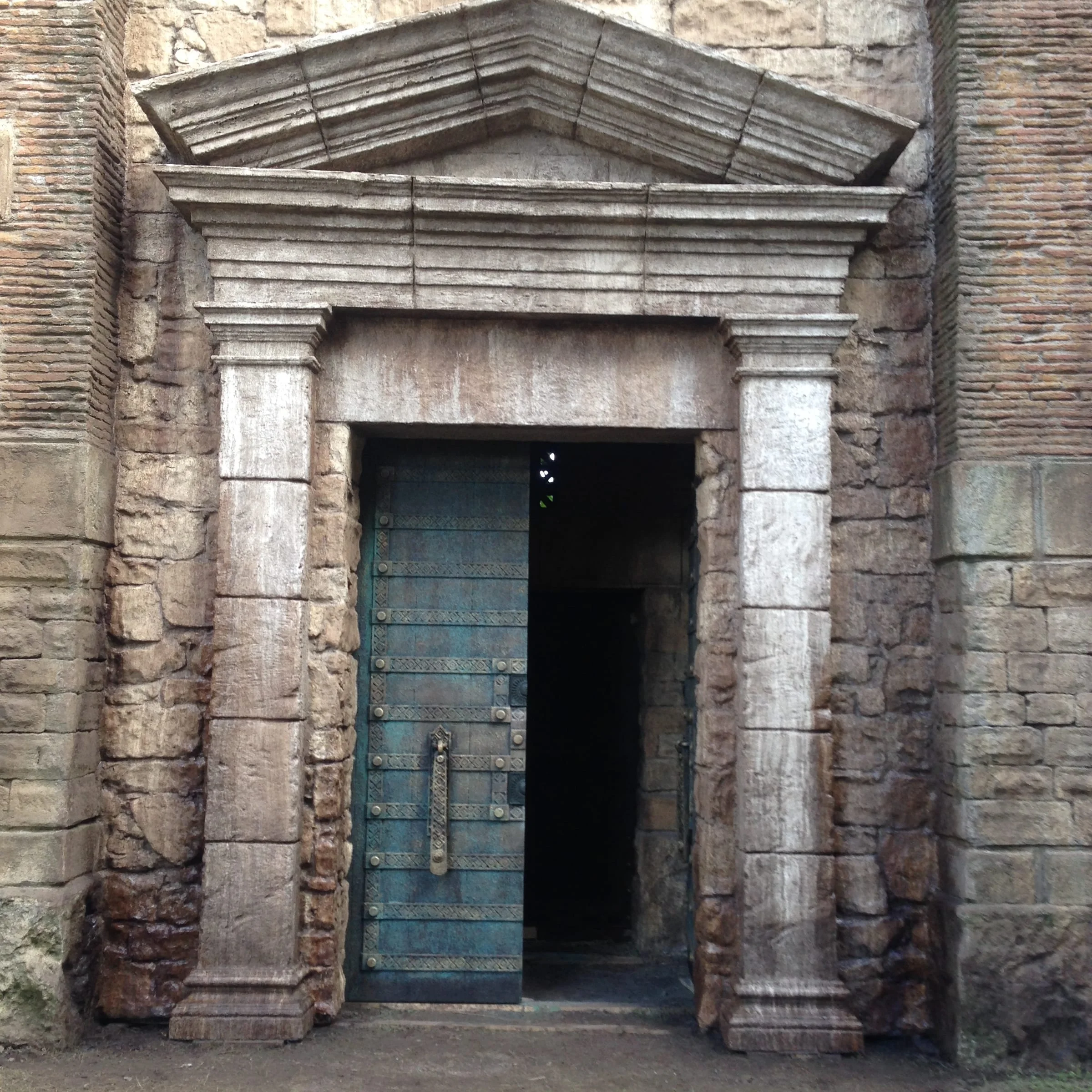
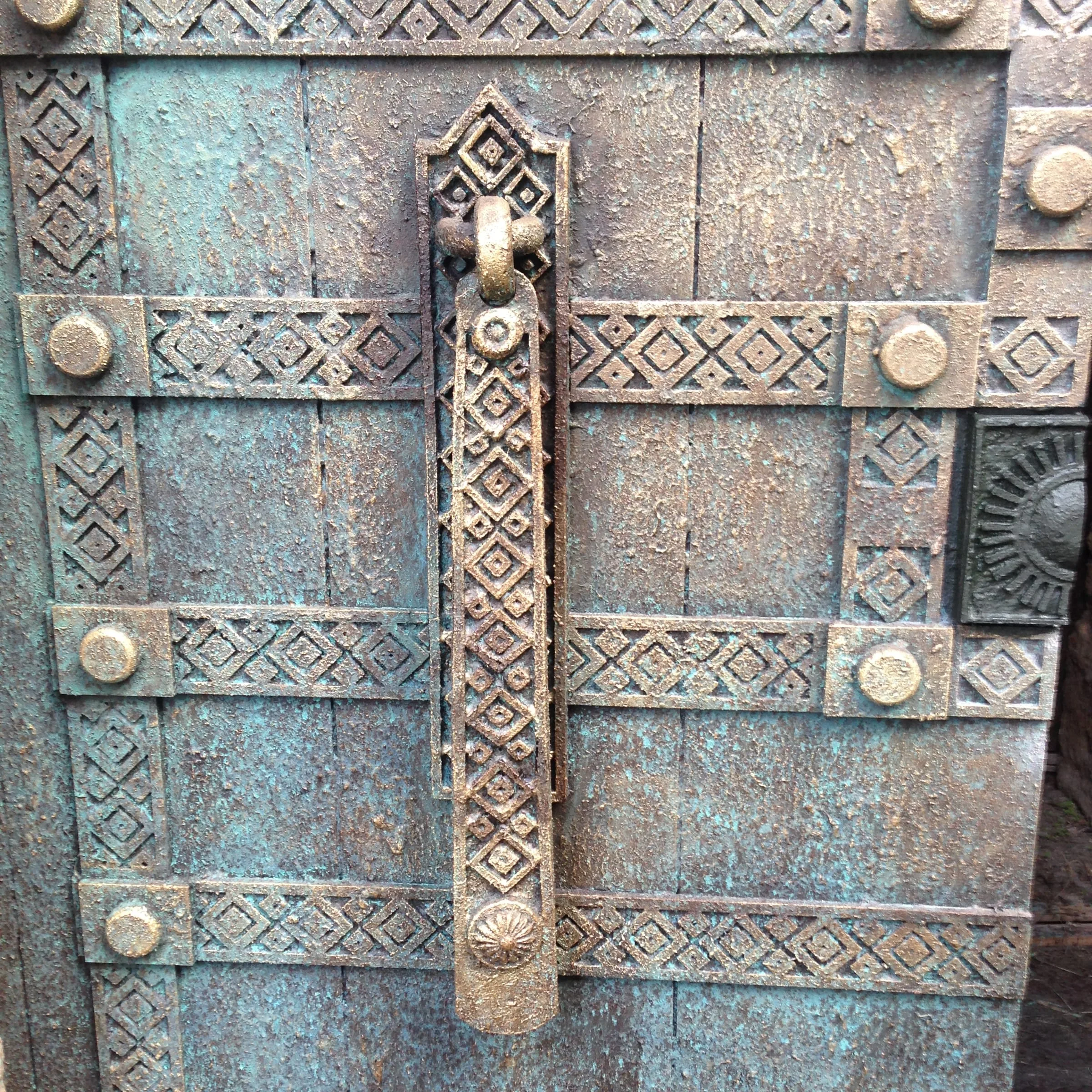
The doors of Nazareth are the first pieces to leave the shed: antiqued wood with bronze studs, geometric ornamental bands typical of First-Century Judaean-Eastern furnishings, jambs sculpted in faux stone with triangular pediments. The doors are trucked to Matera, where they fit into the natural walls of the Sassi as if they had always been there. This is the difference between a set that has been "reconstructed" and one that is "believable".
The lapis-lazuli Temple
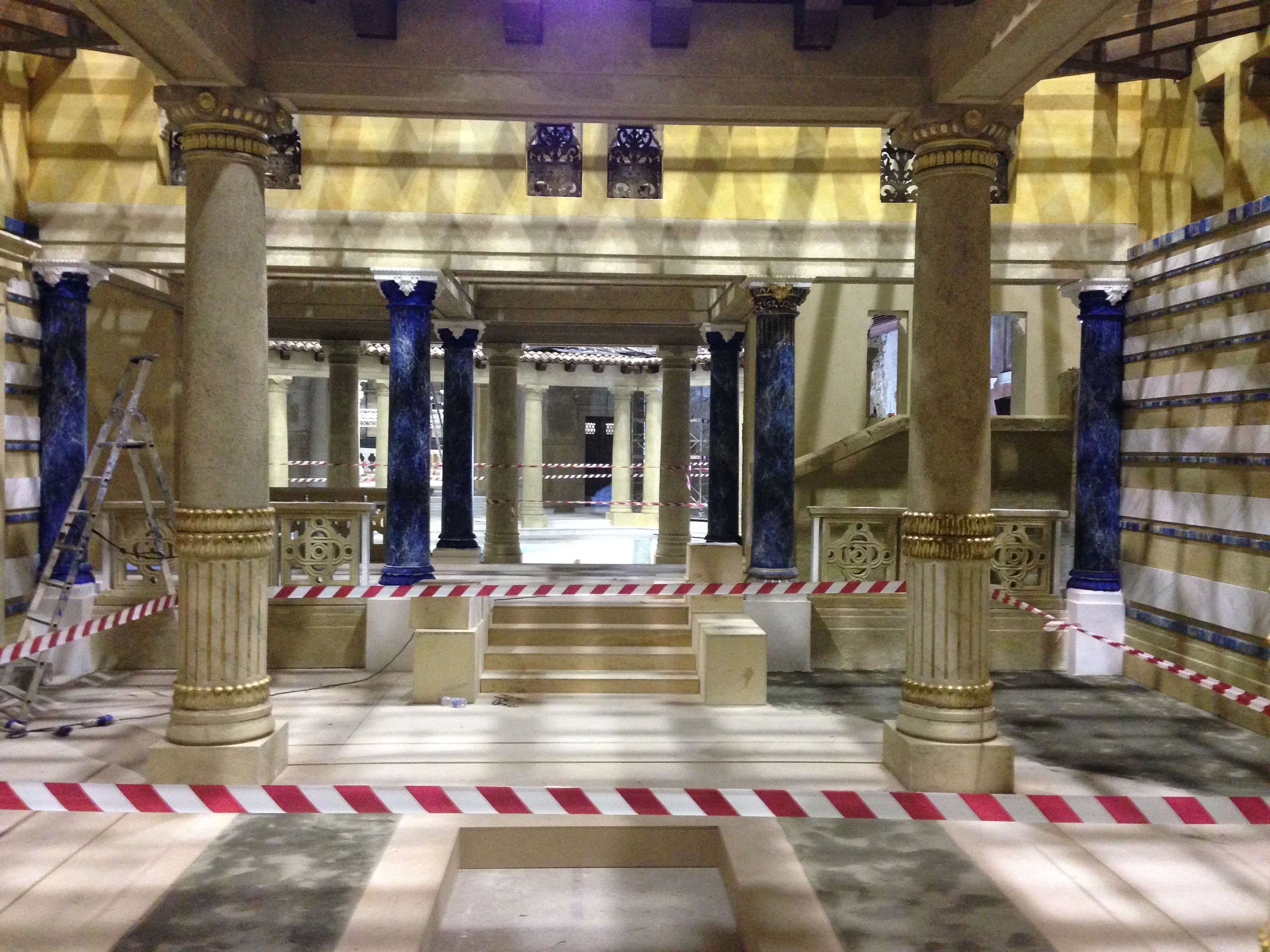
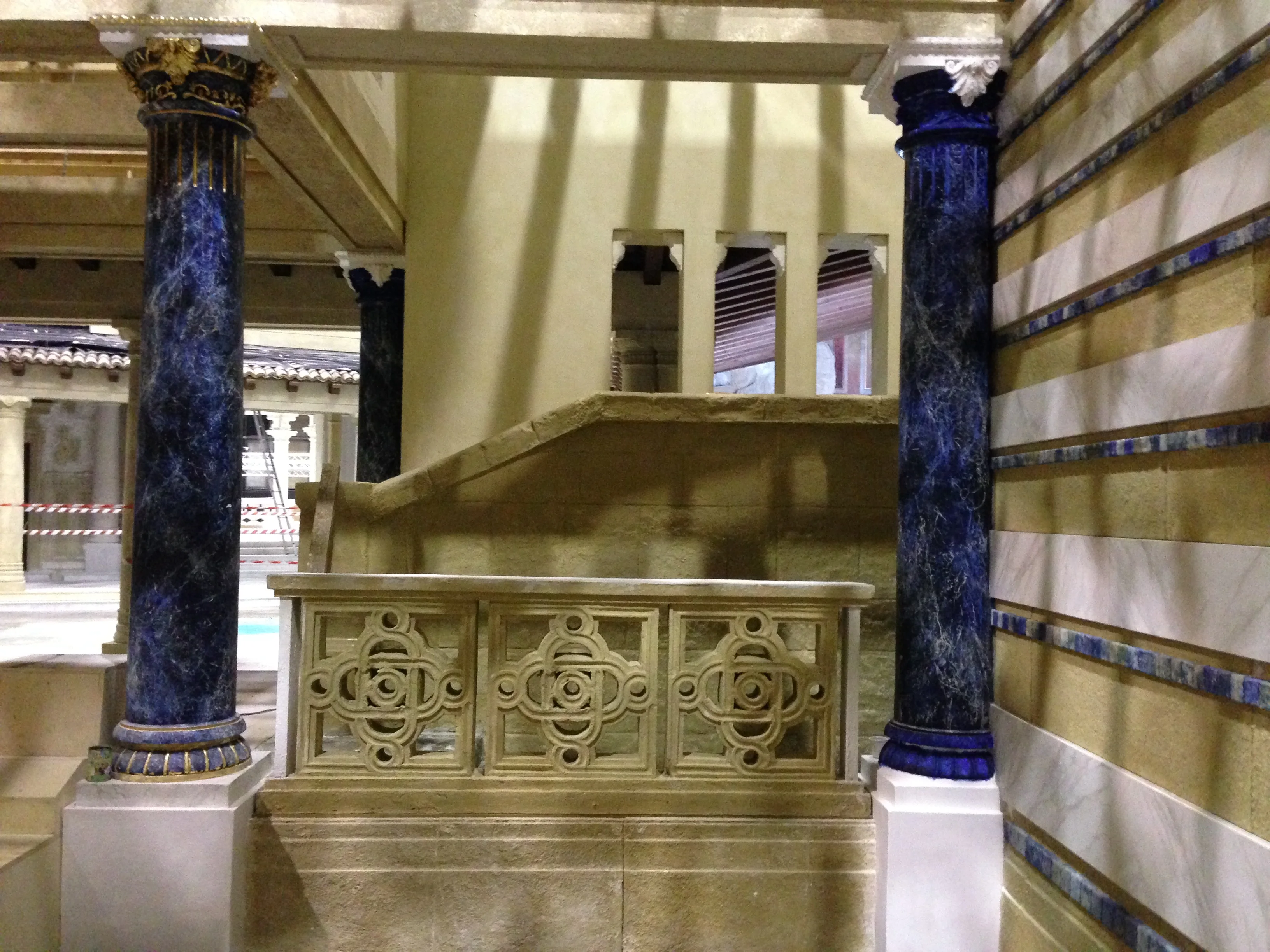
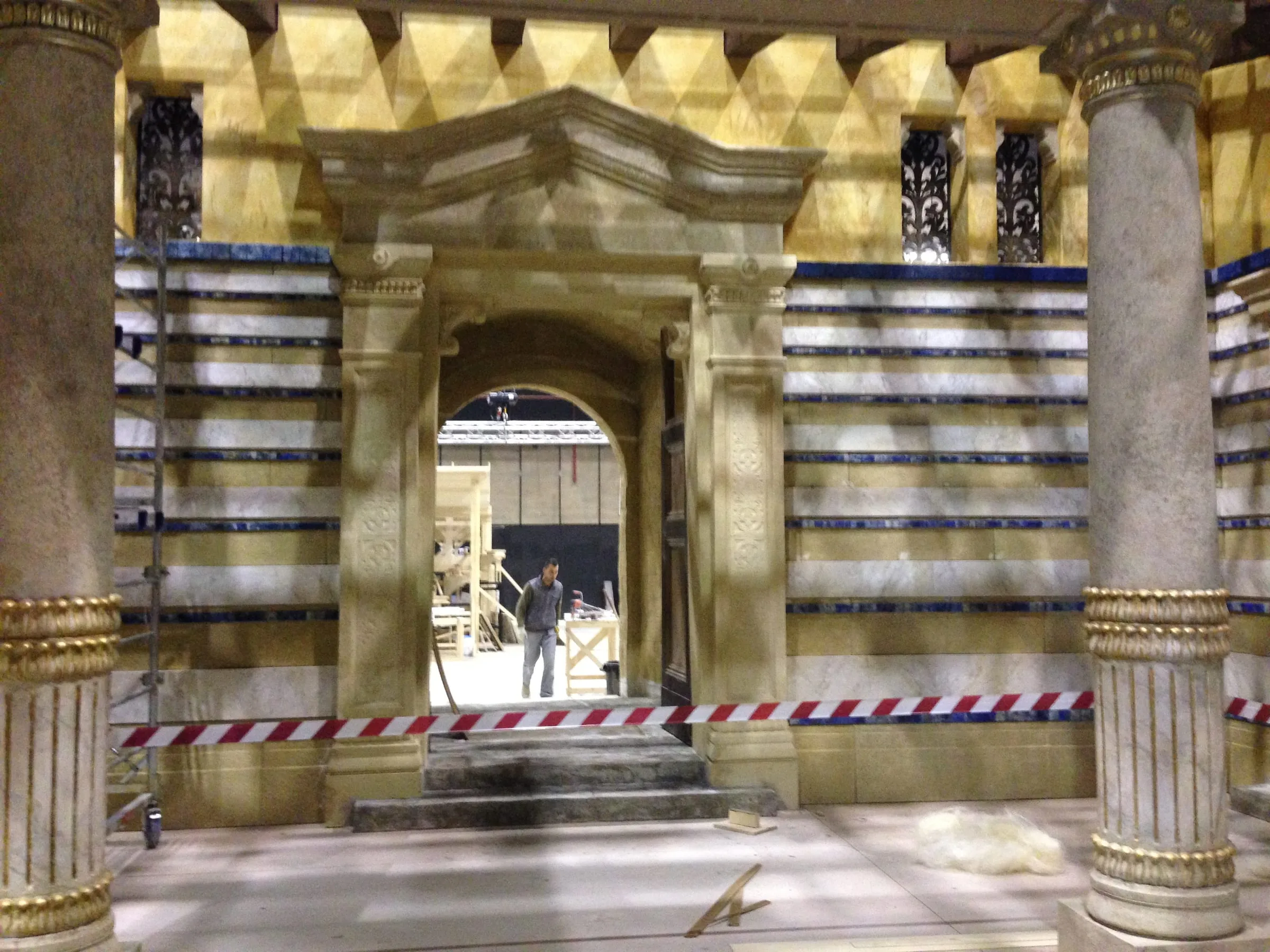
The key scene of the film — the seven-year-old Jesus talking with the doctors of the Law at the Temple — could not be shot in Matera: it needed monumental architecture. The Temple of Jerusalem is rebuilt on a soundstage at Cinecittà: spiral columns painted in lapis lazuli, gold-leaf capitals, paving in white and blue bands, continuous friezes on the walls. For those who sculpt it is not the first Temple of 2010s Cinecittà: it is a chain Creation Art knows well.
The Roman courtyard
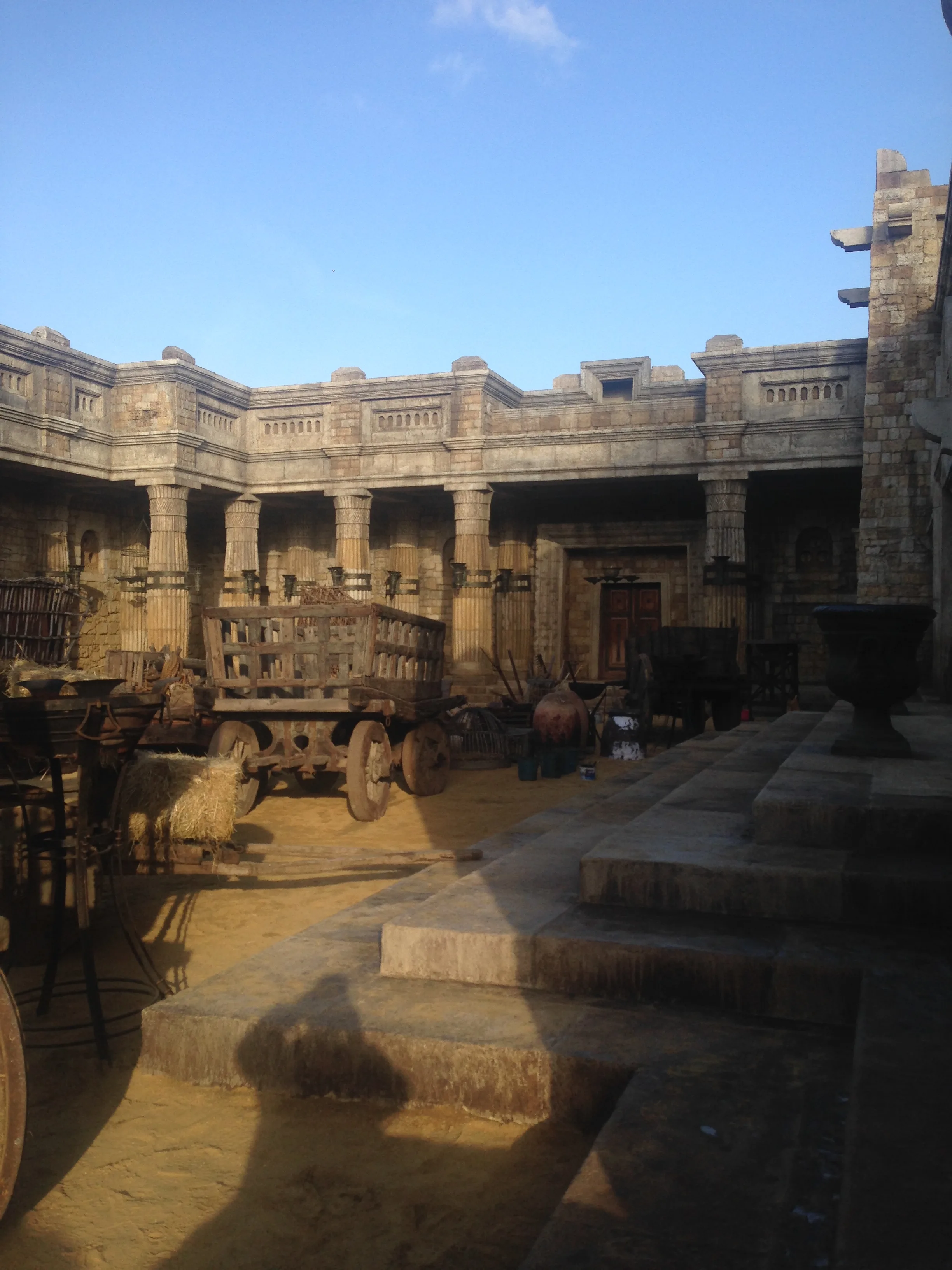
For the scenes along the Roman road in Egypt, and for the centurions' interrogations, a porticoed courtyard is built in Roman-provincial style: Corinthian faux-stone columns, crenellated walls, sandy paving, wooden balconies. It is a transit set, populated with carts laden with straw and real animals. When the camera arrives, Sean Bean walks through it in lorica and red cloak, as the centurion Severus.
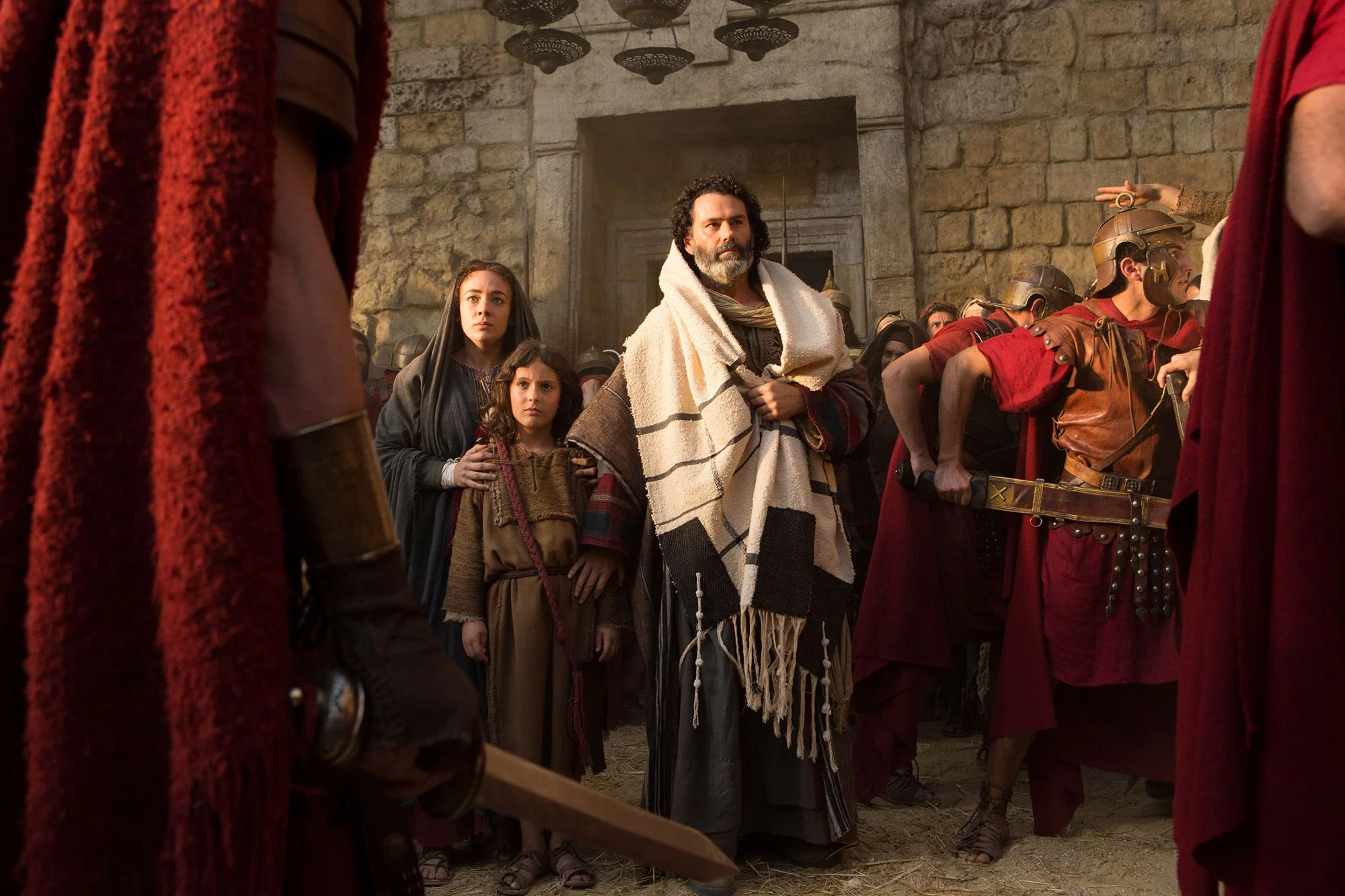
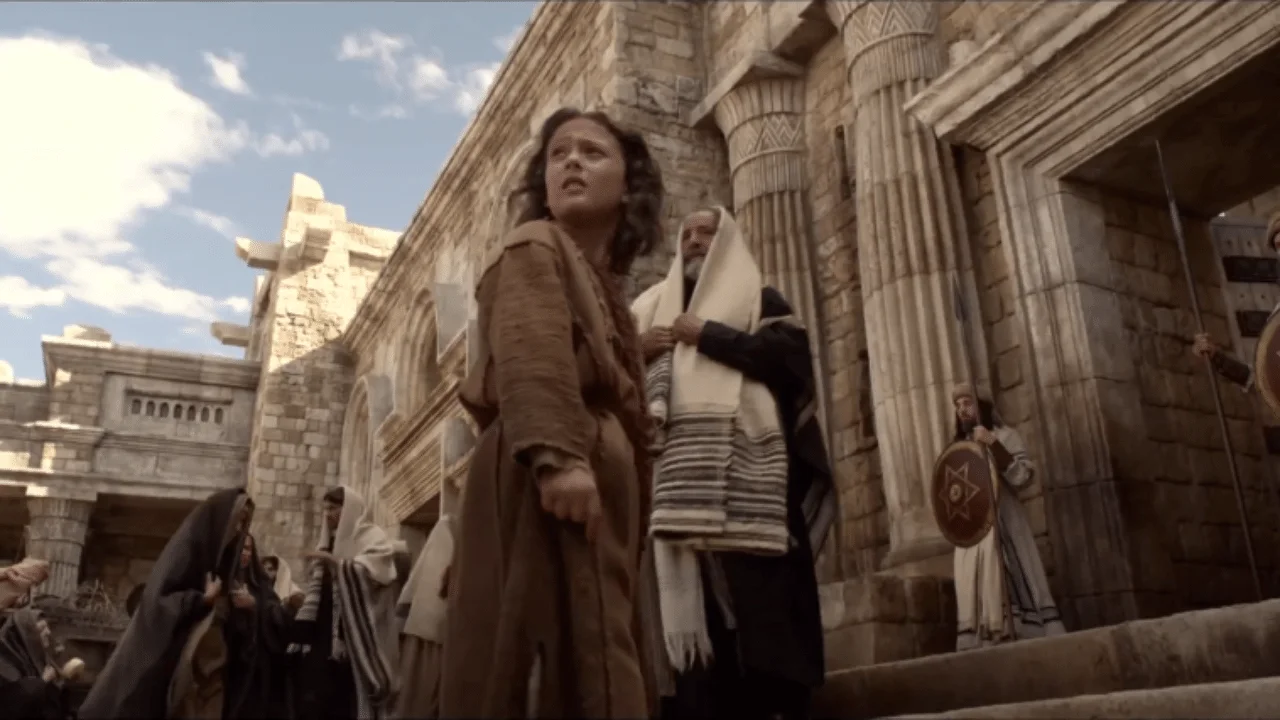
This is really a film about a family. We take you inside the Holy Family.
Tech sheet
2014, the year of the double commission
In 2014 we worked in parallel on two construction sites that, seen from outside, would seem incompatible. The first: the Cabiria portal of Cinecittà World, inaugurated on 24 July. The second: the biblical scenography of The Young Messiah, whose shoot began in Matera on 15 September. The same workshop, the same team, the same faux-stone technique: only the destination of the finished pieces changed. 2014 is one of the few years in our history when two large commissions from different sectors coexisted in the same six months.
Ten years of research
Anne Rice — author of Interview with the Vampire (1976) — returned to the Catholic faith in 1998 after a diabetic coma. She decided to devote her new novels to Christ. Before writing "Christ the Lord: Out of Egypt" (2005) she spent ten years studying the First Century: history, archaeology, anthropology, apocryphal texts. The novel is the first in the trilogy Rice intended to dedicate to the life of Jesus. "Kingdom of Heaven", the third volume, would remain unfinished: the author died in 2021.
One hundred and eleven minutes, two locations
The Young Messiah runs 111 minutes. Shooting took place between Matera (Sassi, September–October 2014) and Cinecittà (monumental interiors, October–November). The film opened in the United States on 11 March 2016, distributed by Focus Features. The choice of the Sassi of Matera follows the international tradition of biblical cinema consecrated by Pier Paolo Pasolini with The Gospel According to St. Matthew (1964) and taken up by Mel Gibson with The Passion of the Christ (2004) — films that had restored to the Lucanian city its status as "the Jerusalem of cinema".
$18.5 million budget
The film has a production budget of $18.5 million, financed by 1492 Pictures (the production company of Chris Columbus, director of Home Alone and of the first two Harry Potter films), Ocean Blue Entertainment, CJ Entertainment and Hyde Park International. At the worldwide box office it grossed around $7.3 million: a niche film, distributed mainly through the American faith-based circuit, but one that required a top-tier production machine in Italy — and scenography of auteur cinematic quality.
All production data
- Type
- Feature film · biblical / dramatic
- International title
- The Young Messiah
- Based on
- "Christ the Lord: Out of Egypt" by Anne Rice (Knopf, 2005)
- Director
- Cyrus Nowrasteh
- Screenplay
- Cyrus Nowrasteh and Betsy Giffen Nowrasteh
- Main cast
- Adam Greaves-Neal (the child Jesus) · Sean Bean (centurion Severus) · Sara Lazzaro (Mary) · Vincent Walsh (Joseph) · David Bradley · Jonathan Bailey · Christian McKay · Isabelle Adriani
- Production
- 1492 Pictures (Chris Columbus · Michael Barnathan · Mark Radcliffe) · Ocean Blue Entertainment · CJ Entertainment · Hyde Park International
- US distribution
- Focus Features · 11 March 2016
- Runtime
- 111 minutes
- Budget
- $18.5 million
- Worldwide box office
- ~$7.3 million
- Shoot start
- 15 September 2014, Matera
- Locations
- Matera (Sassi · Basilicata, exteriors) · Cinecittà Studios, Rome (monumental interiors)
- Our role
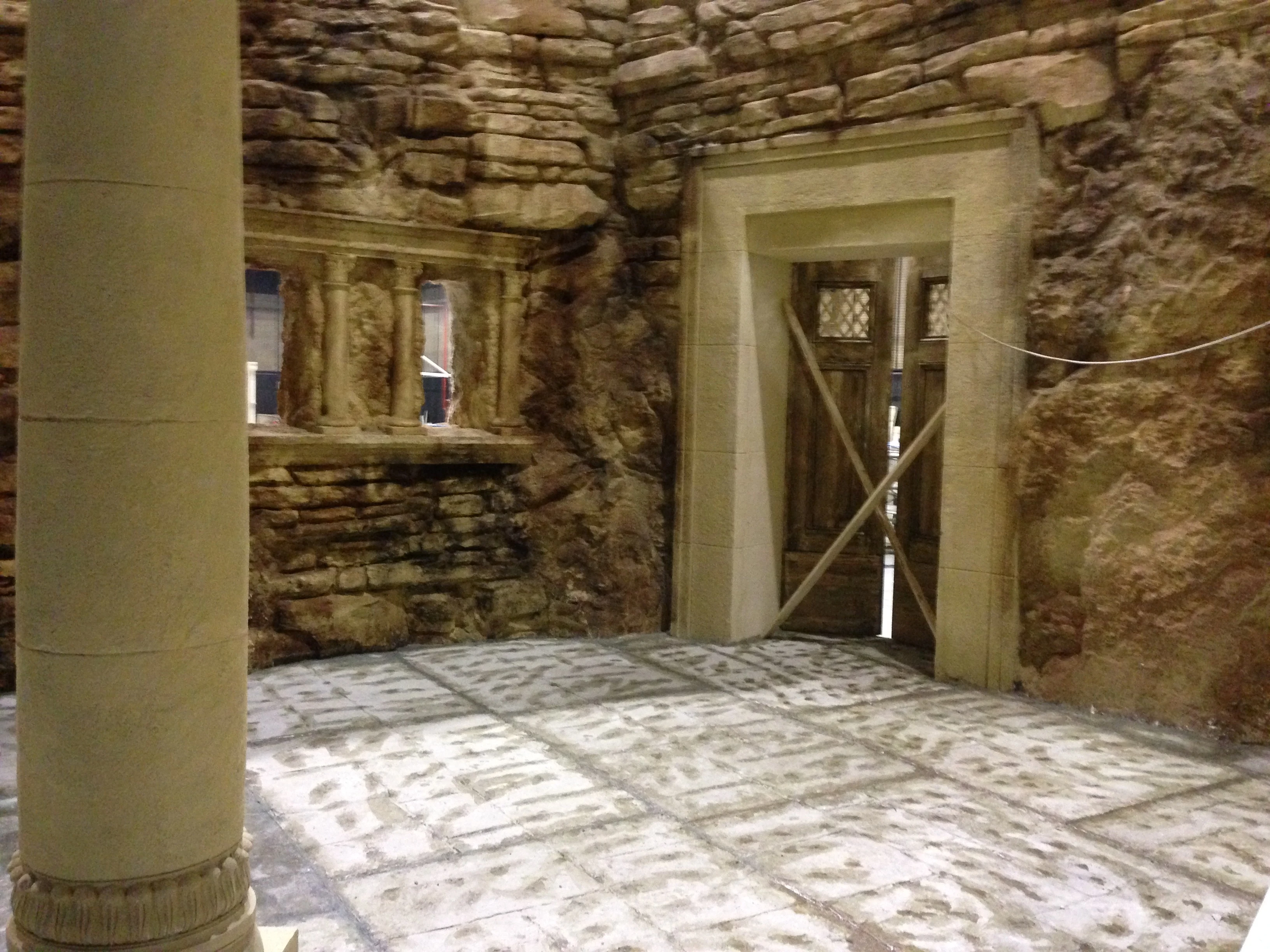
- Production of cinematic scenography in fibreglass, polystyrene + fibre-reinforced mortar and antiqued wood: doors of Judaean houses for the Matera exteriors, reconstruction of the Temple of Jerusalem on the Cinecittà soundstages (lapis-lazuli columns, gold-leaf capitals, monumental arches, banded paving), Roman-provincial courtyards, a Nazareth house in rocky stone.
- Matera local tradition
- Pier Paolo Pasolini, The Gospel According to St. Matthew (1964) · Mel Gibson, The Passion of the Christ (2004) · Catherine Hardwicke, The Nativity Story (2006)
- Parallel Creation Art year
- 2014: the same year as the Cabiria portal of Cinecittà World (24 July 2014)
- Second life
- Set dismantled after shooting · some Egyptian and provincial sculptures kept in our workshops for later reuse on other biblical-Eastern period films
Second life
Egypt in Matera,
then away.
The set of Christ The Lord — The Young Messiah by Cyrus Nowrasteh was shot in Matera in 2014 — the city of the Sassi that has hosted Italian biblical and historical-Eastern films for decades: from Pasolini's Gospel According to St. Matthew (1964) to Gibson's Passion of the Christ (2004) to Hardwicke's The Nativity Story (2006). Our reconstruction of the Temple of Jerusalem with the lapis lazuli and the gold leaf, of the Roman-provincial courtyards, of the Nazareth house in rocky stone has entered that local tradition.
After shooting the set was dismantled — that is the rule of cinema. Some of the more finely worked sculptures (capitals, friezes, monumental arches, details in faux gold leaf) returned to our workshops as a biblical-Eastern scenography archive. The grammar of five-century patination comes back every time a period film calls for ancient material credibility.
Christ The Lord is from 2014 — the same year as our Cabiria Portal at the entrance to Cinecittà World. Two large commissions in parallel, two different architectural grammars, a single workshop school.