
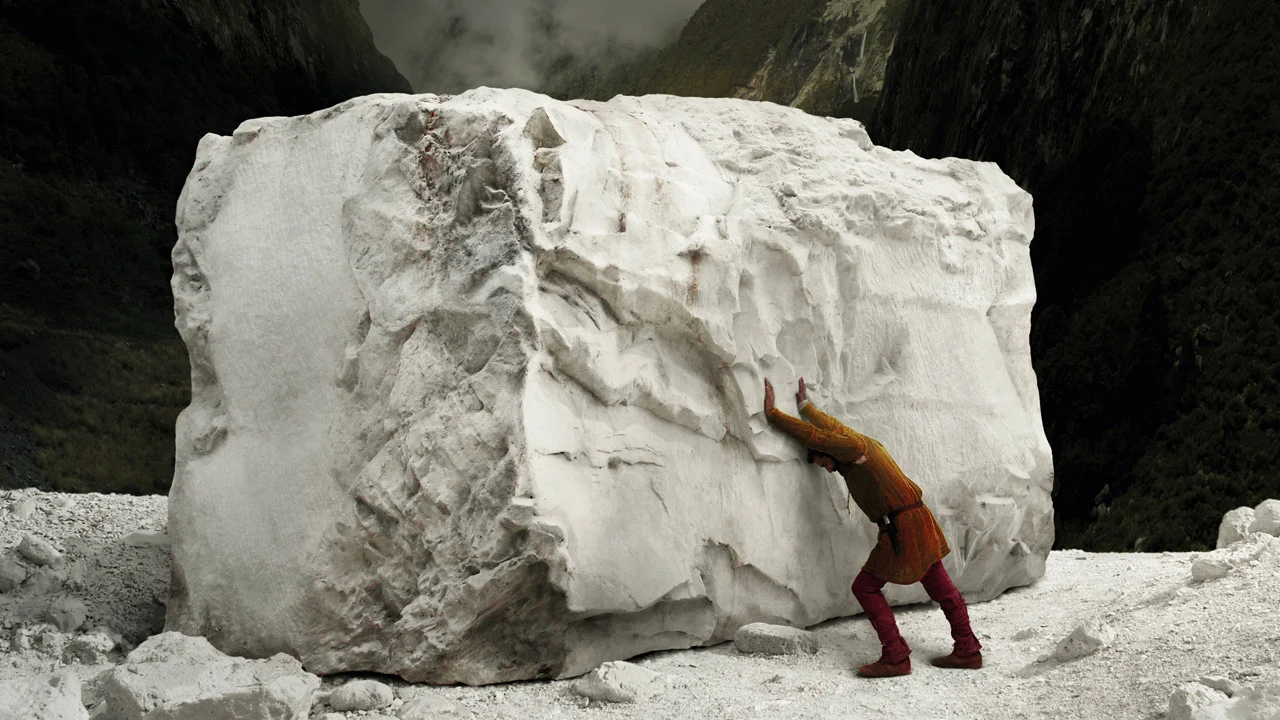
Film · directed by Andrey Konchalovsky · 2019
Il peccato.
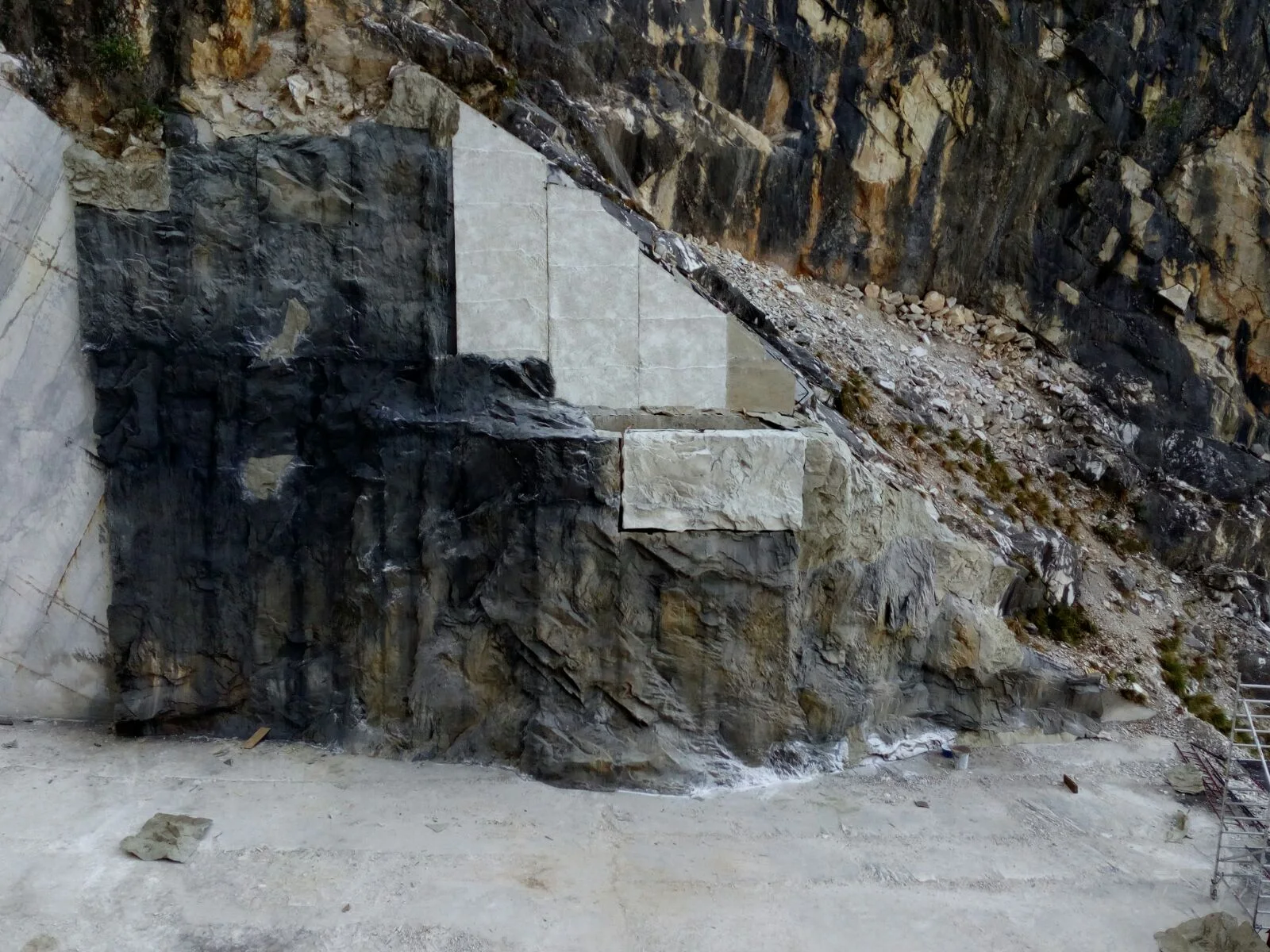
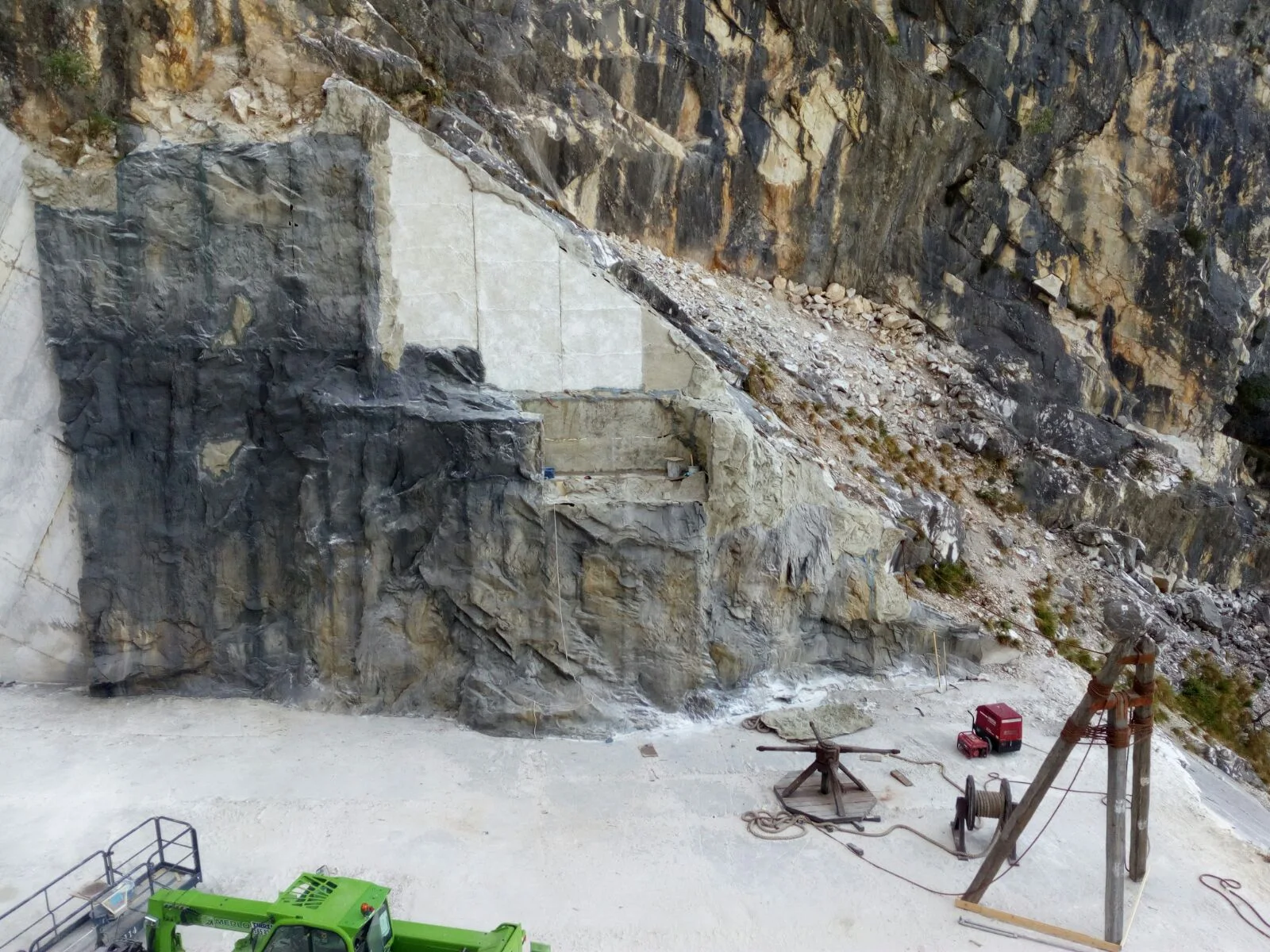
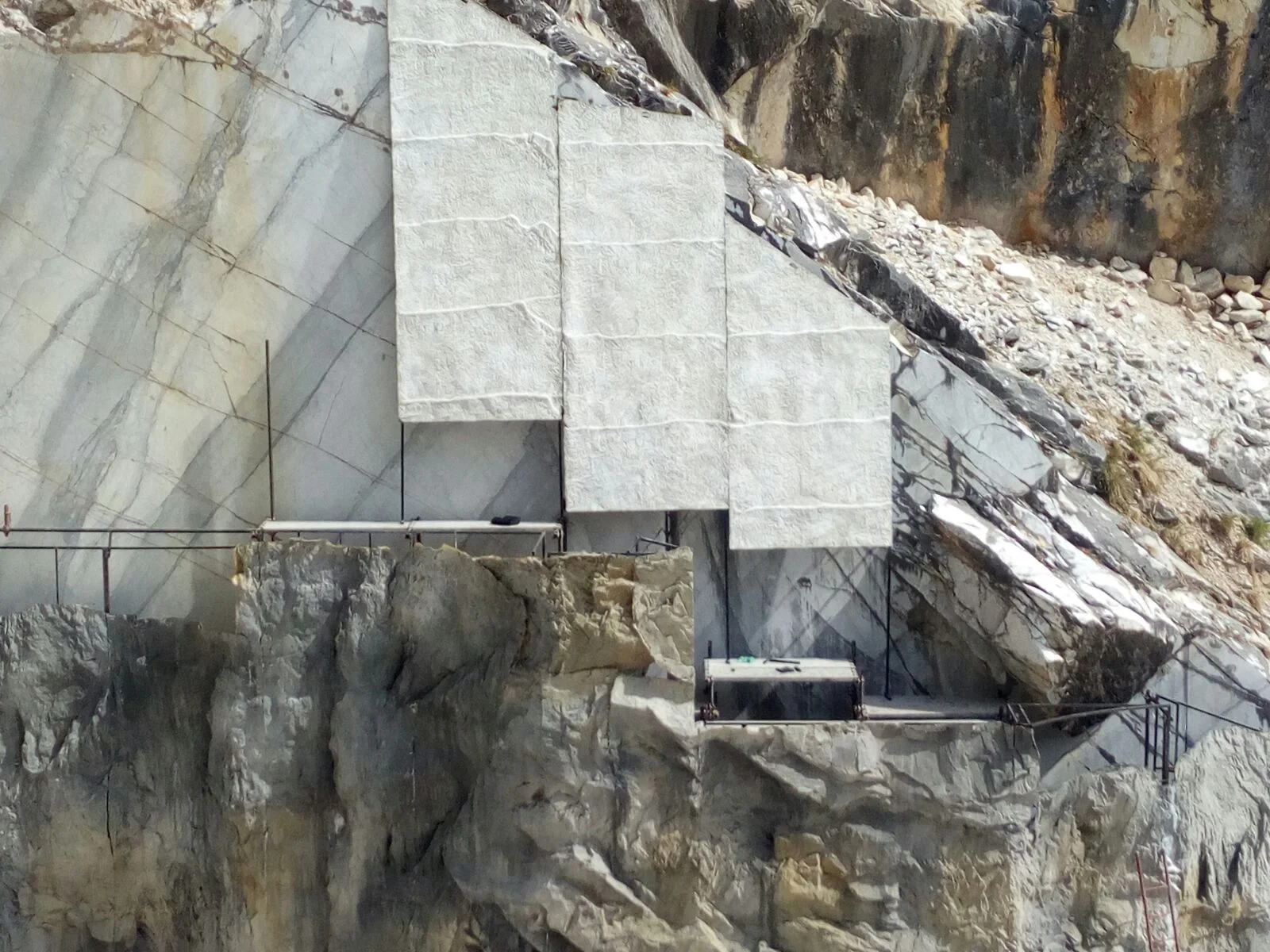
For Konchalovsky's film on Michelangelo Buonarroti, a scenographic intervention inside the real Carrara marble quarry. We rebuilt a wall section the way it looked in the Sixteenth century.
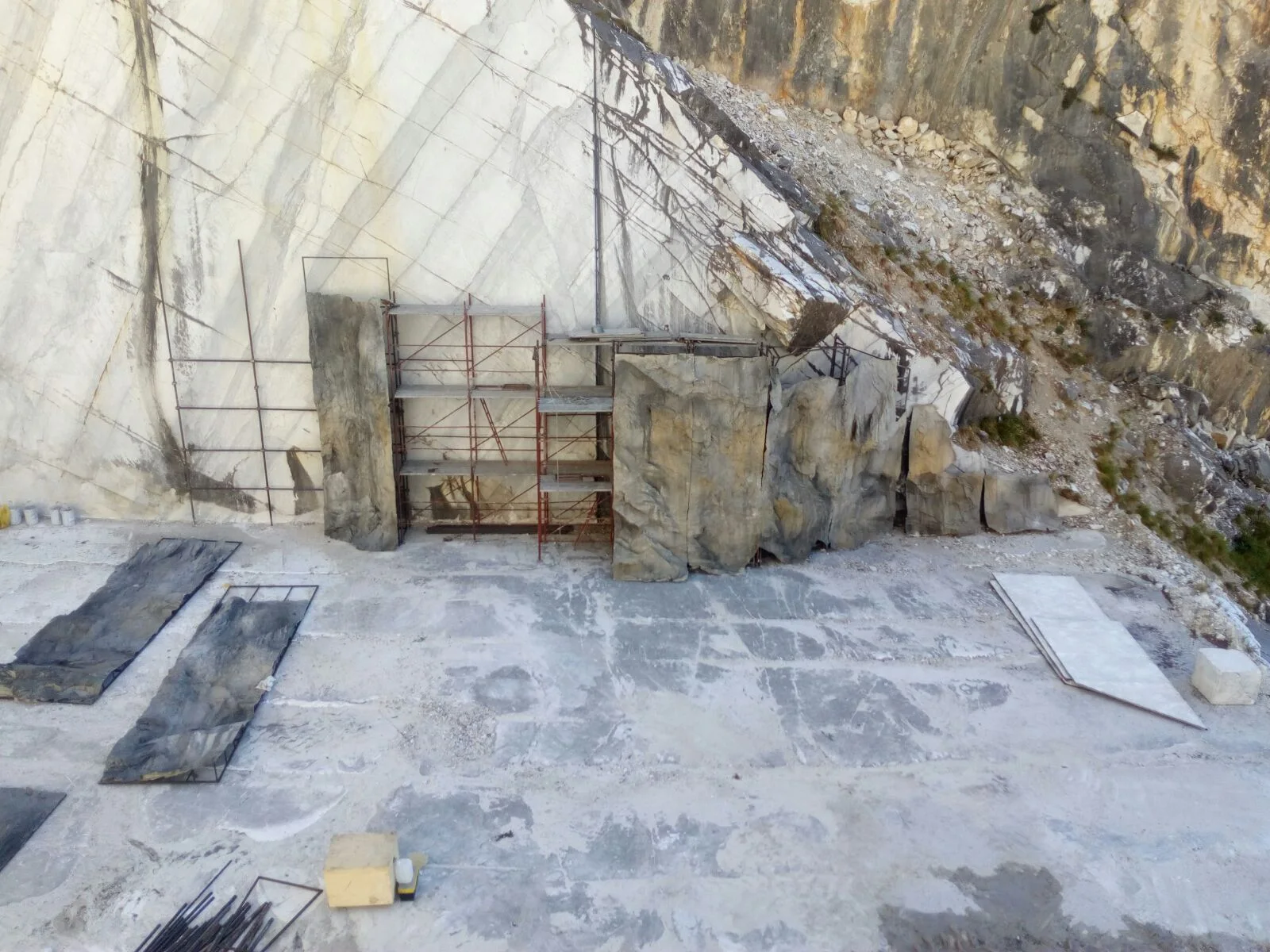
Documentation
May 2018,
in the quarry.
Four days of work on site, up in the Apuan Alps. Photographs from our archive during the assembly.
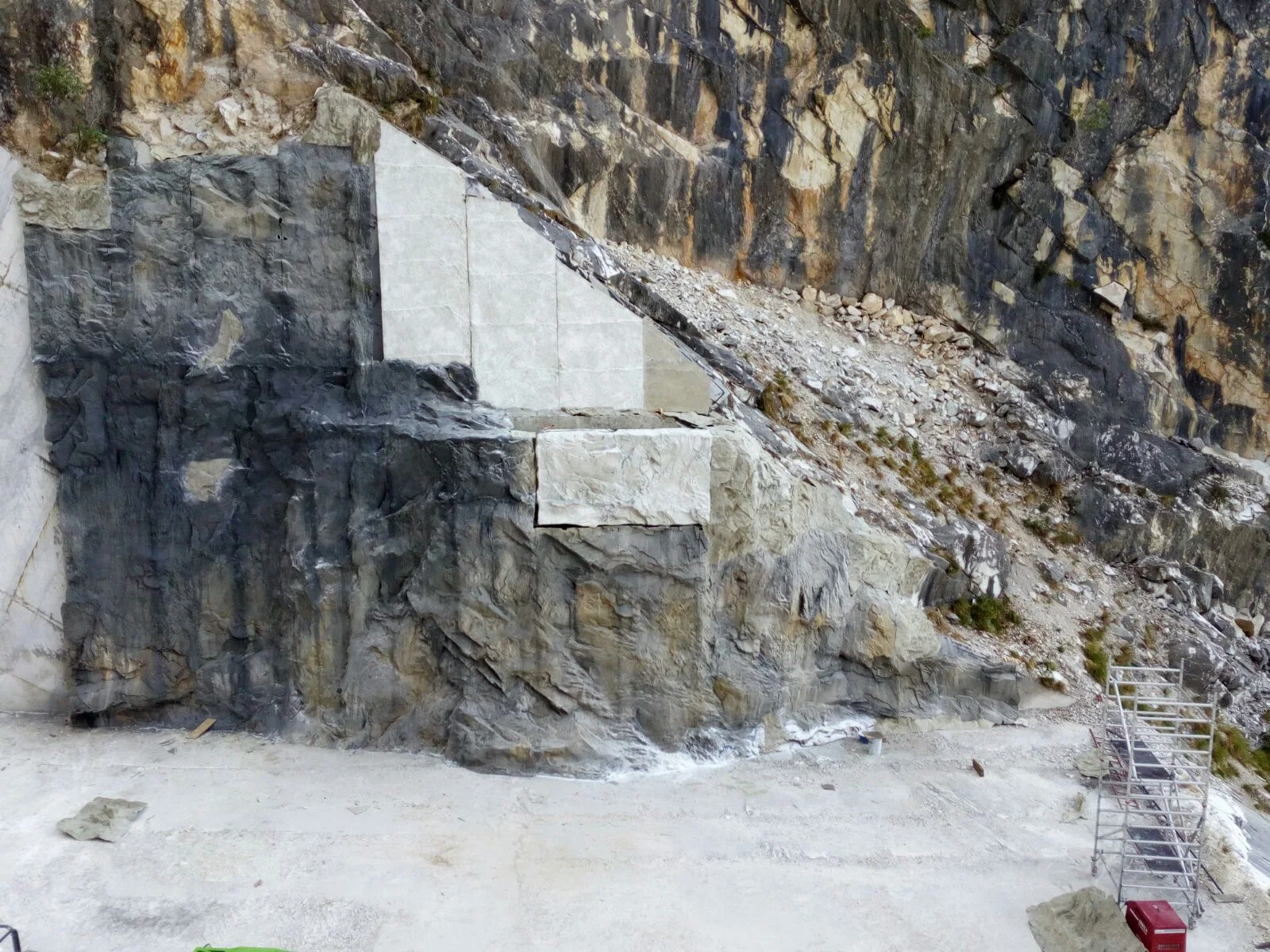
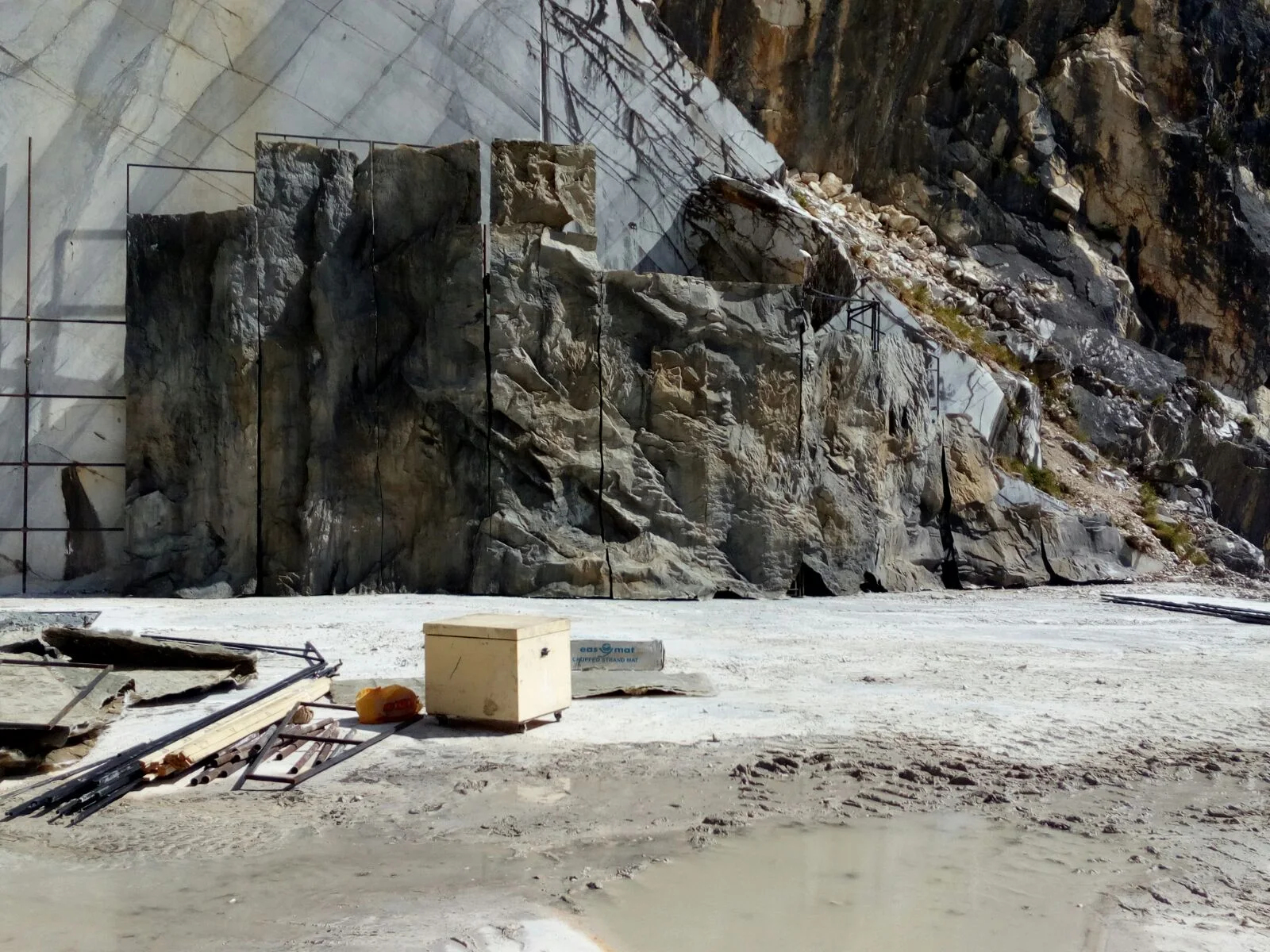
Behind the scenes
The real quarry
and the faux marble.
Working in a real location does not mean you stop sculpting: it means integrating your scenography into something that already exists, and doing it so well that Konchalovsky's camera cannot tell the line between real rock and our own surface.
The printed surface
The faux-marble panels are made of layered fibreglass with the surface printed from a cast of real Apuan marble. We first took a silicone cast of a Carrara block — fissures, veins, fractures — and then replicated its grain in fibreglass on a large panel. The result: a textured surface, not the smooth finish of industrial resin.
Sixteenth-century quarrying
The panels simulate the profile of point-chisel quarrying — the Sixteenth-century technique — not modern diamond-wire cutting. The surfaces are angular, with triangular cusps, wedge fissures, vertical breaks like those depicted in Renaissance quarrying treatises. It is a philological choice: the Michelangelo of history never saw these walls as they are today, and Konchalovsky knows it.
Assembly at height
The panels arrive in the quarry by crane and are fixed onto a metal scaffold anchored to the real wall. For our set technicians it is working at height, with scaffolds and harnesses, alongside the quarry workers who keep extracting blocks from the portion not affected by our intervention. Four days on site in the Apuan Alps.
Sixteenth
the philological era of the quarrying we rebuilt — not the Twenty-first century
4 days
of work on the wall of the Carrara quarry
Apuan
the same Alps Michelangelo crossed to choose his blocks
Tech sheet
All production data
- Type
- Scenographic intervention on location · active marble quarry
- Film
- Sin — Michelangelo's Fury · 2019
- Director
- Andrey Konchalovsky
- Subject
- The life of Michelangelo Buonarroti during the years of the Tomb of Julius II
- Location
- Marble quarries of Carrara · Apuan Alps · Tuscany
- Work period
- May 2018 · shooting summer 2018
- Intervention
- Scenographic panels in faux stone applied to the wall of the real quarry to recreate the look of a marble section quarried in the Sixteenth century using point-chisel techniques — uneven surfaces, wedge fissures, angular profiles
- Techniques
- Layered fibreglass with the surface printed from Apuan marble · lime base for the ivory tone · application on a metal scaffold anchored to the real quarry wall · transport in pieces by crane
- Our role
- Realisation of the scenographic intervention in the quarry — sculpting of the panels, finishing, assembly at height on the wall of the active quarry
- Second life
- Panels dismantled after shooting · the Apuan-marble casting technique stays in our repertoire for other period projects
Second life
The faux marble on the
real quarry.
The film opens in Russian and Italian cinemas in 2019 and receives mixed reviews — audiences love the cinematography by Aleksandr Simonov, critics less so the length. The scenes inside the Carrara quarry are among the most remembered: the blocks Michelangelo chooses on horseback, Buonarroti's face against the white wall, the hand touching our surface as if it were the real marble just hewn from the stone.
The Apuan marble casting techniques developed for this film have entered our repertoire: the same silicone print of the grain returns in Christ The Lord for the walls of the Temple of Jerusalem and in Gangs of New York for the façades of Five Points. Sculpted Apuan marble is an Italian scenographic signature that travels into cinema worldwide.