
Film · 2009
Baarìa
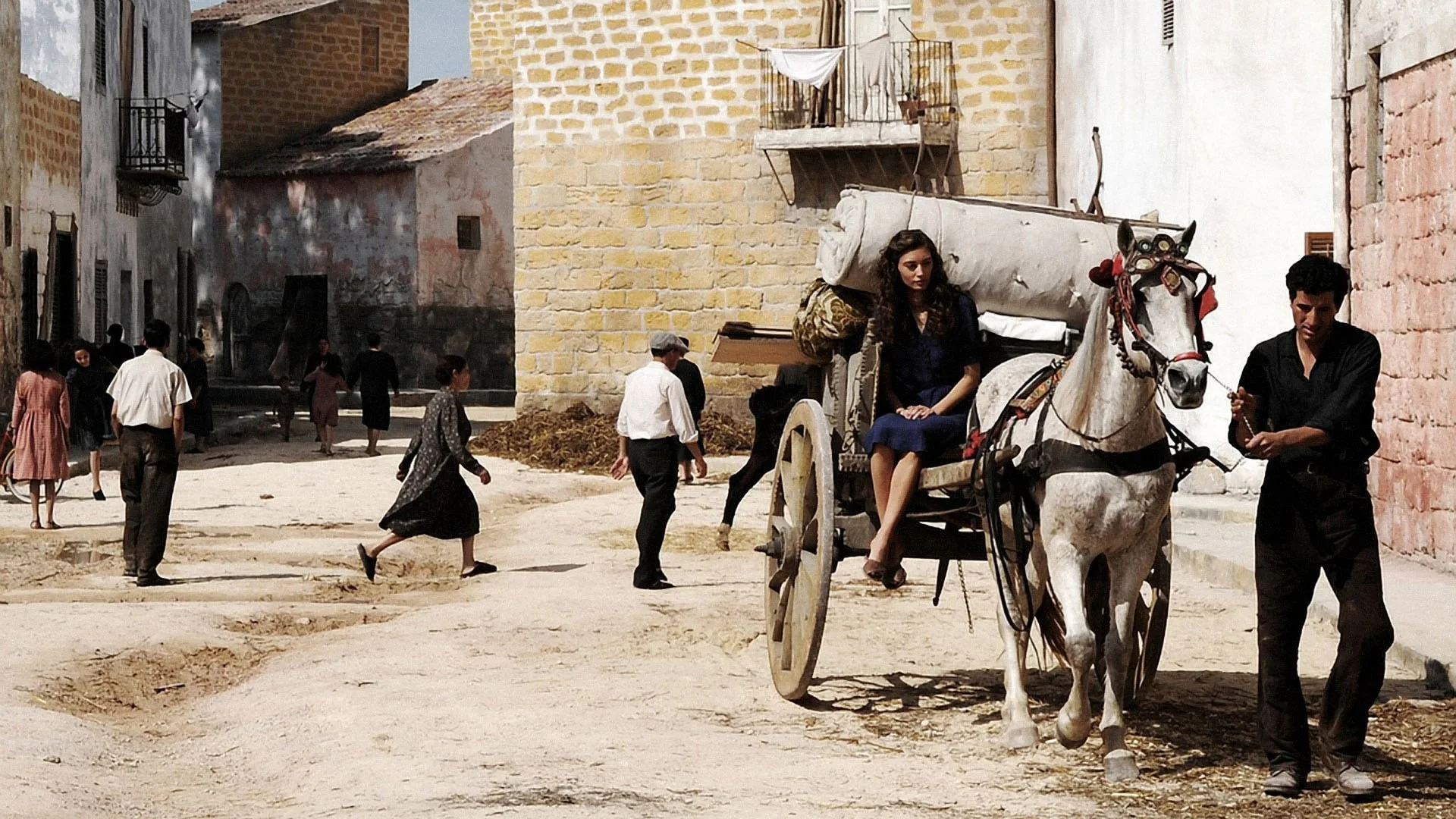
Tornatore's Bagheria, rebuilt twenty kilometres from Tunis.
Behind the scenes
Six hectares, three eras,
one single town.
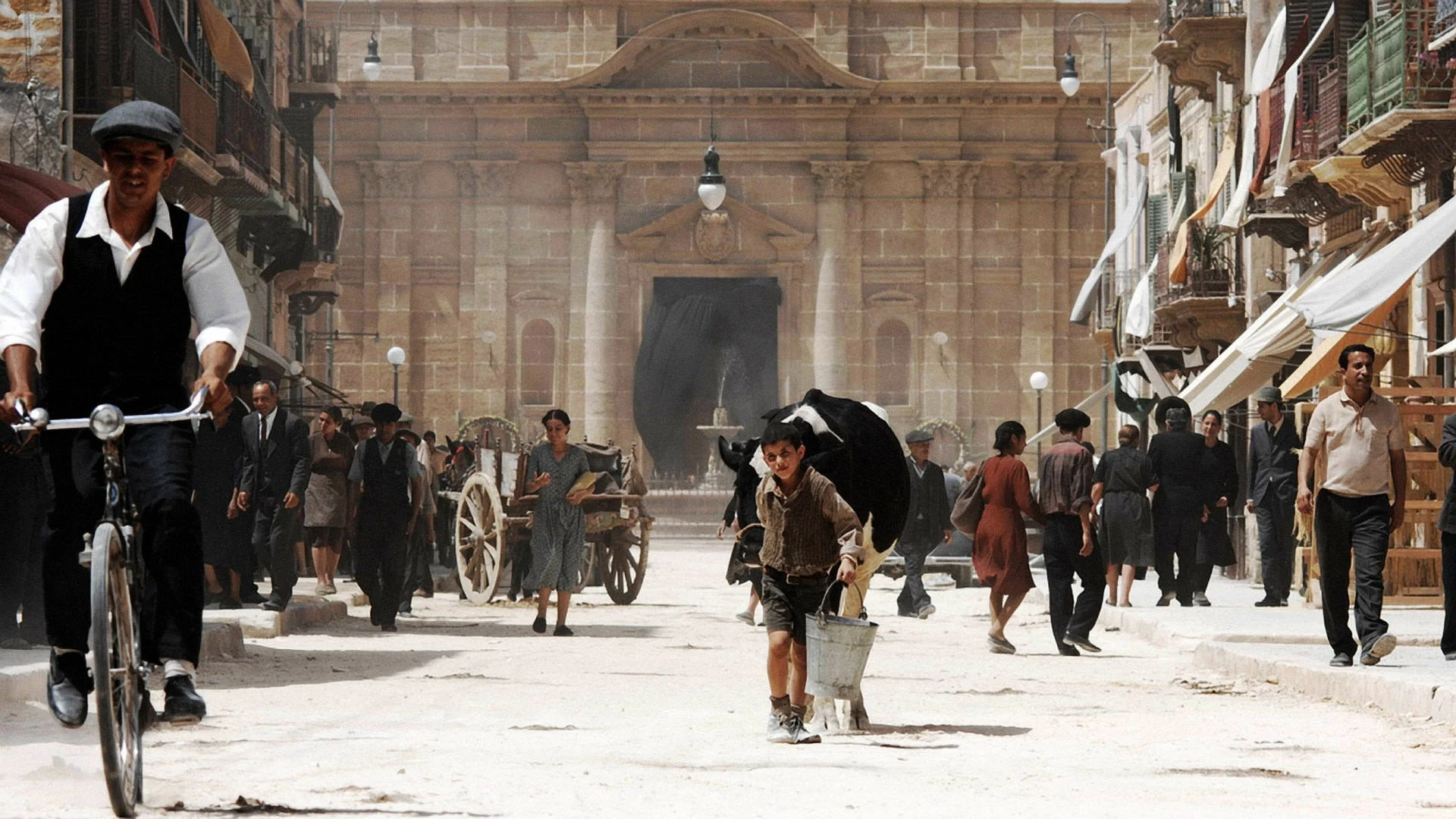
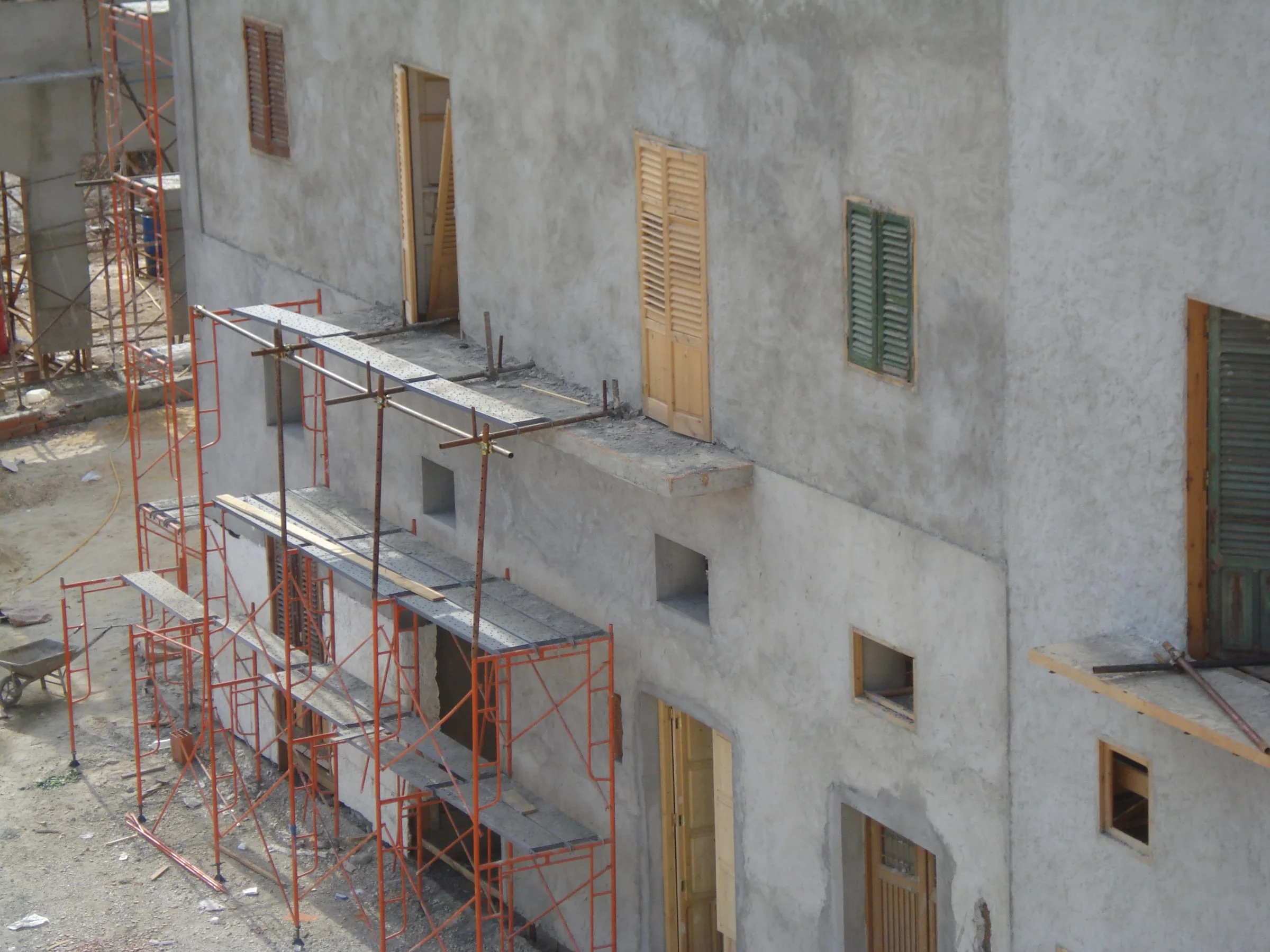
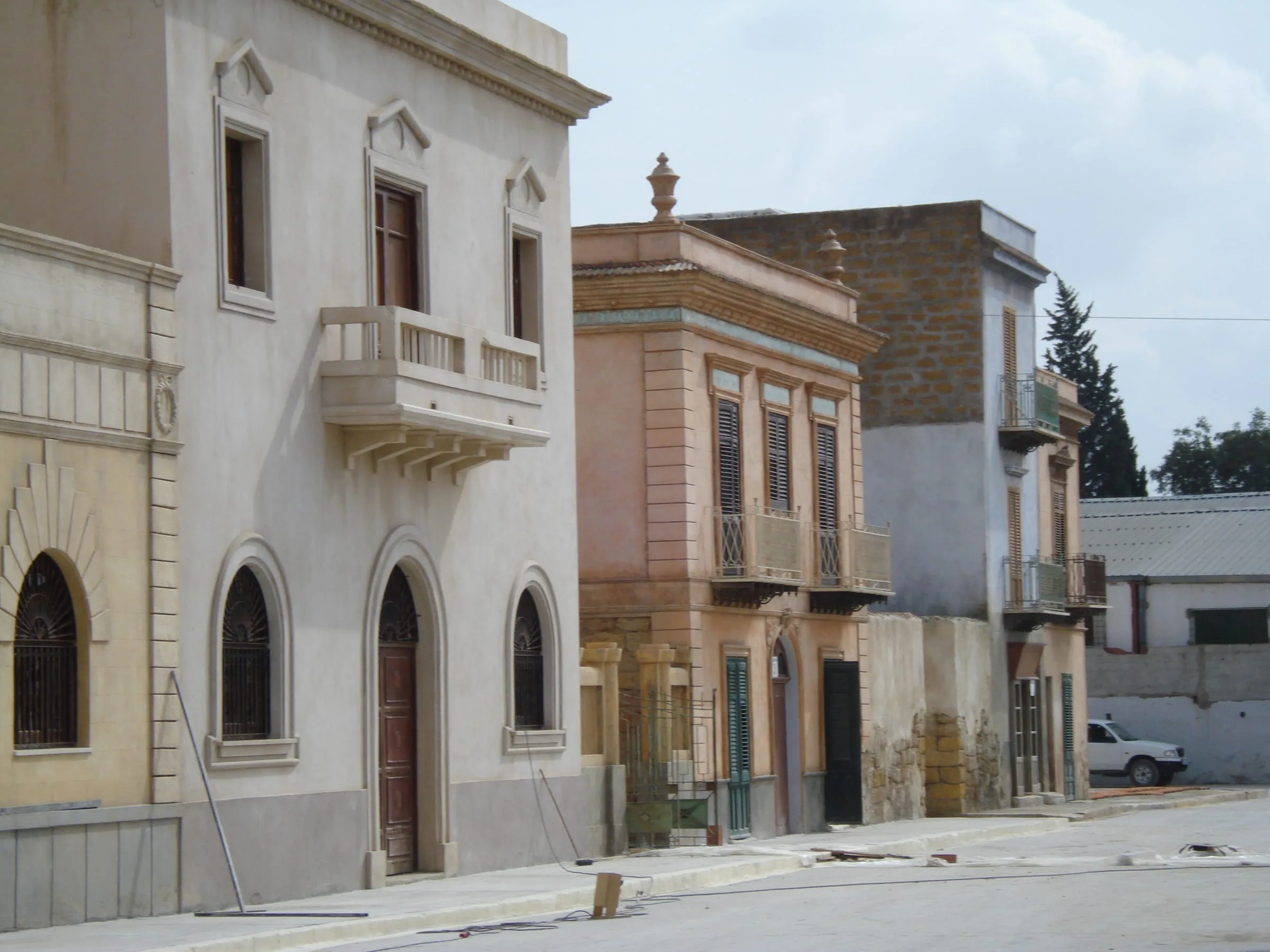
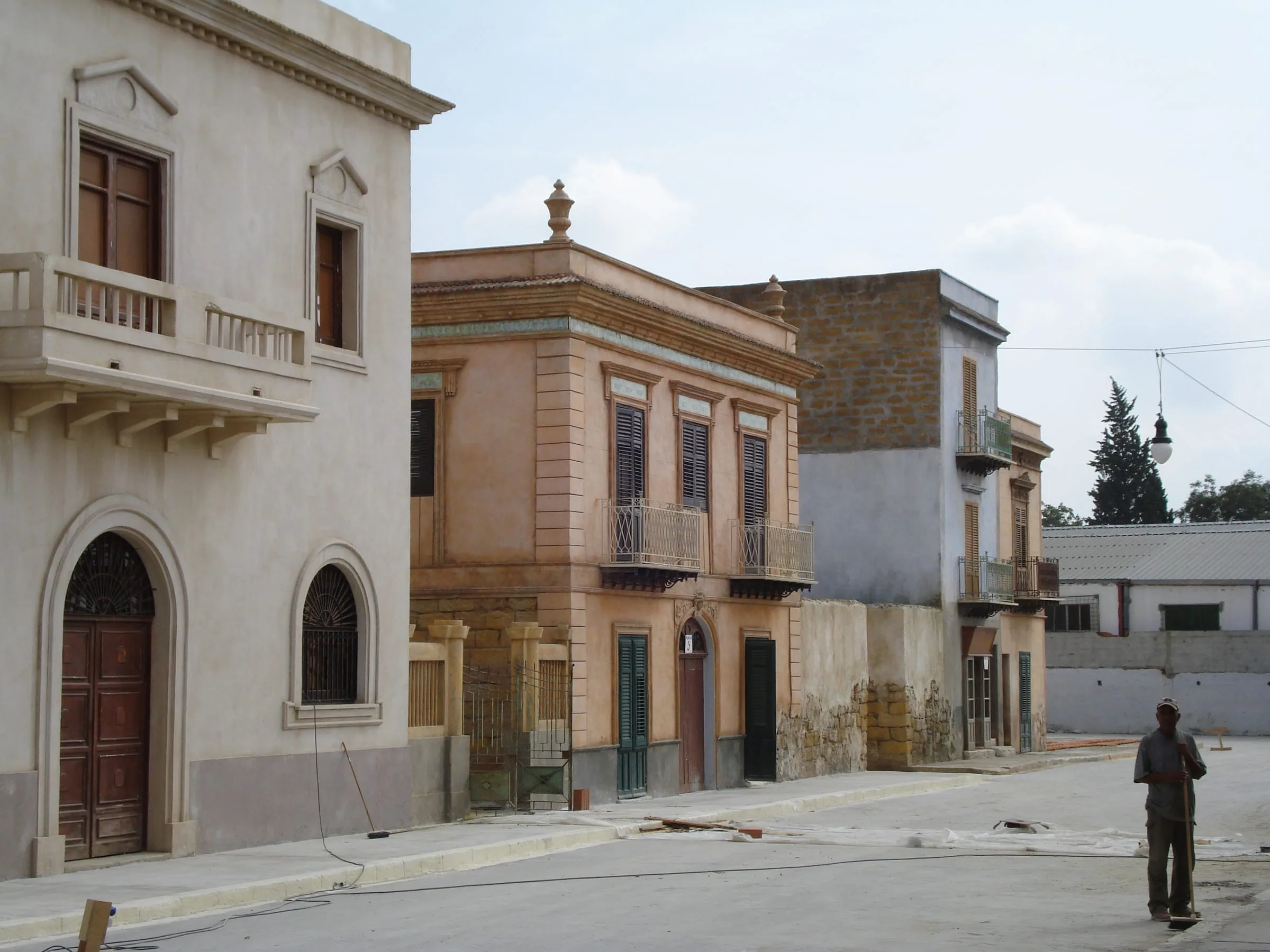
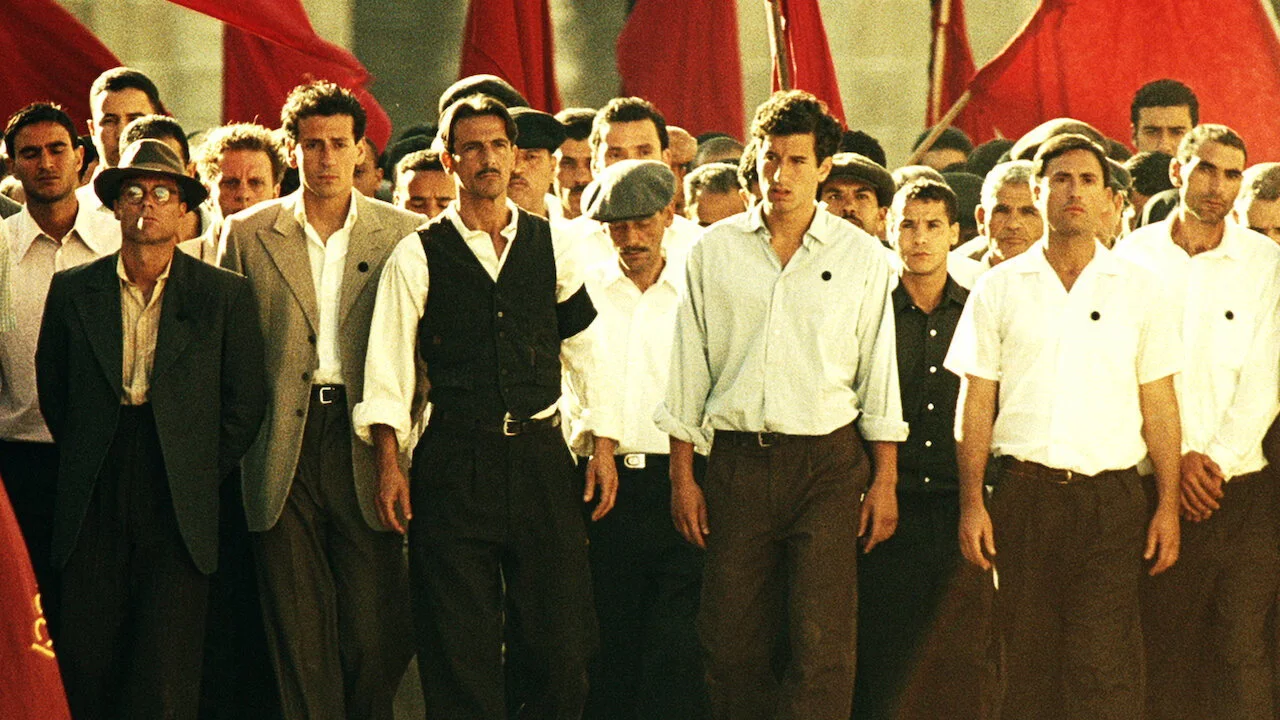
Baarìa is an Italian blockbuster: a budget around thirty million euros, about fifteen of which were spent on scenography alone. Six hectares of set, nine months of preparation, twenty-five weeks of shooting, thirty-five thousand extras in costume. Tornatore wants three distinct eras — the Thirties of Sicilian poverty, the Fifties of political hope, the Seventies of modernist illusion — on the same row of buildings. Fibreglass is the technical answer.
The monumental scale
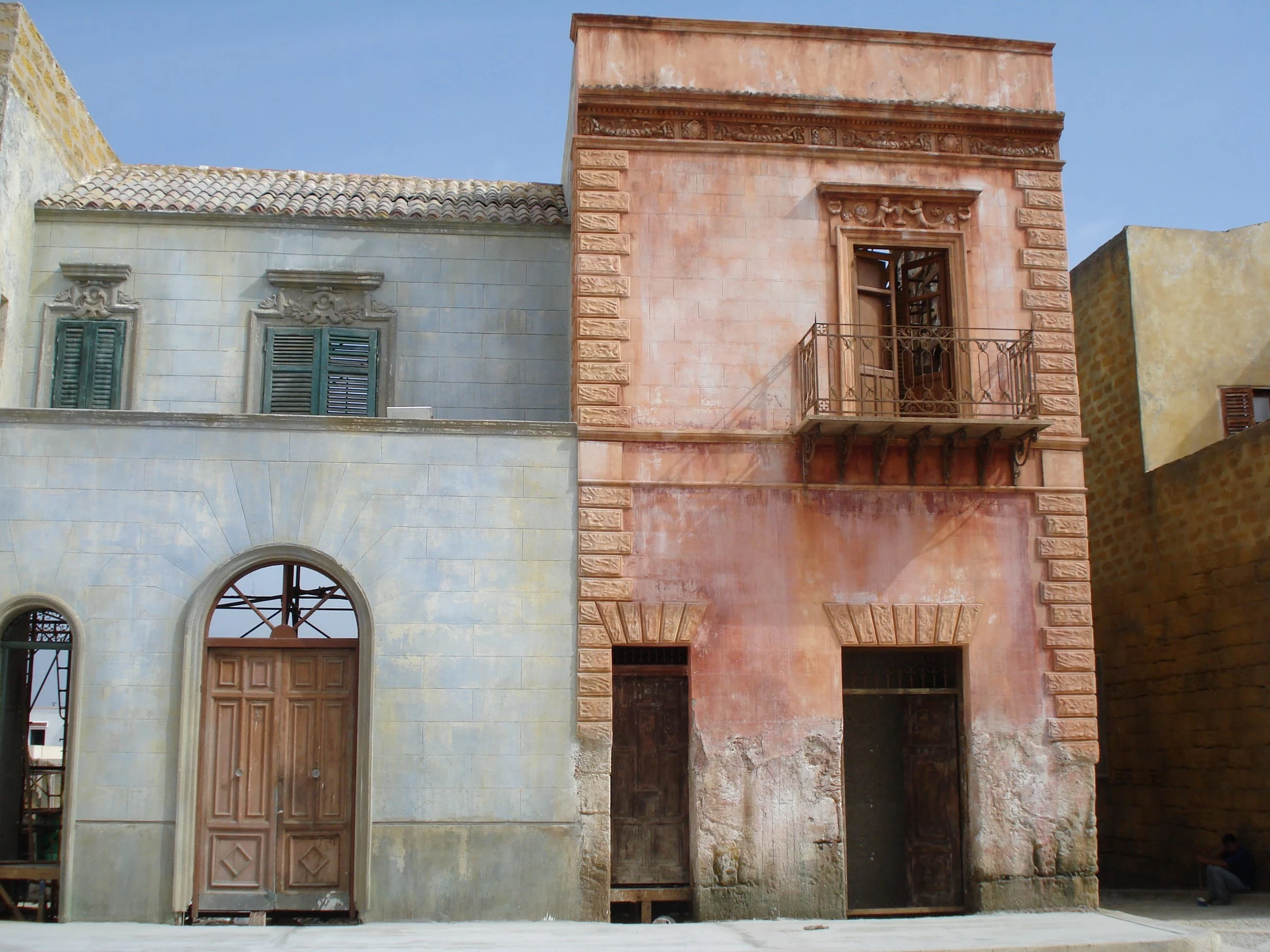
Six hectares of set, built on the grounds of Tarak Ben Ammar's Carthago Studios. Three times the surface area of the Gangs of New York set built at Cinecittà seven years earlier by Dante Ferretti for Scorsese. One hundred and twenty-two additional exterior locations in Sicily, in Tunisia, on Pantelleria. Three hundred thousand metres of film stock shot.
Three eras, same walls
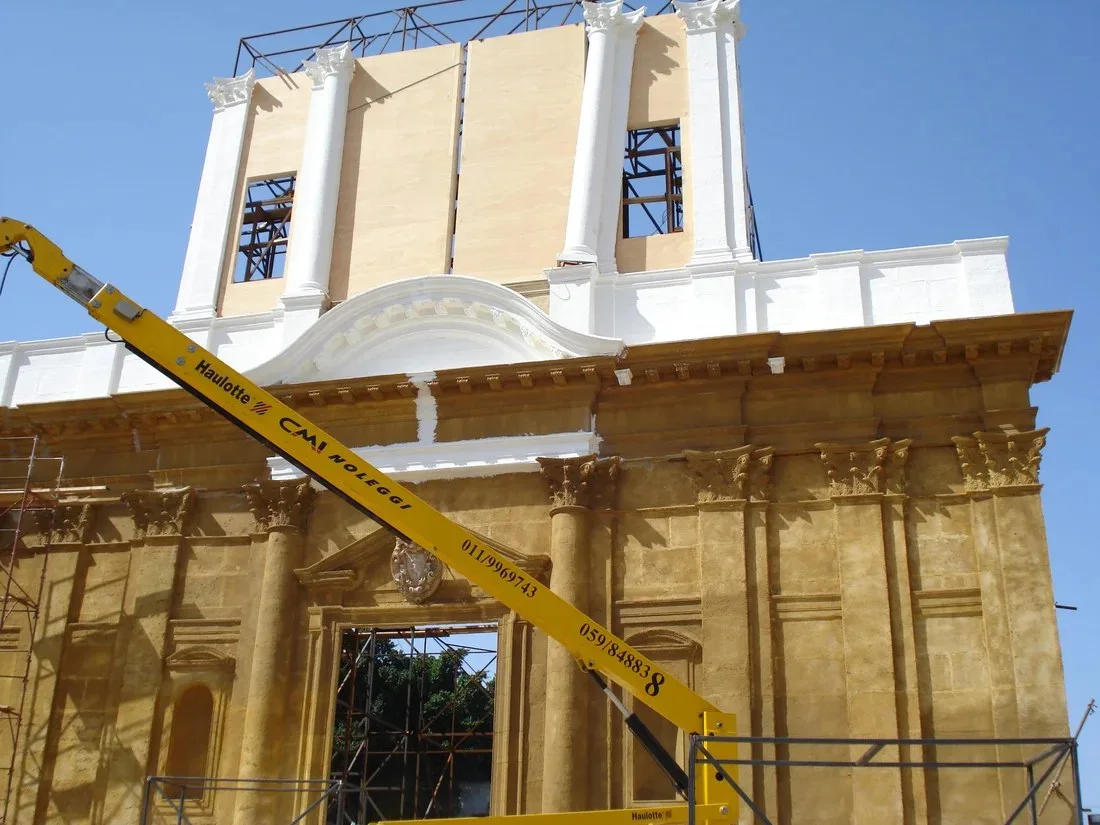
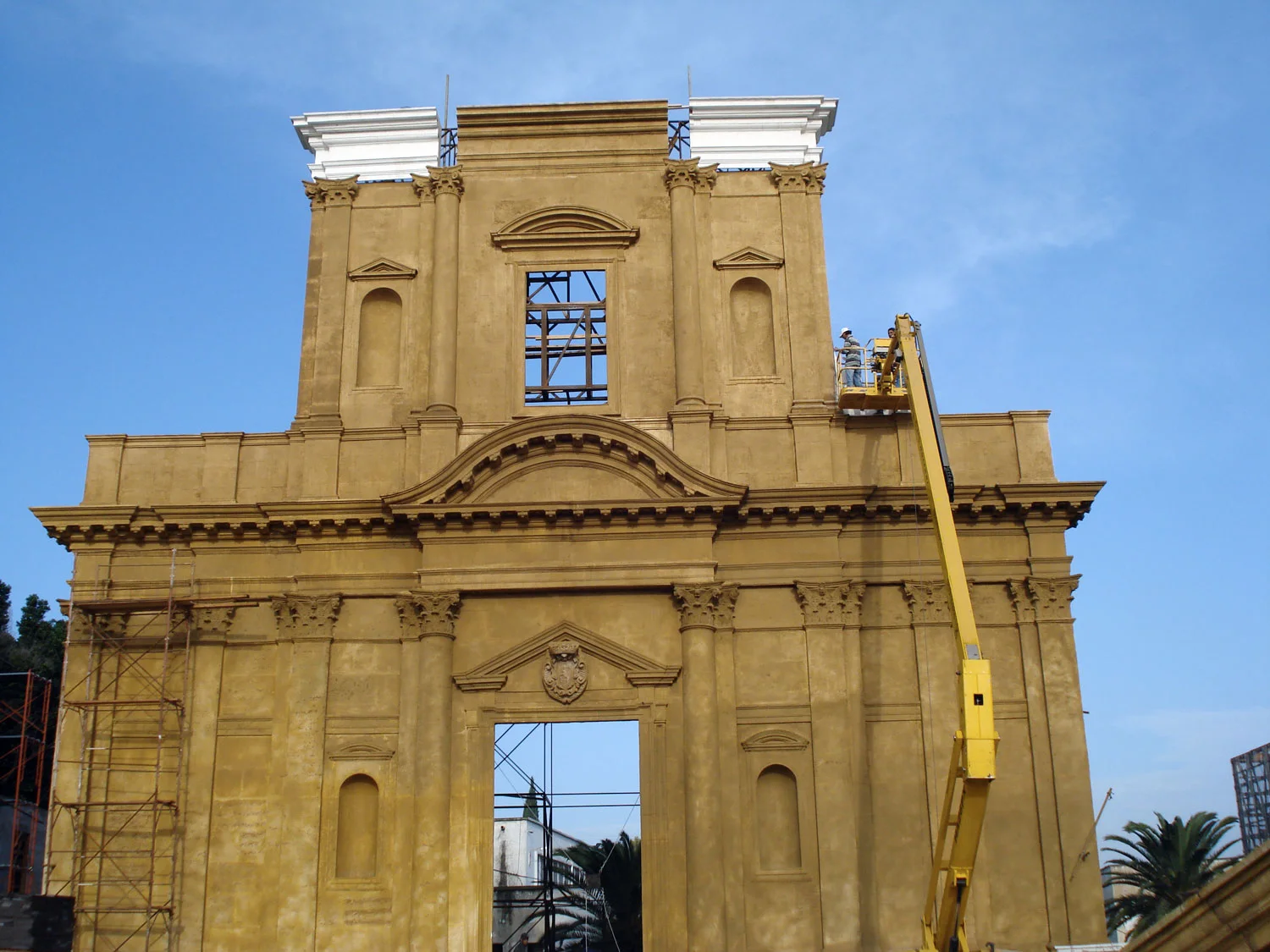
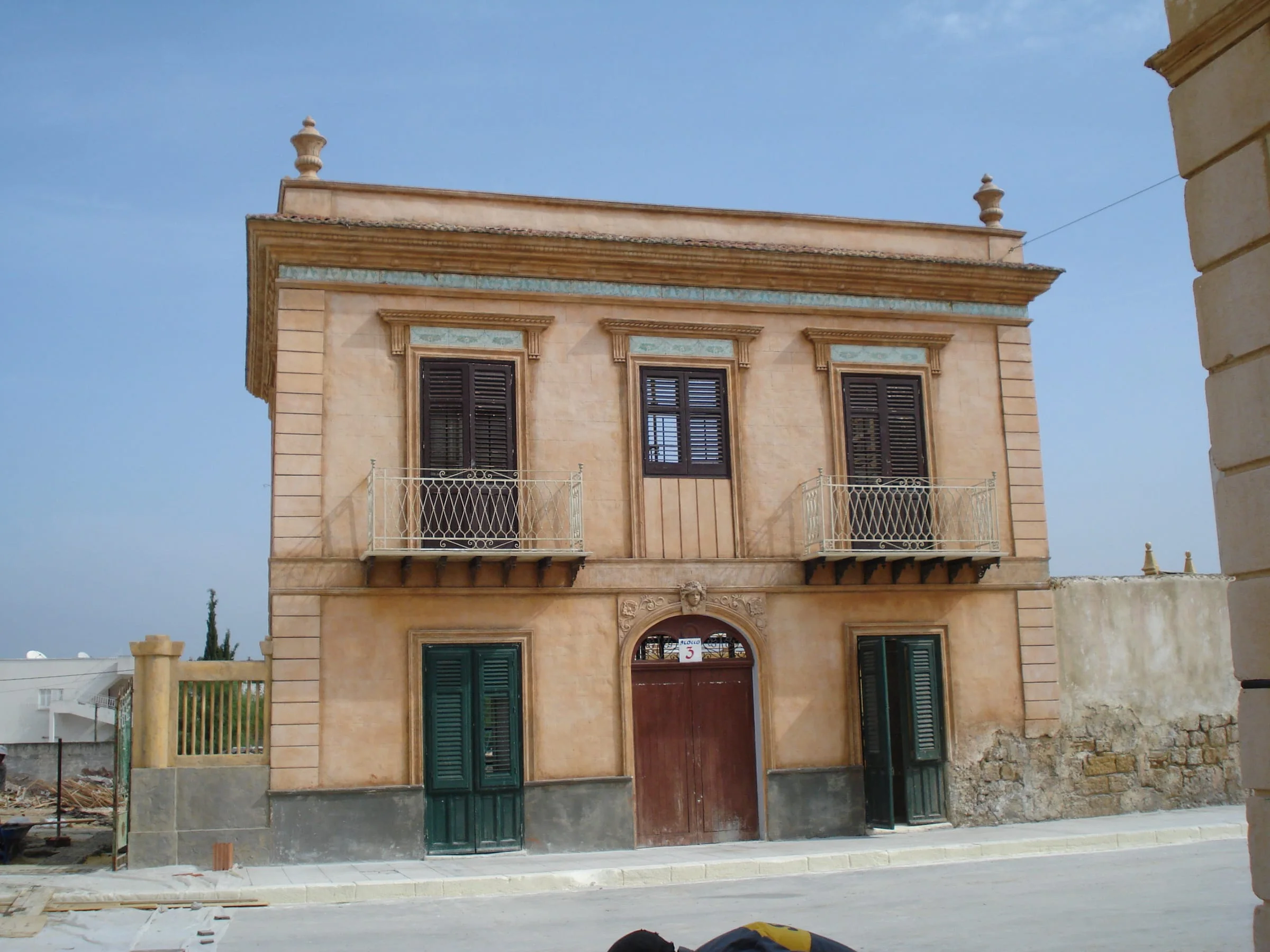
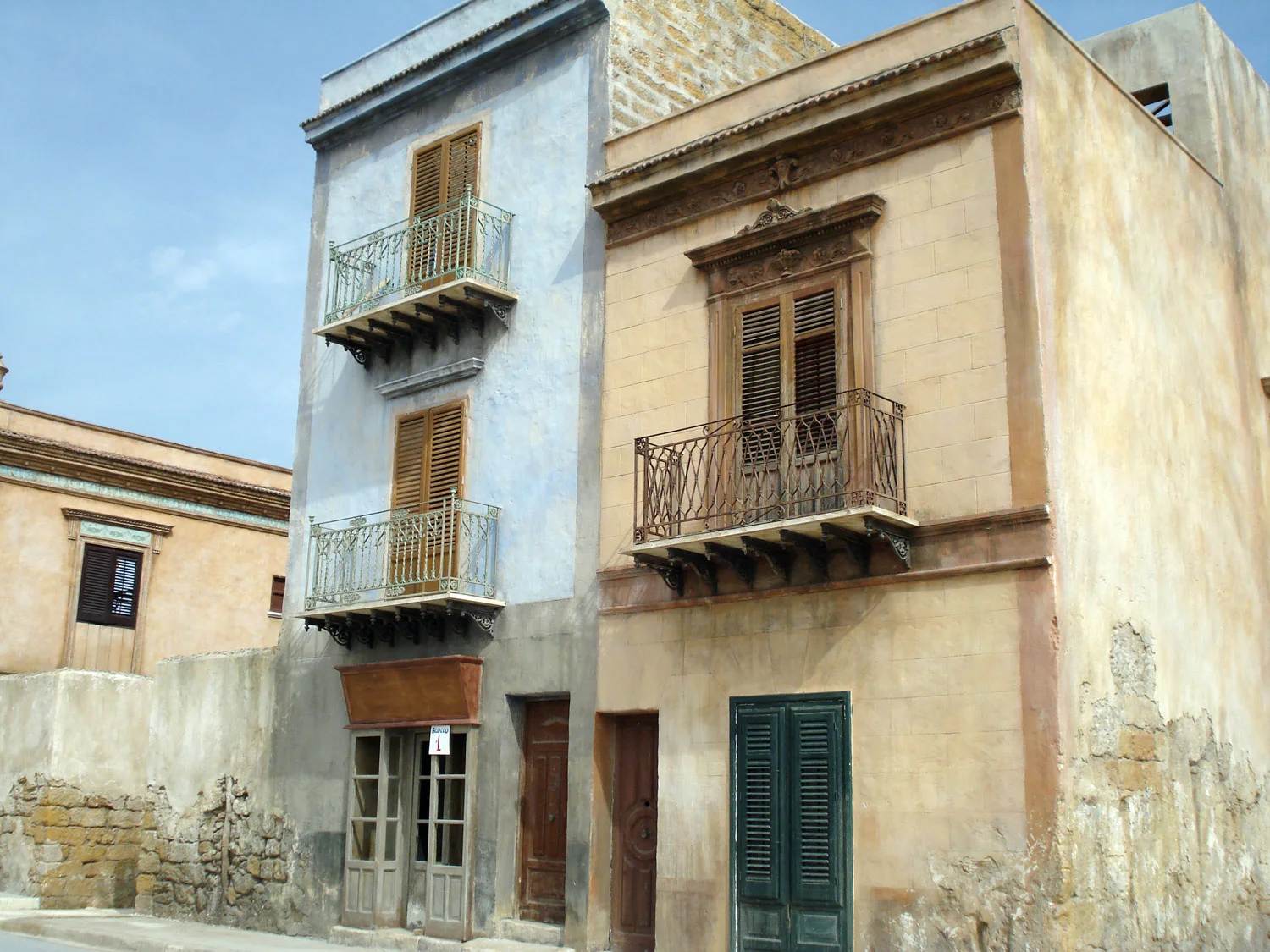
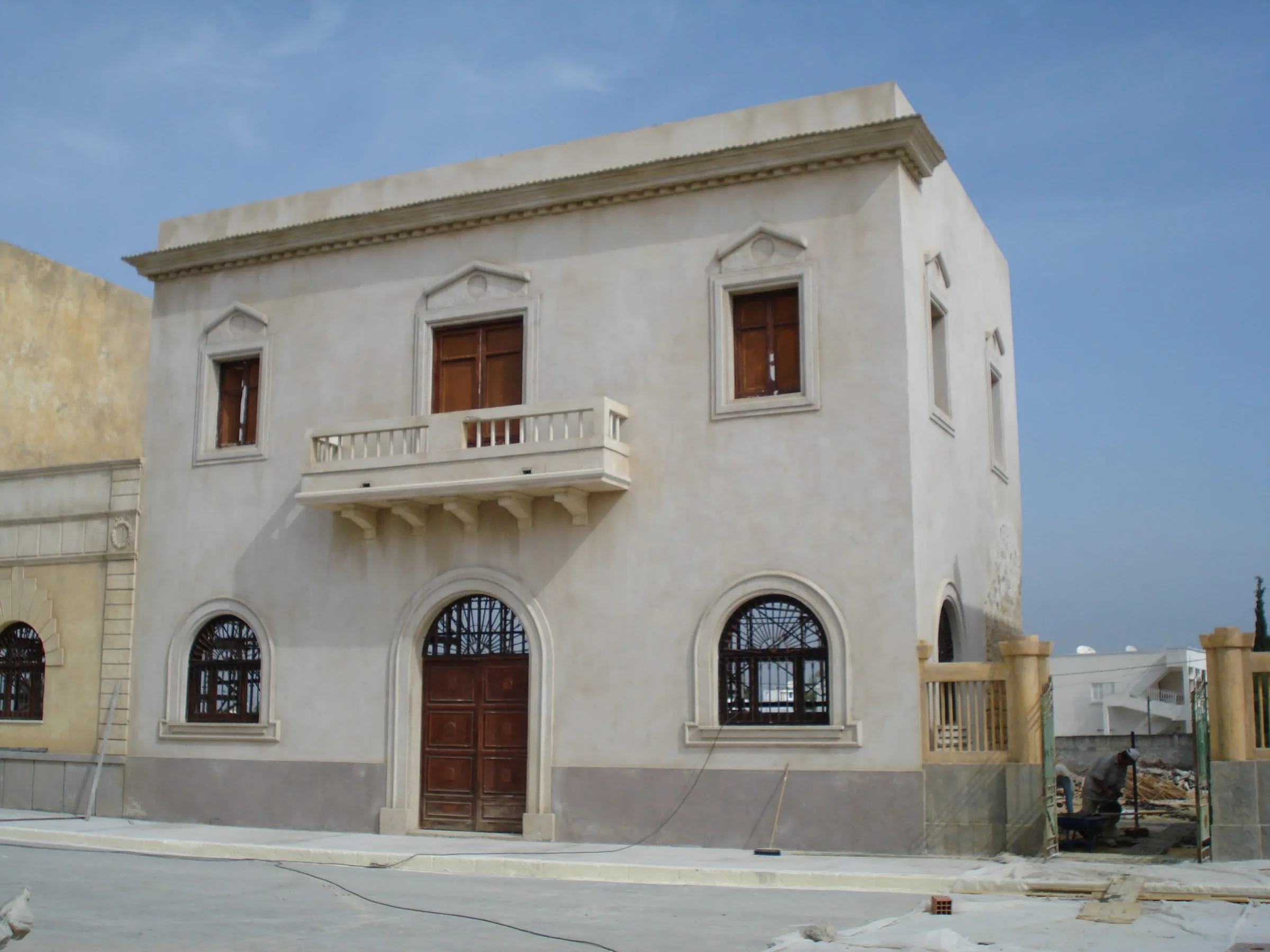
Bagheria must appear as it was in the Thirties, then the Fifties, then the Seventies. The same facades, the same balconies, the same windows — but different signs, different shopfronts, different shutters, different cornices. Fibreglass makes it possible to build dozens of interchangeable elevations on the same urban grid, swapped out between one week of shooting and the next.
The yellow of Palermo
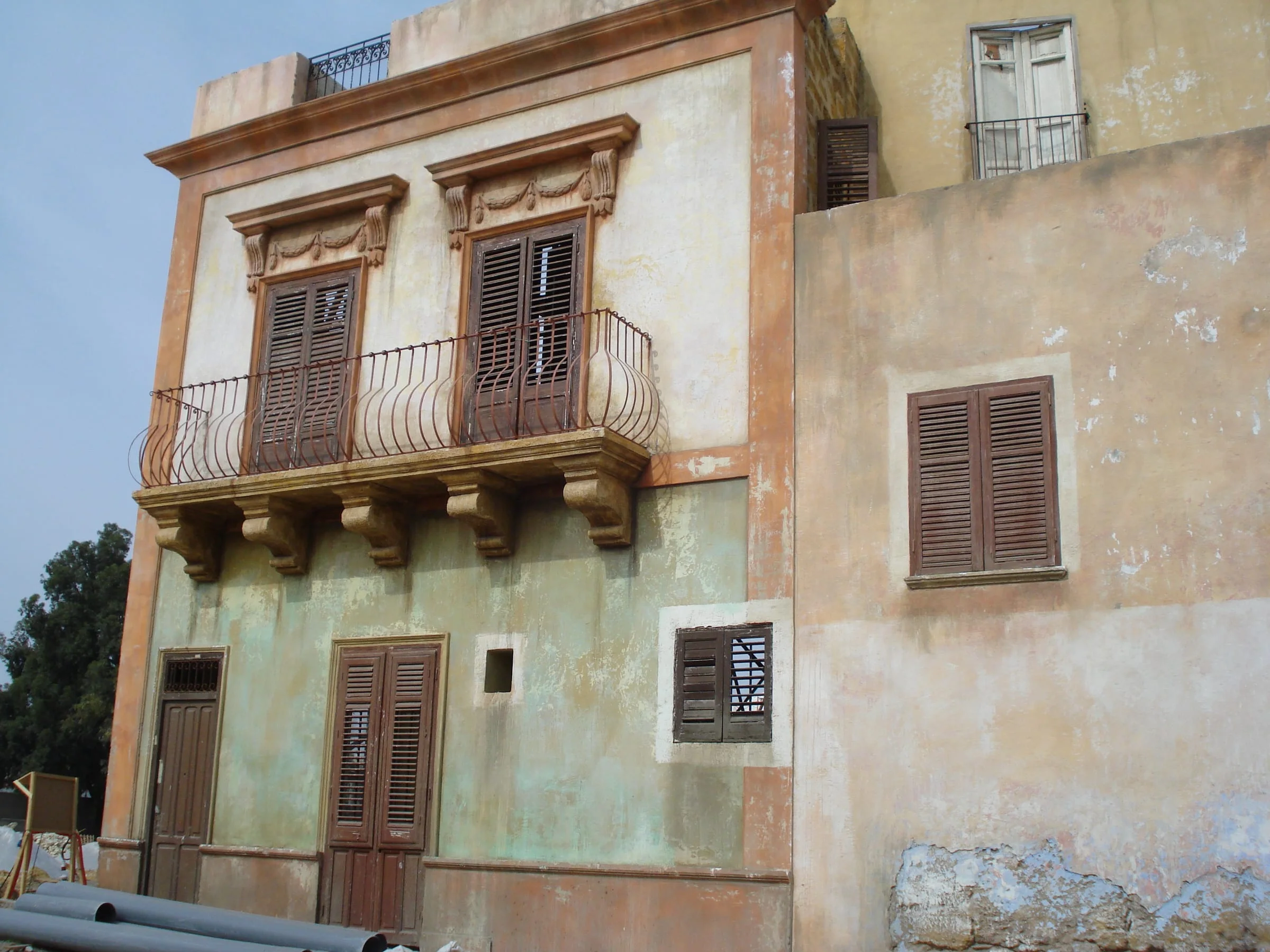
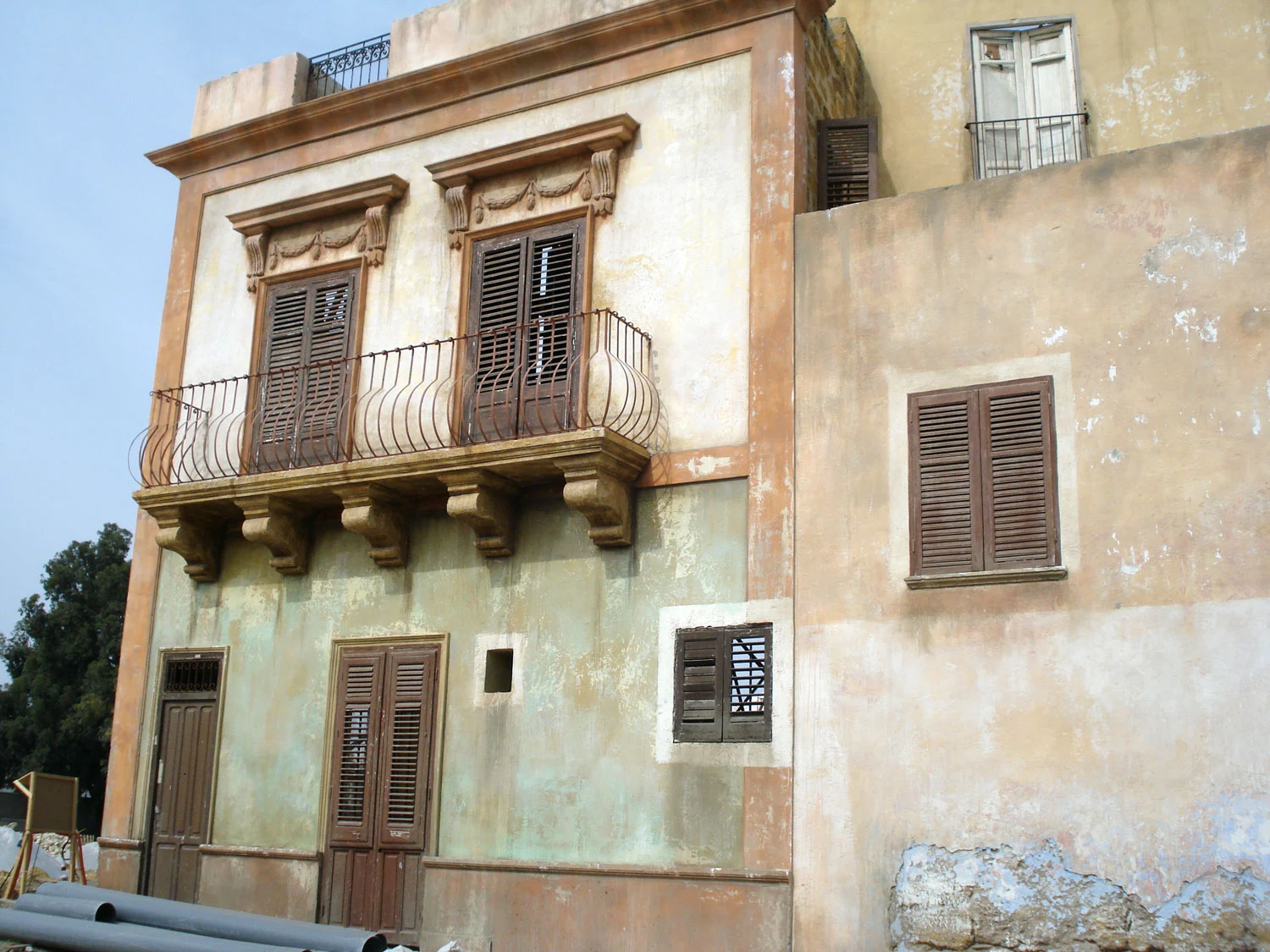
The palette is the Sicilian signature: mustard yellow, ochre, salmon pink, burnt sienna. The light of Enrico Lucidi — director of photography — turns it to gold when the Tunisian sun strikes the elevations. The painted finishes of our workshop are layered with glazing, sponging, ragging, one coat at a time, over every square metre of the six hectares.
Mine will not be a nostalgia trip, even though it is my
most personal film.
Tech sheet
Three times Gangs of New York
Six hectares of set, built on the grounds of Tarak Ben Ammar's Carthago Studios in Ben Arous, on the southern outskirts of Tunis. To give a sense of scale: it is about three times the surface of the ancient Rome set built at Cinecittà in 2001 by Dante Ferretti for Martin Scorsese's Gangs of New York. The derelict factory was completely converted into a film studio.
Three David di Donatello wins, fourteen nominations
Baarìa received fourteen David di Donatello nominations in 2010, of which three were won — Best Composer (Ennio Morricone, his eighth David), David Giovani for Tornatore, Best Supporting Actor ensemble. In the same year: Nastro d'Argento Film of the Year, Golden Globe nomination for Best Foreign Language Film. The film was also Italy's entry for the 2010 Academy Awards.
Thirty-five thousand extras
The mass scenes of Baarìa involved thirty-five thousand extras in costume — the official production figure, never substantially matched since by Italian cinema. Two hundred permanent crew, over one hundred actors, twenty-five weeks of principal photography. The film opened the 66th Venice Film Festival on 2 September 2009 — the first Italian opening film in twenty years.
Fifteen million on scenography
On an overall budget of around thirty million euros, scenography alone cost fifteen million — exactly half the film. Production designer: Maurizio Sabatini. Fibreglass made it possible to build dozens of interchangeable modular elevations: the same building can appear as the Thirties, then the Fifties, then the Seventies, swapping only the facades. A key material for the industrial scale of the work.
All production data
- Type
- Feature film
- Directed and written by
- Giuseppe Tornatore
- Production designer
- Maurizio Sabatini
- Director of photography
- Enrico Lucidi
- Music
- Ennio Morricone (David di Donatello 2010, his eighth)
- Main cast
- Francesco Scianna · Margareth Madè · Lina Sastri · Luigi Lo Cascio · Raoul Bova
- Production
- Medusa Film · Quinta Communications (Tarak Ben Ammar) · Mediaset Premium
- Shooting
- 9 months pre-production · 25 weeks shooting · 300,000 metres of film stock
- Premiere
- 2 September 2009, 66th Venice Film Festival (opening film)
- Release
- 25 September 2009 (Italy)
- Main location
- Carthago Studios, Ben Arous — Tunis · 6 hectares · converted former factory
- Additional locations
- Bagheria · Palermo · Pantelleria · Cefalù · Castelbuono · 122 locations in total
- Our role
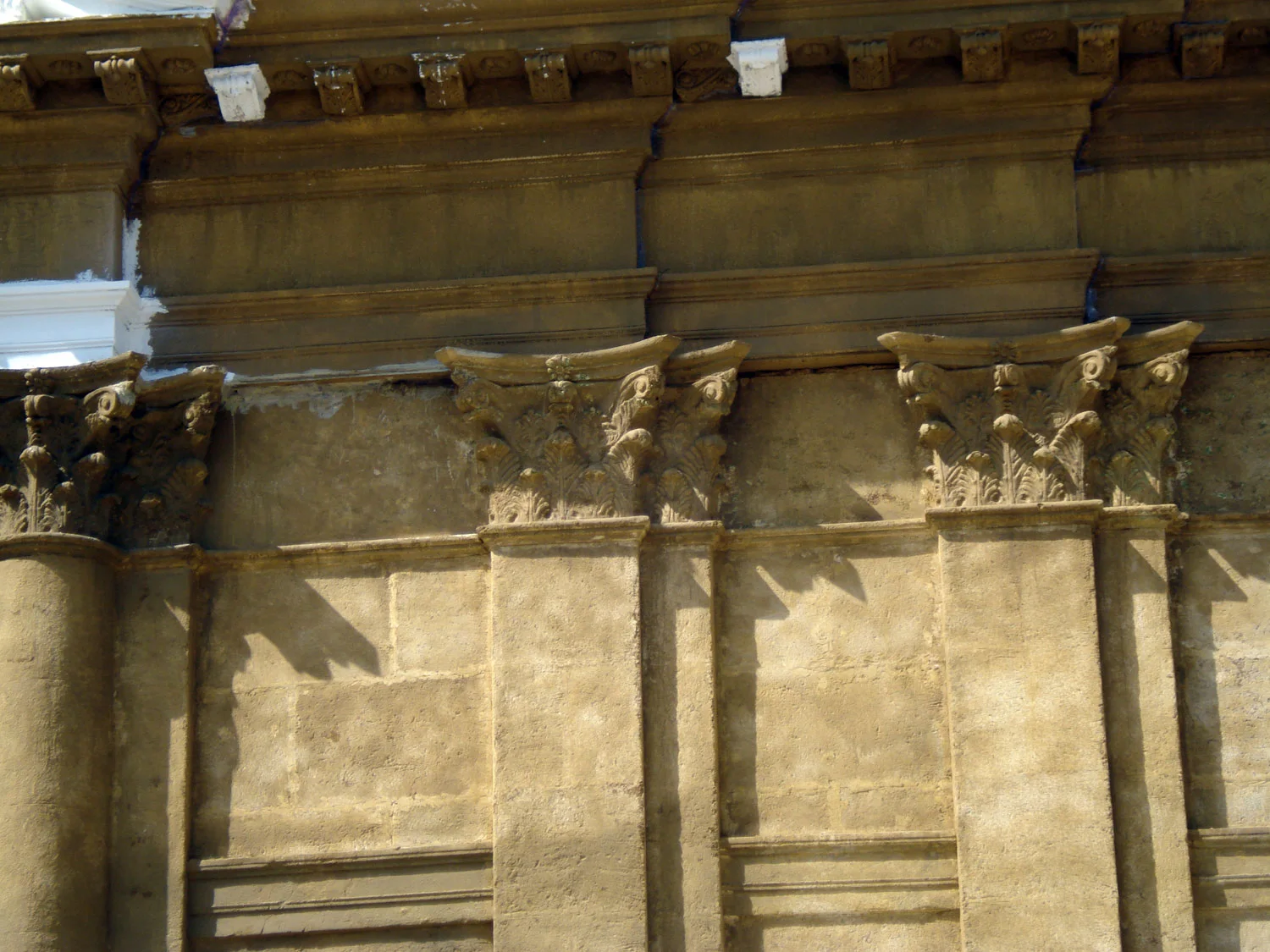
- Scenographic elements in plaster and fibreglass: interchangeable modular facades for the three eras, cornices, friezes, Sicilian Baroque architectural details, painted patina. Set work carried out under the direction of Maurizio Sabatini.
- Awards
- 14 David nominations 2010 (3 won: Morricone, David Giovani, ensemble cast) · Nastro d'Argento Film of the Year · Golden Globe nomination for Best Foreign Language Film
- Second life
- Set dismantled after filming · some plaster and fibreglass sculptures returned to our workshops as an archive of Sicilian Baroque scenographic school
Second life
The Sicily rebuilt,
then dismantled.
The set of Baarìa was one of the largest ever built for an Italian film — six hectares of Sicilian town rebuilt at Ben Arous, in Tunisia, at Tarak Ben Ammar's Carthago Studios. Three times the surface of the ancient Rome set for Gangs of New York at Cinecittà. Fifteen million euros spent on scenography alone, 35,000 extras in costume across the 25 weeks of shooting.
After the 2008-2009 shoot the set was dismantled. The most carefully crafted plaster and fibreglass sculptures — cornices, friezes, Sicilian Baroque architectural details — returned to our workshops as a scenographic-school archive. The grammar of Sicilian Baroque entered our repertoire permanently for the period-film commissions that followed.
Baarìa remains in our portfolio as one of the most ambitious Italian cinematic blockbusters of all time. Fourteen David di Donatello nominations in 2010 (three won, including Morricone for the score), Golden Globe nomination for Best Foreign Language Film, Nastro d'Argento Film of the Year. Tornatore's Sicily, built by our hands.