
Cinecittà World · monumental entrance · 2013 — 2014
Cabiria Gate
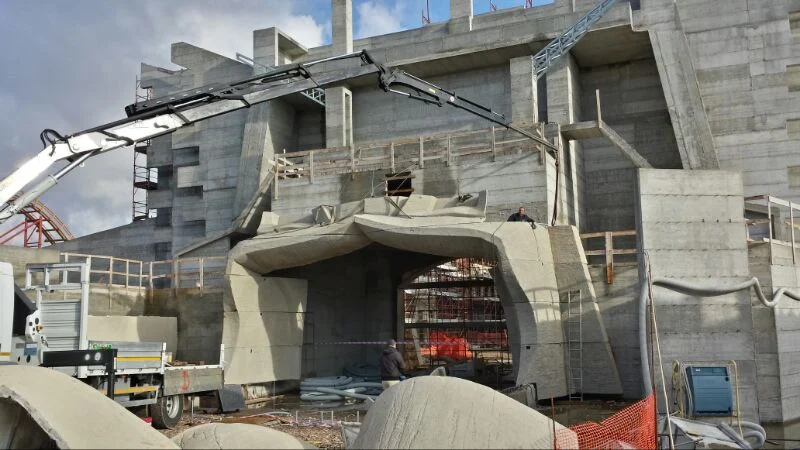
The Temple of Moloch from Pastrone's film (1914), rebuilt to the scale of a park entrance.
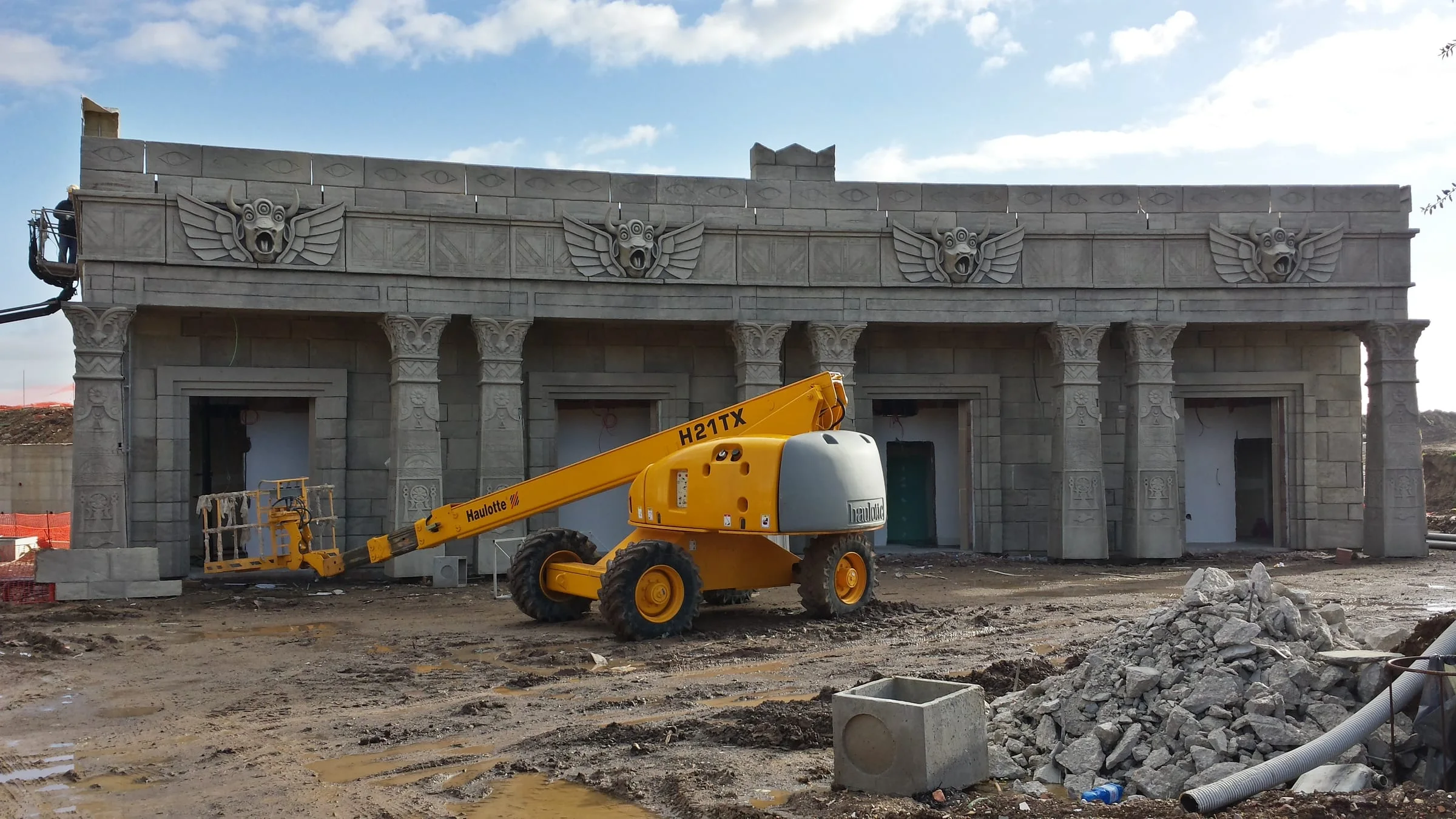
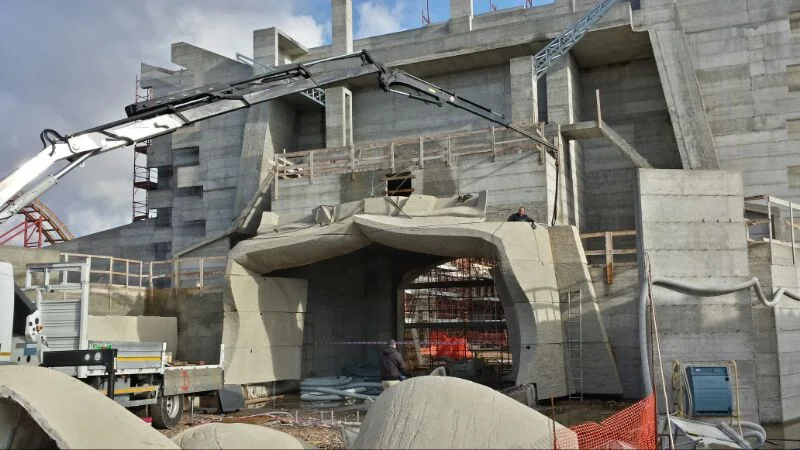
Behind the scenes
A set in black and white,
translated into faux stone.
Ferretti's challenge was this: Cabiria is a silent black-and-white film. Everything we know about the Temple of Moloch comes from graphic, high-contrast stills, without colour. Translating a 1914 aesthetic into a 2014 architecture, permanent and visitable, meant deciding what colour that building had in the audience's dreams. The chosen one was the ash-grey of ancient stone.
The Temple of the god Moloch
from which Maciste saves little Cabiria,
rebuilt at the park's entrance.
Tech sheet
All production data
- Type
- Monumental scenographic architecture · theme-park entrance
- Location
- Cinecittà World · Castel Romano, Rome
- Public opening
- 24 July 2014 · with the park's opening
- Artistic direction
- Dante Ferretti, three-time Academy Award winner
- Inspiration
- The Temple of the god Moloch from the film Cabiria by Giovanni Pastrone (1914), titles by Gabriele D'Annunzio
- Documented site
- 15 January 2014 · 6 months before the opening
- Architectural elements
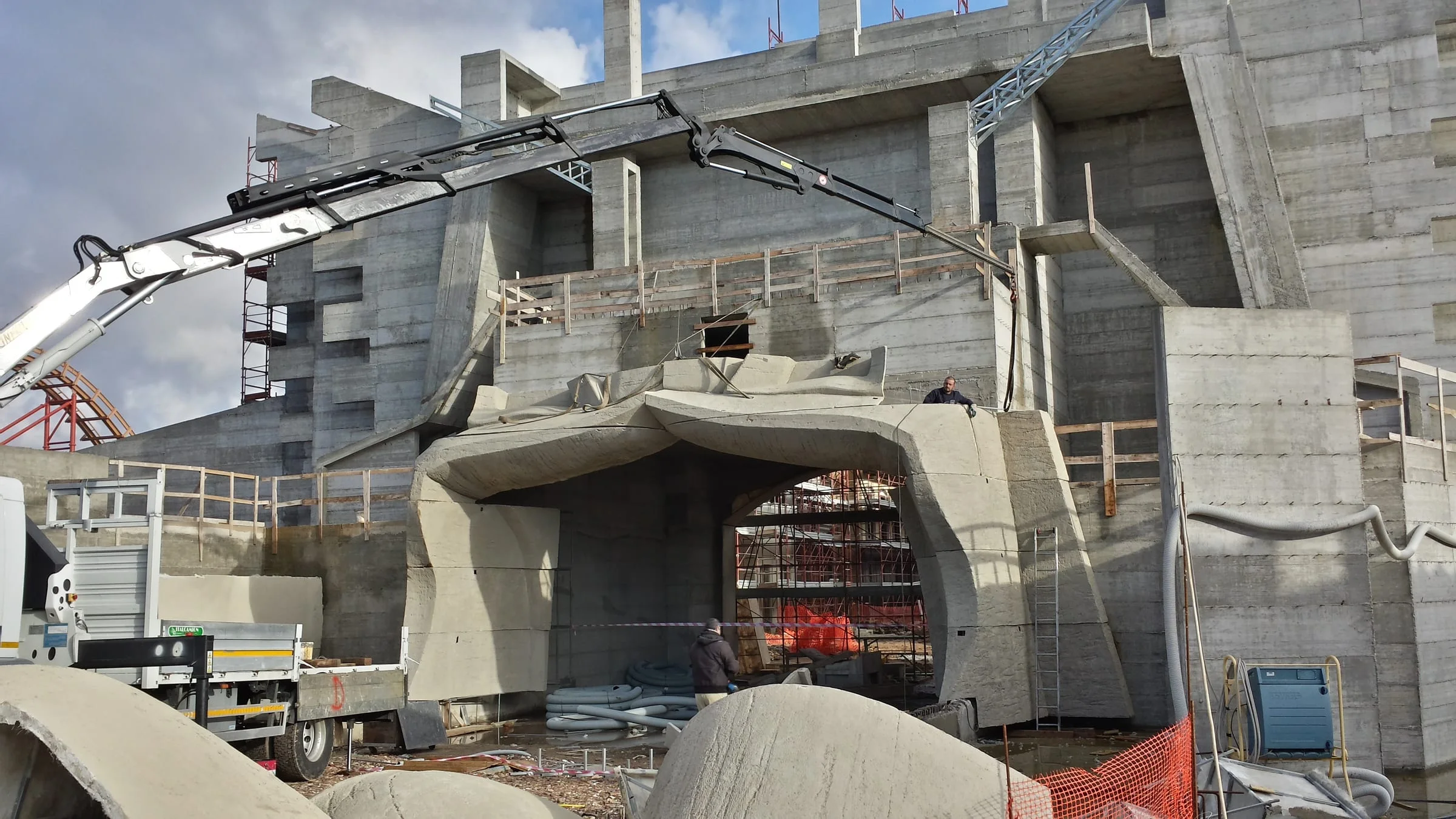
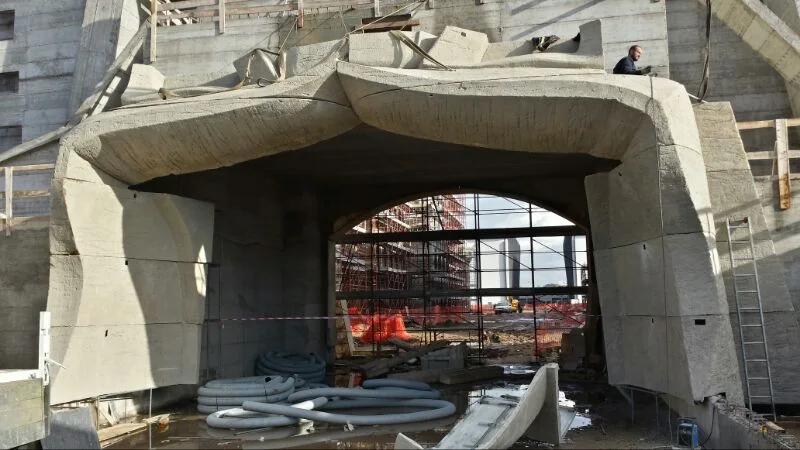
- Large central vesica piscis arch · internal Assyrian façade with four winged-lion masks · four-arch portico · hieroglyphs on the pilasters · cyclopean ribbed concrete structure
- Materials
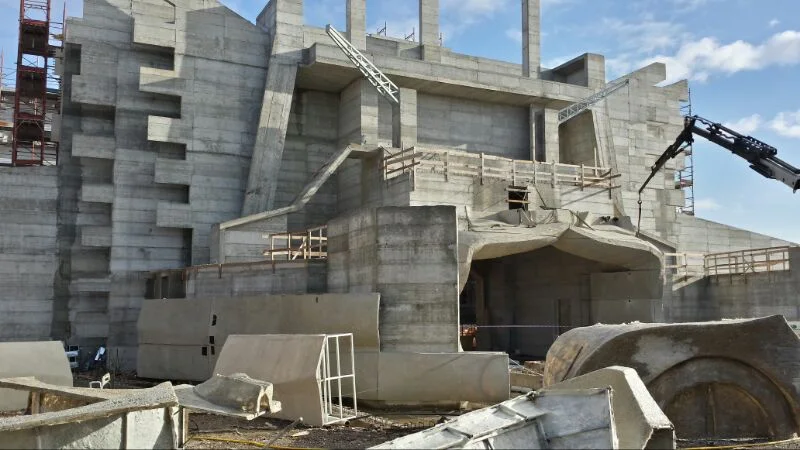
- Reinforced-concrete load-bearing structure · finishes in sculpted faux stone · ash-grey patina
- Subsequent passage
- After the Gate, a large red curtain leads to Cinecittà Street (the 2002 Gangs of New York set repurposed)
- Our role
- Scenographic work for the park's entrance Gate: Assyrian façade with bas-reliefs, friezes with four winged lions, large vesica piscis arch, sculpting of the faux-stone finishes patinated ash-grey. The photos from our archive in January 2014 document the gate's construction site, six months before the park's opening to the public.
- Cabiria 1914 — innovations
- First invention of the cinematic dolly (patented by Pastrone, "Cabiria dolly") · direct influence on Griffith's Intolerance (1916) · 2006 restoration presented at Cannes with introduction by Martin Scorsese
- Cluster
- Part of the Cinecittà World cluster
- Second life
- Gate on stage at the park entrance since 24 July 2014 · seen by every visitor entering · philological citation of Pastrone 1914
Second life
From 1914 to 2014,
a hundred years of Cabiria.
The Cinecittà World Gate pays homage to Cabiria by Giovanni Pastrone, 1914 — the film with which the Italian kolossal is born and for which Pastrone patents the cinematic dolly ("Cabiria dolly"), directly influencing Griffith's Intolerance two years later. In 2006 the film is restored and presented at Cannes with an introduction by Martin Scorsese — the same director of the Gangs of New York set at Cinecittà.
In 2014 Ferretti chooses Cabiria as the narrative incipit of Cinecittà World: the visitor entering the park passes under the large vesica piscis arch and through the Assyrian façade with winged lions — exactly the iconography of the 1914 film. A hundred years of Italian cinema summed up in an entrance gate.