
TV series · Lux Vide · Sony · Rai · 2020
Leonardo.
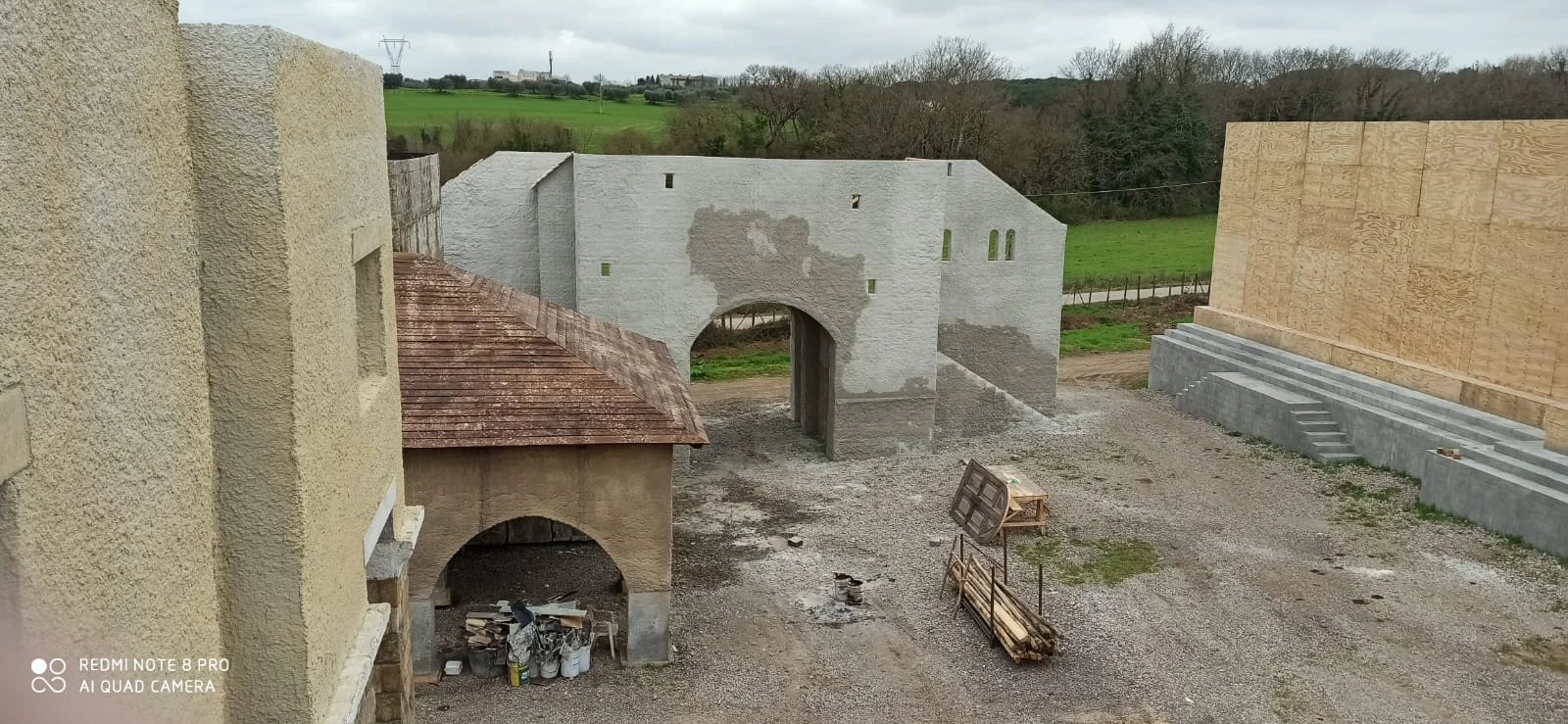
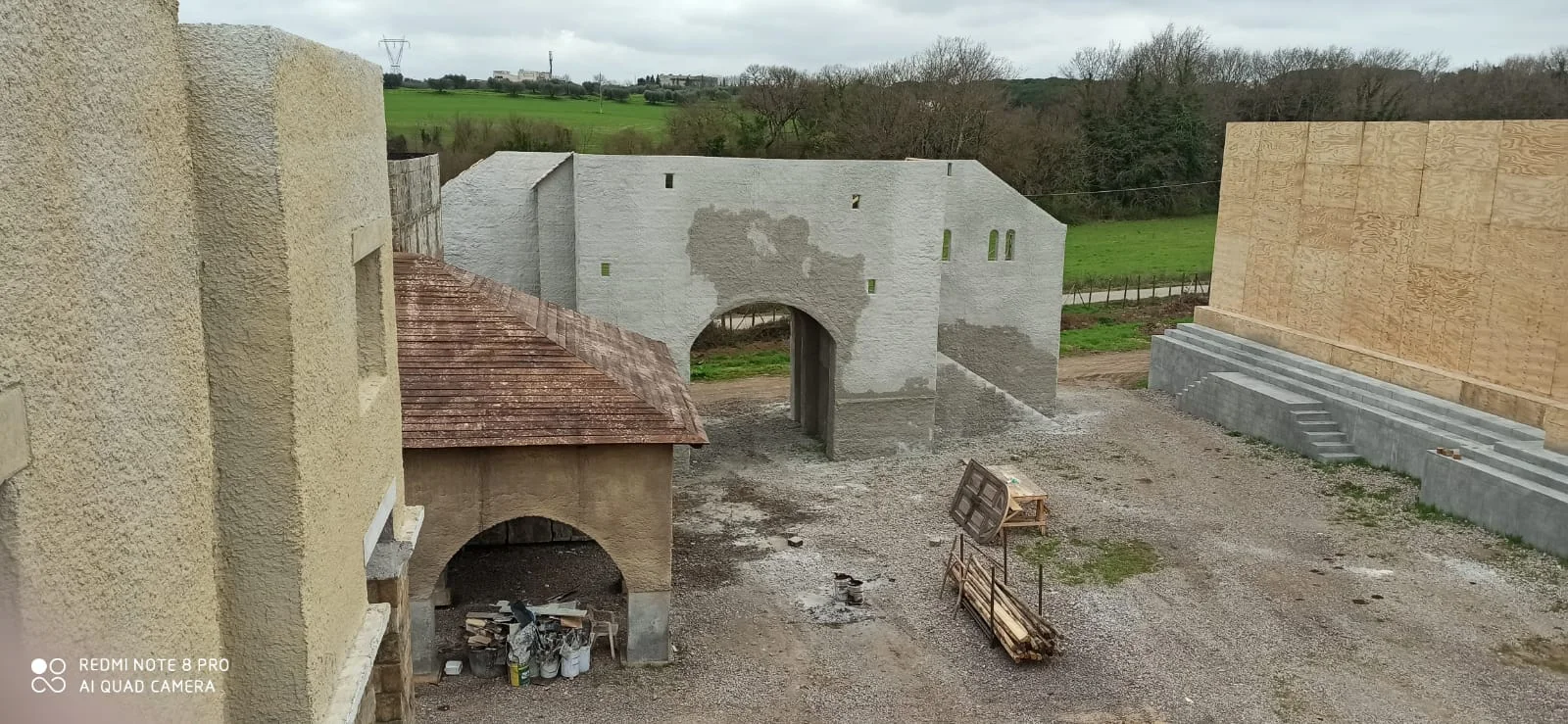
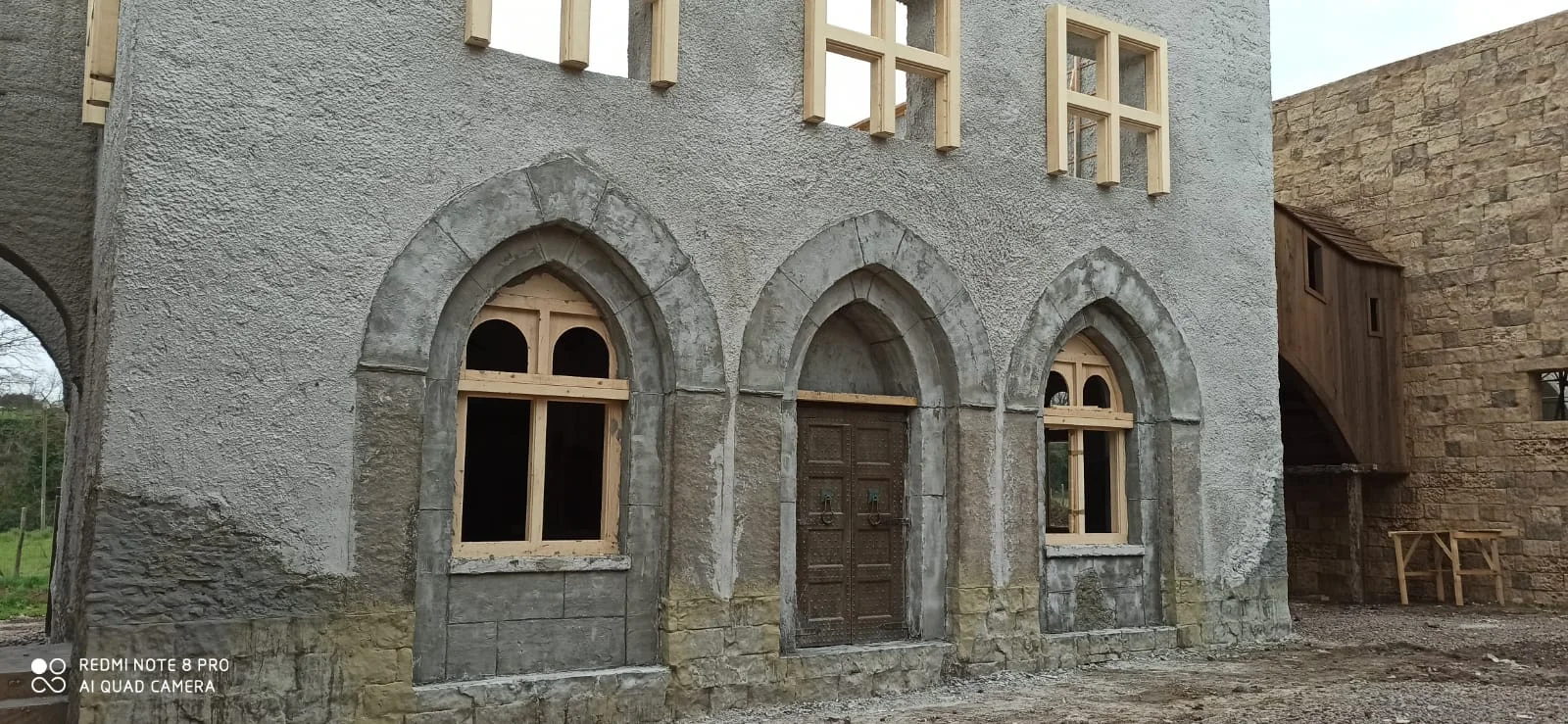
For the international series on Leonardo da Vinci starring Aidan Turner, we rebuilt an entire Renaissance village — Lombard courtyards, Gothic arches, palazzi with mullioned windows.
Set details
The Quattrocento
at full scale.
Five architectural typologies, a single open-air build. March 2020 caught us at the end of the finishing work.
Behind the scenes
The Quattrocento in the open air,
March 2020.
The build wrapped on 13 March 2020 — the last day before the national lockdown. It is the date we remember as a watershed: the finishing of the Leonardo set was nearly complete, and from that day the world changed.
Modulated sand-ochre plaster
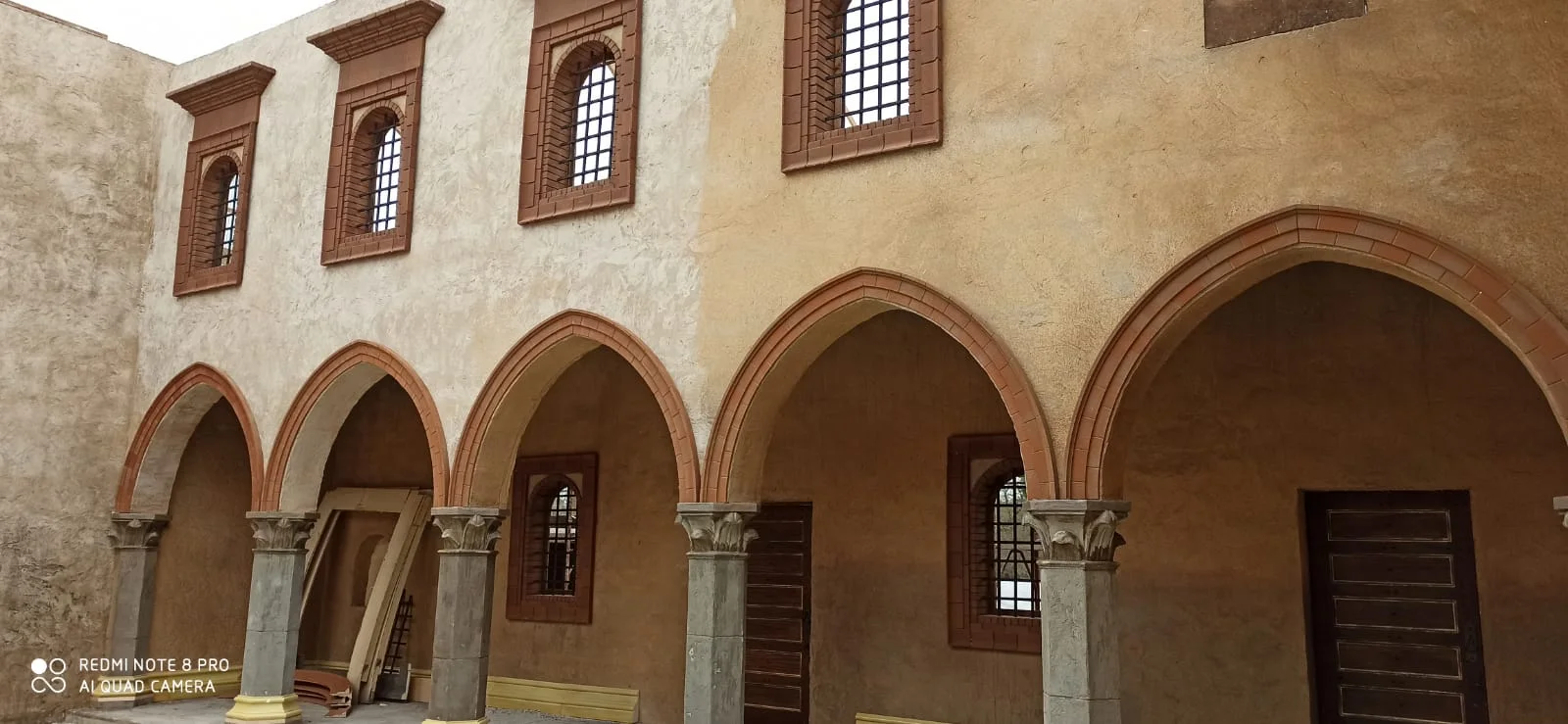
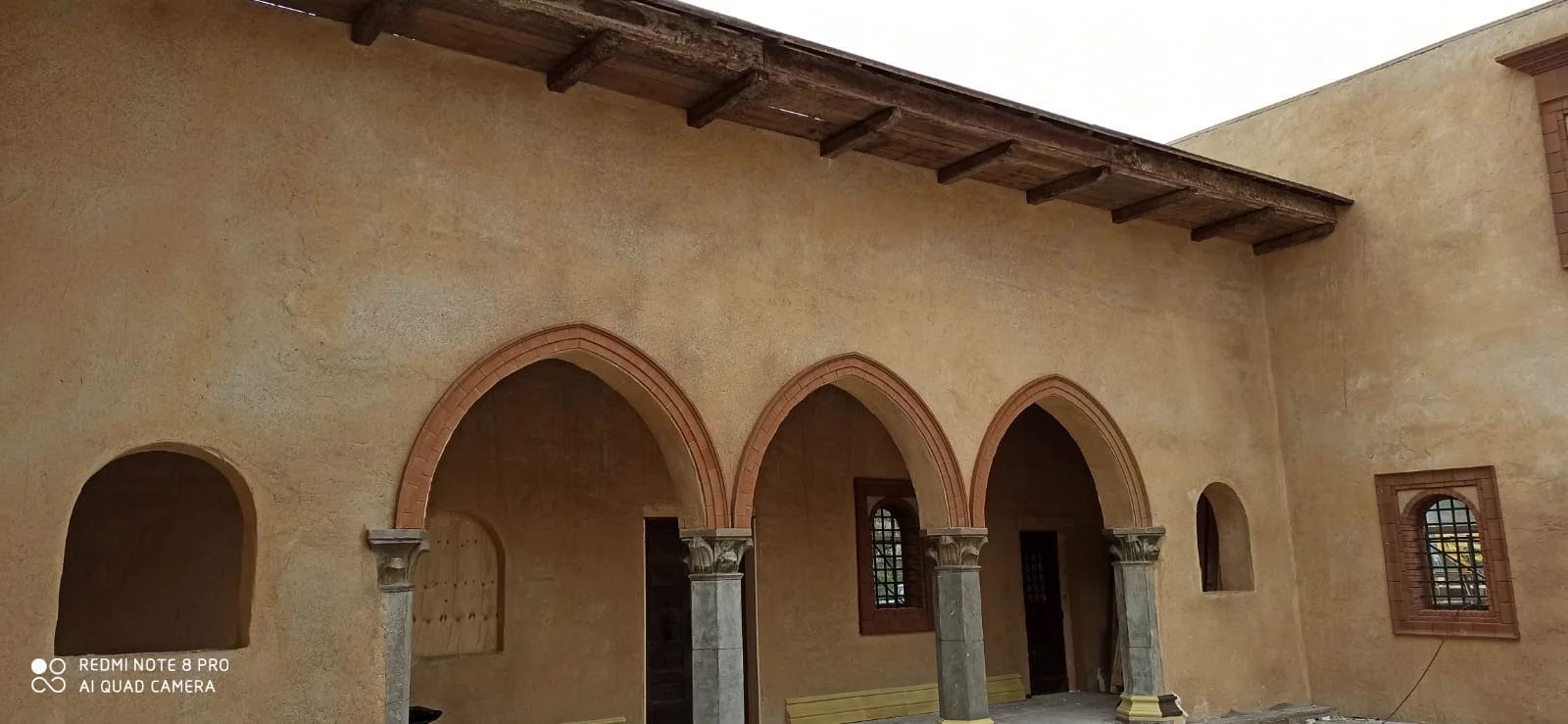
The walls of the Lombard palazzo are in modulated plaster applied directly to polystyrene and fibreglass panels. Colour modulation is obtained through glazes of natural earths (yellow ochre, red ochre, Siena earth), as a Renaissance fresco would have been done. No flat industrial colour: the wall must look like it has lived for five centuries.
The acanthus-leaf capitals
The capitals of the courtyard columns are sculpted in the round: acanthus leaves stylised in the manner of the Lombard Quattrocento, not in the Roman-classical taste (more rigid), not in the taste of the late Cinquecento (more soft). Bramante and Filarete are the references — Leonardo knew them, and the director wanted a capital that the eye of the period would find familiar.
Real wood on the balcony
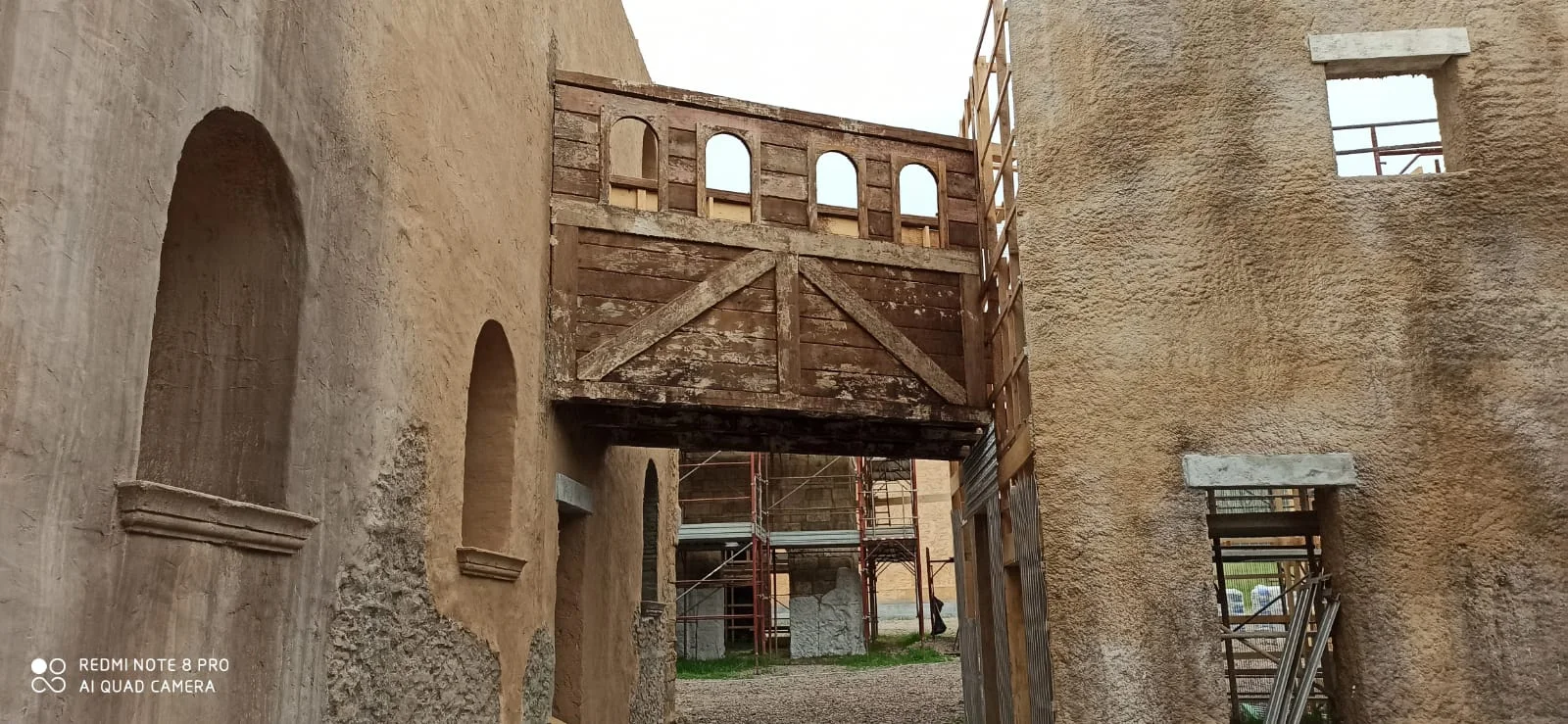
The roof beams, the solid wood doors, the wooden balcony suspended between the two wings of the palazzo are in real wood, not scenographic. It is a choice of craft: structural set wood lasts the duration of the production, and the camera in close-up reads it without recourse to special effects. The physical weight of the material supports the direction.
13 Mar
2020 · last day of construction before lockdown
8 ep.
the series length · aired on Rai 1 spring 2021
5
architectural typologies including palazzo, courtyard, corridor, balcony, village
Tech sheet
All production data
- Type
- Exterior scenographic sets for television series · full-scale Renaissance architecture
- Series
- Leonardo · 8 episodes · broadcast spring 2021
- Co-production
- Lux Vide · Sony Pictures Television · France Télévisions · Rai Fiction · Big Light Productions
- Lead
- Aidan Turner as Leonardo da Vinci
- Build period
- Construction until 13 March 2020 · shooting suspended by lockdown, resumed after summer 2020
- Elements built
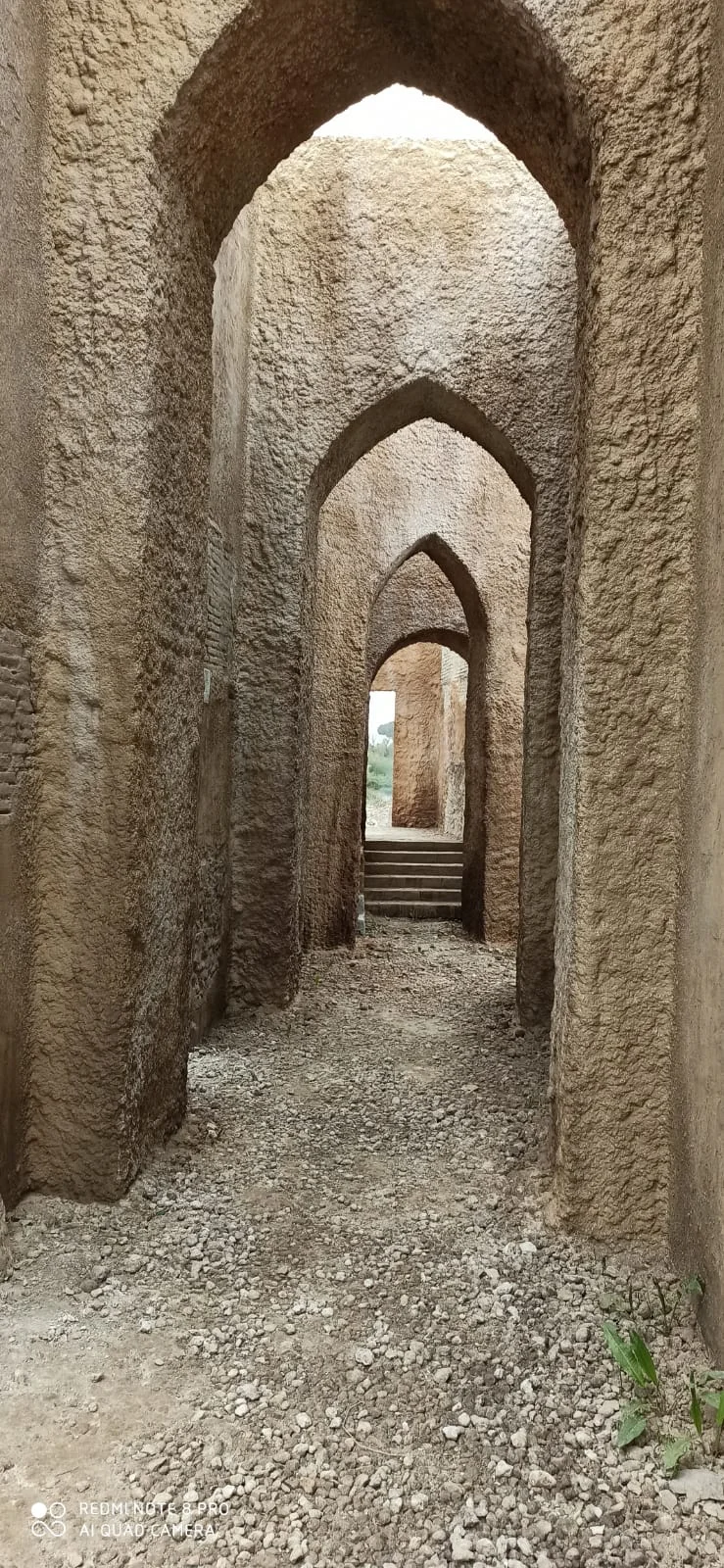
- Open-air Renaissance village · two-storey Gothic-Lombard palazzo with mullioned windows and pointed arches · inner courtyard with portico of three arches, columns with acanthus-leaf capitals · corridor-gallery of Gothic arches in eroded faux stone · wooden balcony suspended between two wings of the palazzo
- Techniques
- Hand-sculpted expanded polystyrene · modulated plaster for the ochre-sand finish · faux stone for rustication and capitals · real wood for roof beams, solid doors, balustrades, balconies
- Our role
- Full delivery of the Renaissance village — sculpting, plastering, faux stone, on-site assembly of the open-air set
- Second life
- Set dismantled after shooting · some elements (columns, capitals, mullioned windows) kept in our workshops for Renaissance reuse
Second life
The series on air,
the set dismantled.
Leonardo aired on Rai 1 in the spring of 2021, with strong ratings and international distribution. Our sets are dismantled after shooting — it is the rule of cinema, even for television epics.
Some individual sculptures return to our workshops for future reuse: the columns with acanthus-leaf capitals, the terracotta mullioned windows, the blocks of patinated faux stone. They are elements that enter our Lombard Quattrocento repertoire and will be useful the next time a set demands that specific period.
Leonardo stays in our memory as the build that closed on 13 March 2020: the last finishes, the last brushstrokes on the plaster, and then the silence of the national lockdown for the months that followed.