
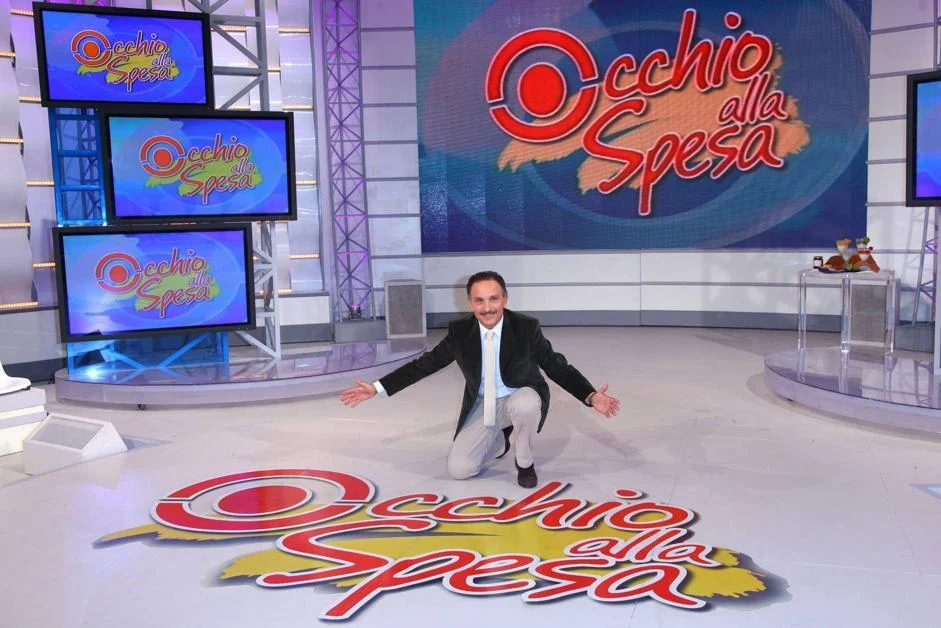
Food and wine magazine · Rai 1 · 2003 — 2013
Occhio alla spesa.
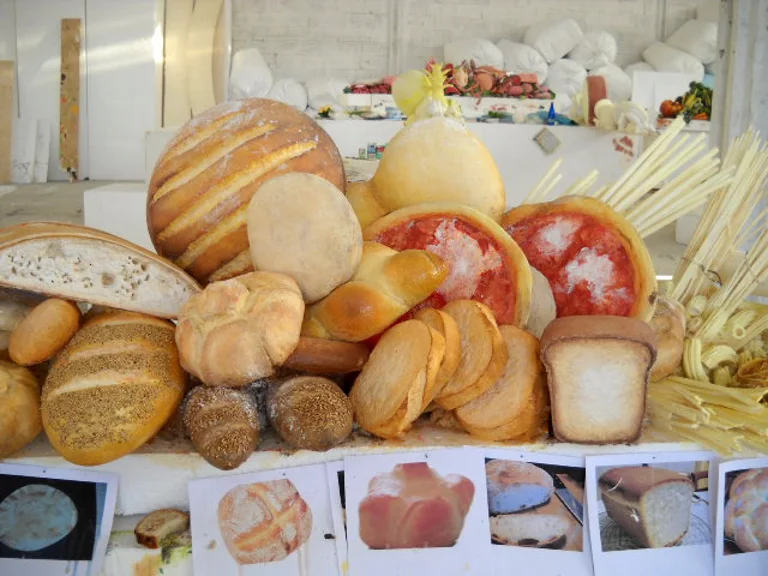
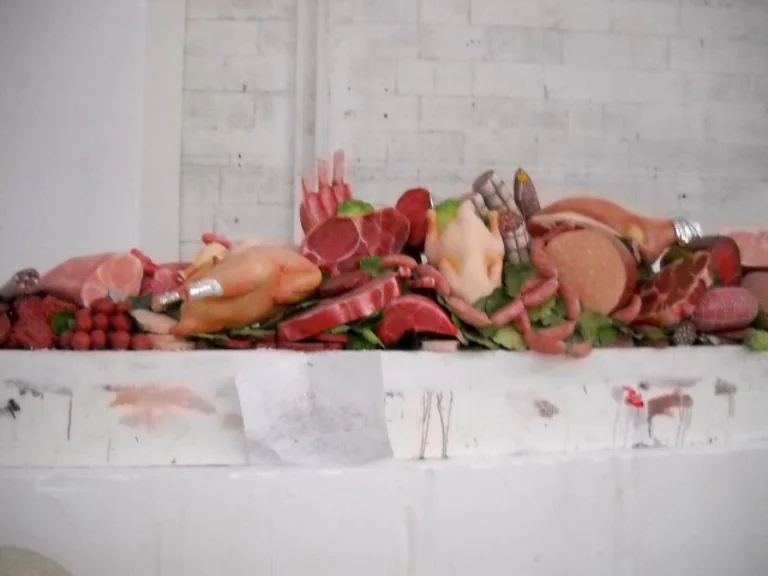
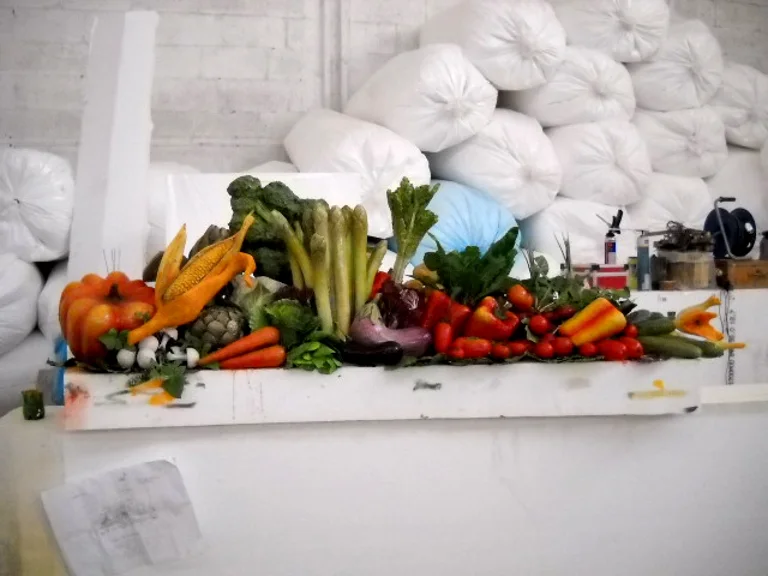
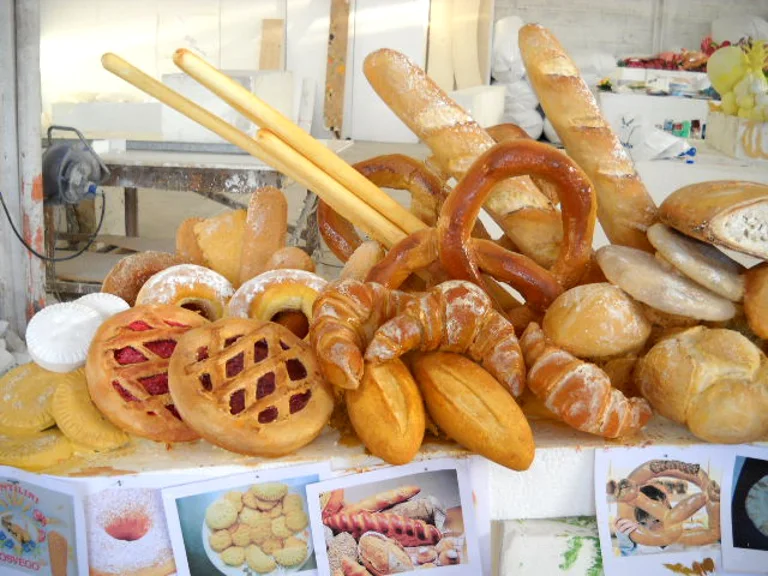
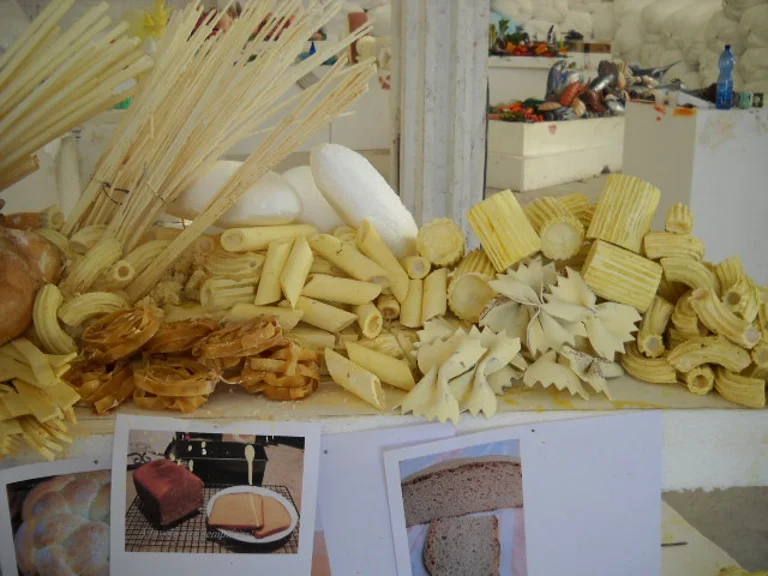
For the Rai 1 show on conscious consumption we sculpted an entire grocery — bread, pasta, cured meats, vegetables, pastry. Hyperreal, in polystyrene and fibreglass.
Behind the scenes
The Flemish still life,
on a locked-off Rai camera.
Gastronomic scenography for TV is a niche of the craft: it's needed almost only for consumer-affairs shows or food talk-shows, but when it is needed, the brief asks for a hyperrealism that the elegant plastic displays simply cannot deliver. Three techniques held together: photography, sculpting, painting.
The reference photograph
Every food item starts from a real photograph laid on the worktable: an actual sample of the loaf to be made, a catalogue photo of the salami, a scan of the pasta at original size. The sculpting proceeds while looking at the photo next to the polystyrene: we don't model from memory, because memory romanticises bread and television does not forgive romance.
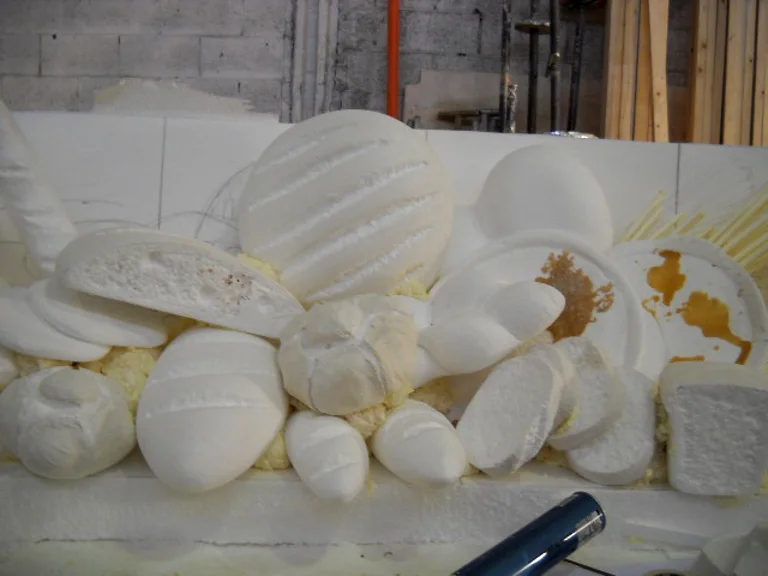
The detail filling
After the rough sculpting in polystyrene, every piece must be filled by hand for the details the camera sees: the perforated crumb of the loaf, the grain of the salami, the ridges of the penne, the wrinkled skin of the pumpkin. It's microsculpture work with epoxy filler and finishing tools — hours of work for every piece, but it's what makes the difference between "sculpted grocery" and "hyperreal".
Painting against the real thing
The gastronomic polychromy is done holding the reference photograph in the left hand and the brush in the right. Every colour is compared directly with the real one: the red of the pepper isn't a generic red, it's that specific red; the pink of the lard is specific to that vein of the ham. Acrylic glazes, matte finish for the bread and satin for the ham.
10 years
of broadcast, from 2003 to 4 April 2013
50 min
episode length until 2012, then 25 min inside Unomattina
5 counters
sculpted: bread, pasta, cured meats, vegetables, pastry
Tech sheet
All production data
- Type
- Gastronomic scenography for TV show · hyperreal still life
- Show
- Occhio alla spesa · Rai 1 food and wine magazine show devoted to conscious consumption
- Period
- From 2003 to 4 April 2013 · Monday to Friday · 50 minutes per episode (2003-2012), then 25 minutes as a segment of Unomattina (2012-2013)
- Created and hosted by
- Alessandro Di Pietro
- Direction
- Salvatore Perfetto
- Production design
- Patrizia Cardoni
- Costumes
- Rosaria Rapuano
- Cinematography
- Ugo Mantova
- Production
- Paolo Saccani (producer) · Simonetta Fazzari (executive producer) · Rai
- Pieces produced
- Bread counter — round loaf, brioche, pizza, sandwich loaf, donuts, focacce, michette rolls · pasta counter — penne, farfalle, rigatoni, bundled spaghetti, fettuccine, mafalde · cured meats and meats counter — whole chicken, ham, salami, frankfurters, mortadella, beef ribs · vegetable counter — pumpkin, corn, carrots, broccoli, peppers, aubergines, onions, cherry tomatoes · pastry counter — jam tarts, pretzels, croissants
- Techniques
- Hand-carved expanded polystyrene · fibreglass reinforcement · detail filling (crumb, grain, ridges) · hyperreal acrylic painting from reference photographs
- Workflow
- Every food item starts from a reference photograph laid on the worktable — modelled at real size, scaled up, sculpted, reinforced, painted in direct comparison with the photo. No generic references
- Our role
- Full delivery of the gastronomic still lifes — sculpting, reinforcement, polychrome finish, set-up · still lifes renewed season after season across ten years of programming
- End of the show
- 4 April 2013 · host Alessandro Di Pietro dismissed for surreptitious advertising during the 2011-2012 season
- Second life
- The still lifes entered the rental catalogue for food fairs, photo shoots, retail set-ups
Second life
The grocery preserved,
season after season.
Occhio alla spesa has the longevity that only Rai public-service shows have: ten years, on air almost every weekday. For the gastronomic scenography this means that the still lifes are renewed season after season — new pasta arrives, new seasonal vegetables, editions with regional southern bread, editions with holiday pastry. It's a scenographic archive that keeps growing.
When the show closes in April 2013, the sculpted food items return to our studios. Many are kept in the rental catalogue and come in useful in the years that follow: food fairs (Vinitaly, Cibus, Salone del Gusto), packaging photo shoots for pasta and Italian food brands, set-ups for delicatessen chains and concept stores. Fibreglass doesn't expire — the bread sculpted in 2008 is still identical to itself today.
The hyperreal-gastronomy techniques developed here — mandatory reference photo, detail filling, painting in direct comparison — are the same ones we apply whenever a sculpted food commission lands in another field: from the Lavazza commercials with their dreamlike oversize food, to concept- store windows, to museum displays about food and wine.