
Advertising · TV commercial · December 2012
Peroni Port of Genoa.
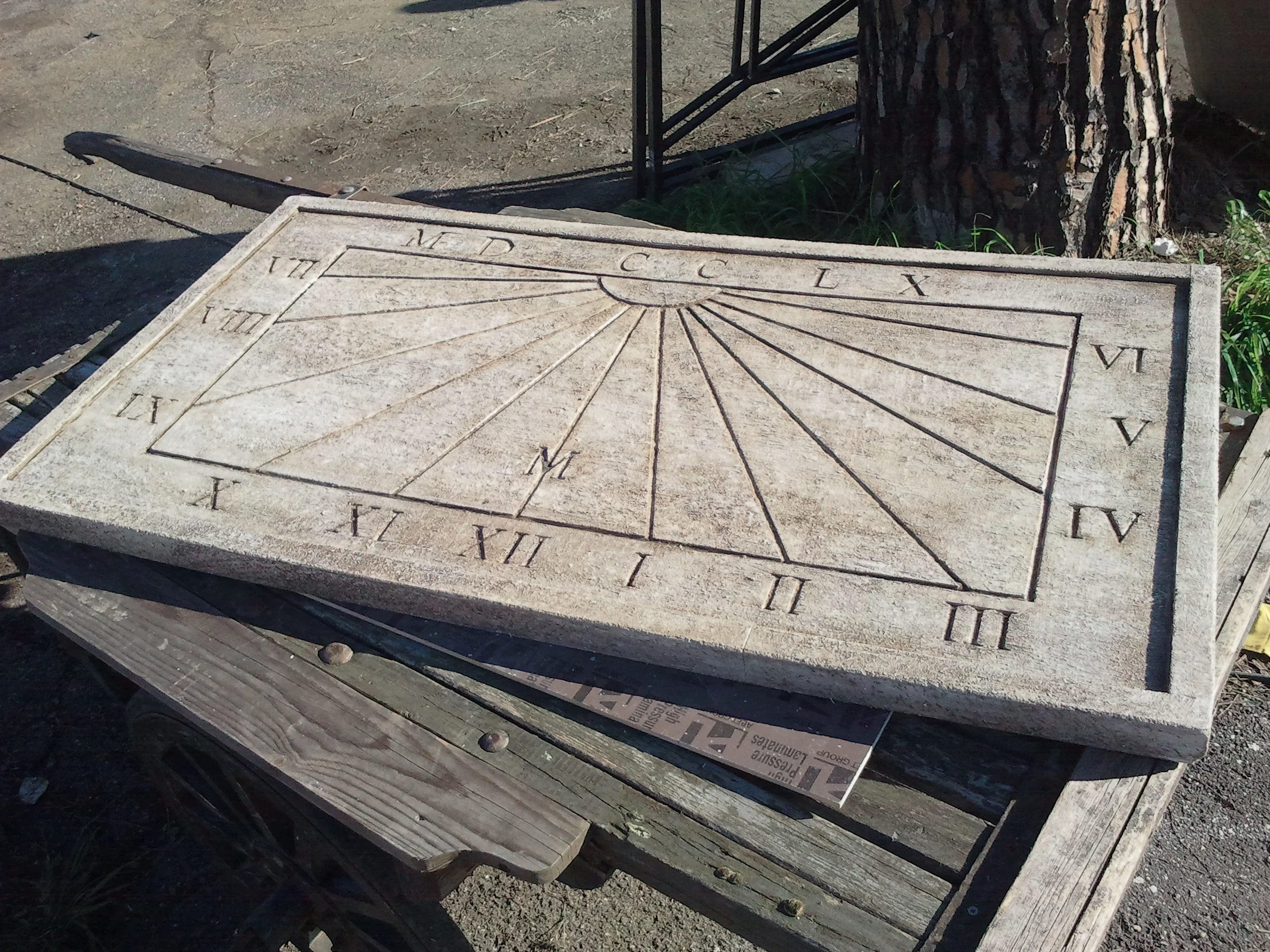
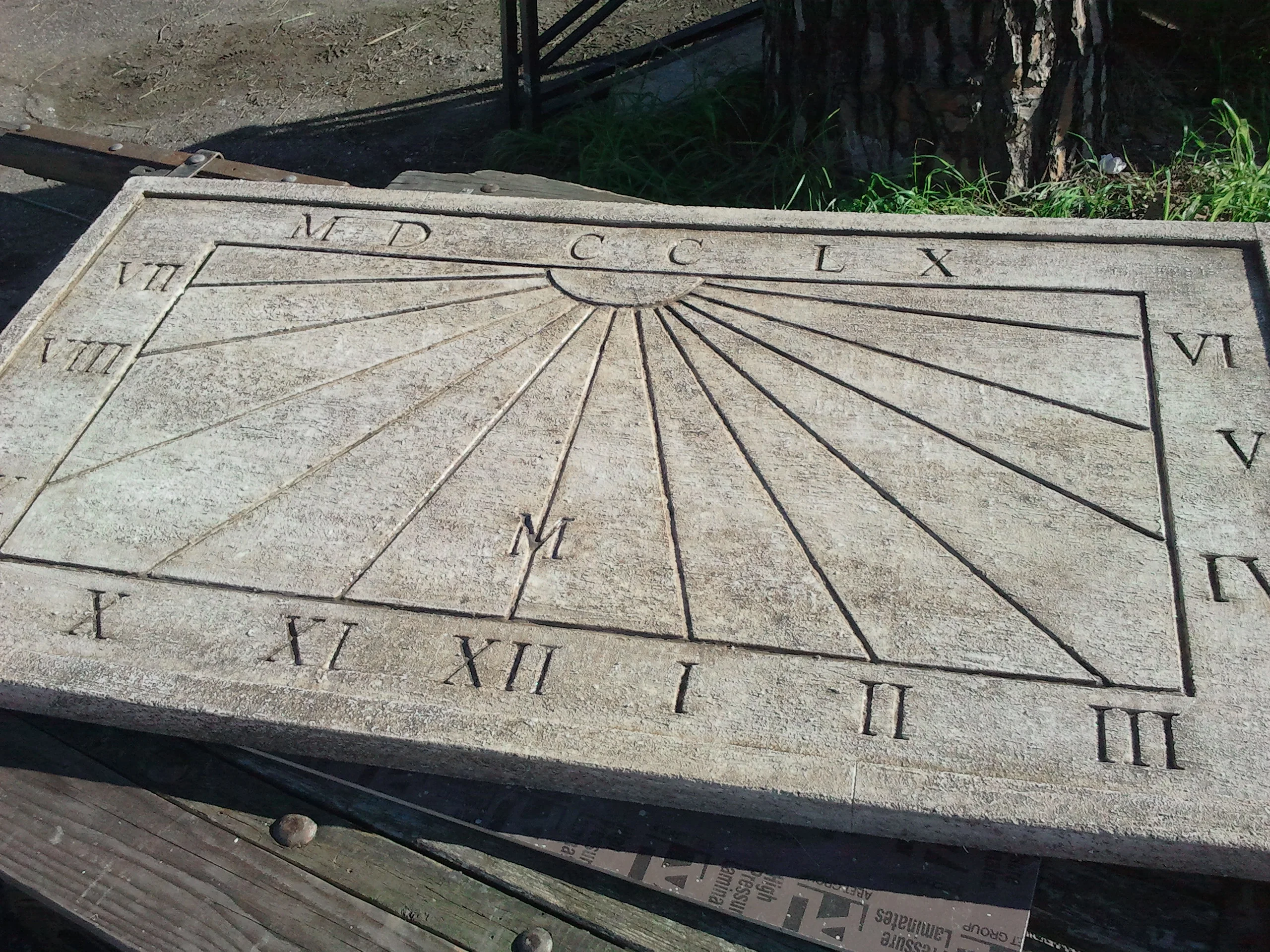
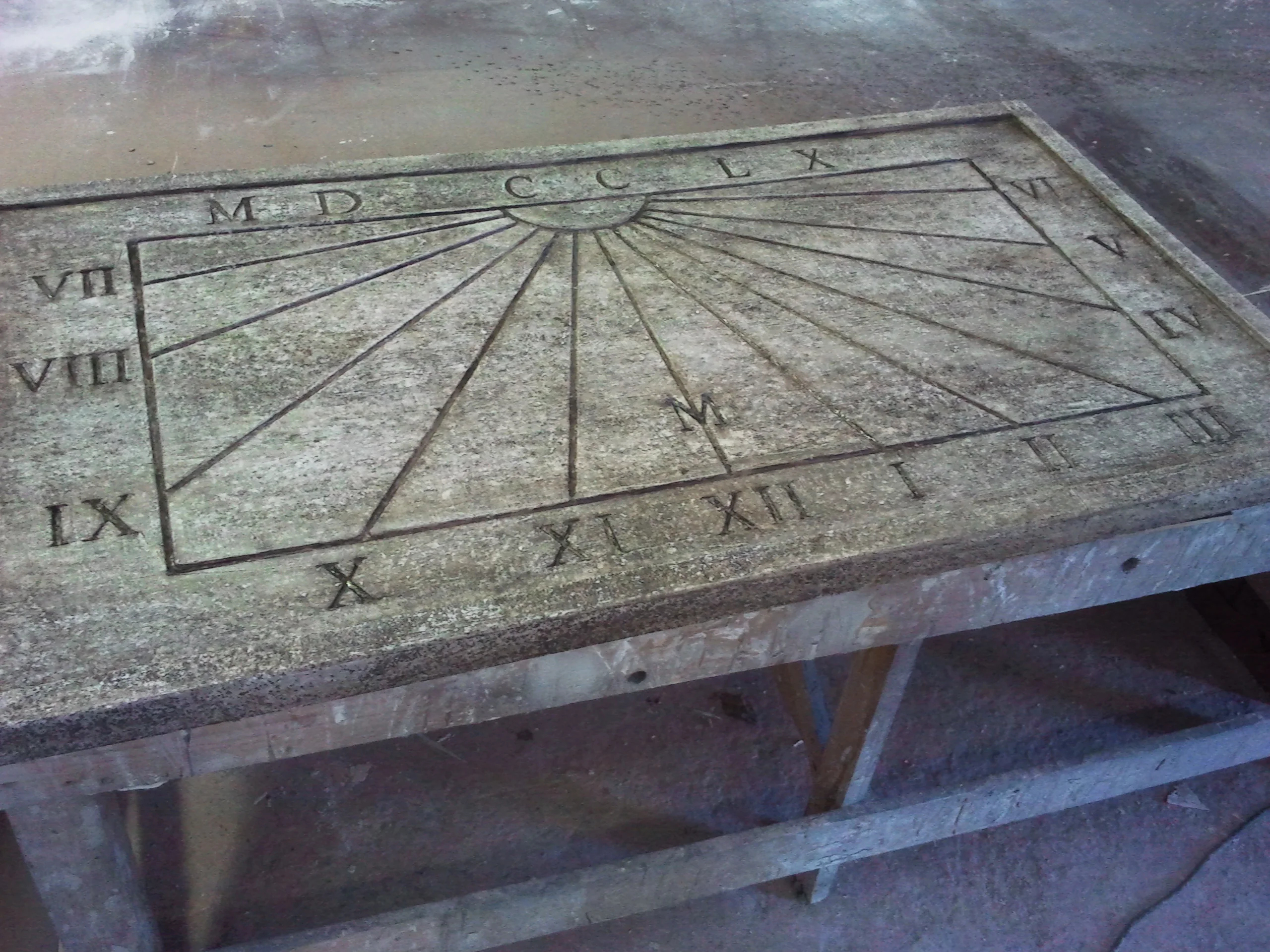
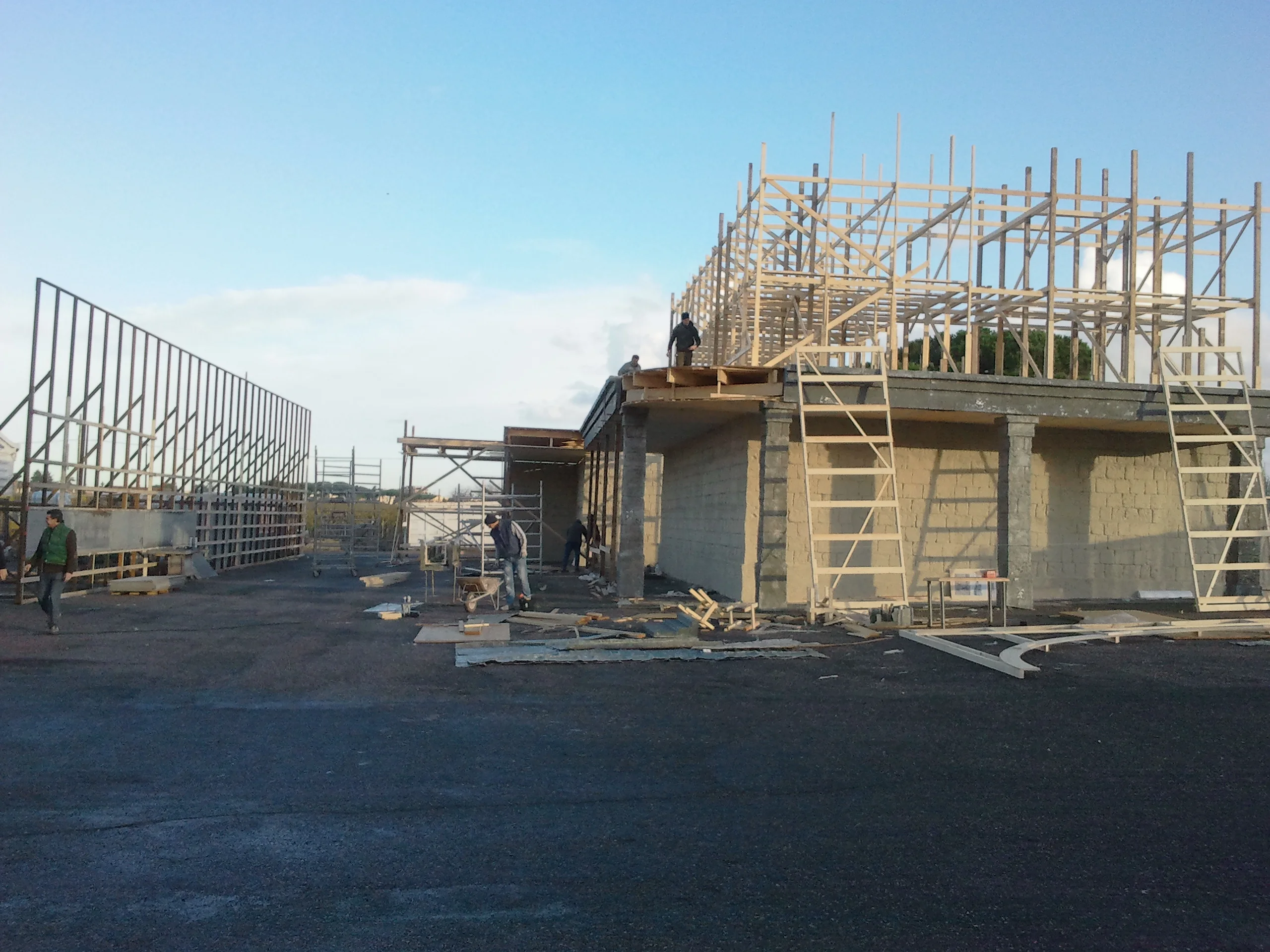
For the 2012 Peroni commercial we built a historic port from scratch: monumental wooden structures, period scaffolding, a Roman sundial carved with the date 1760.
Behind the scenes
A historic port, for pretend,
in ten days on site.
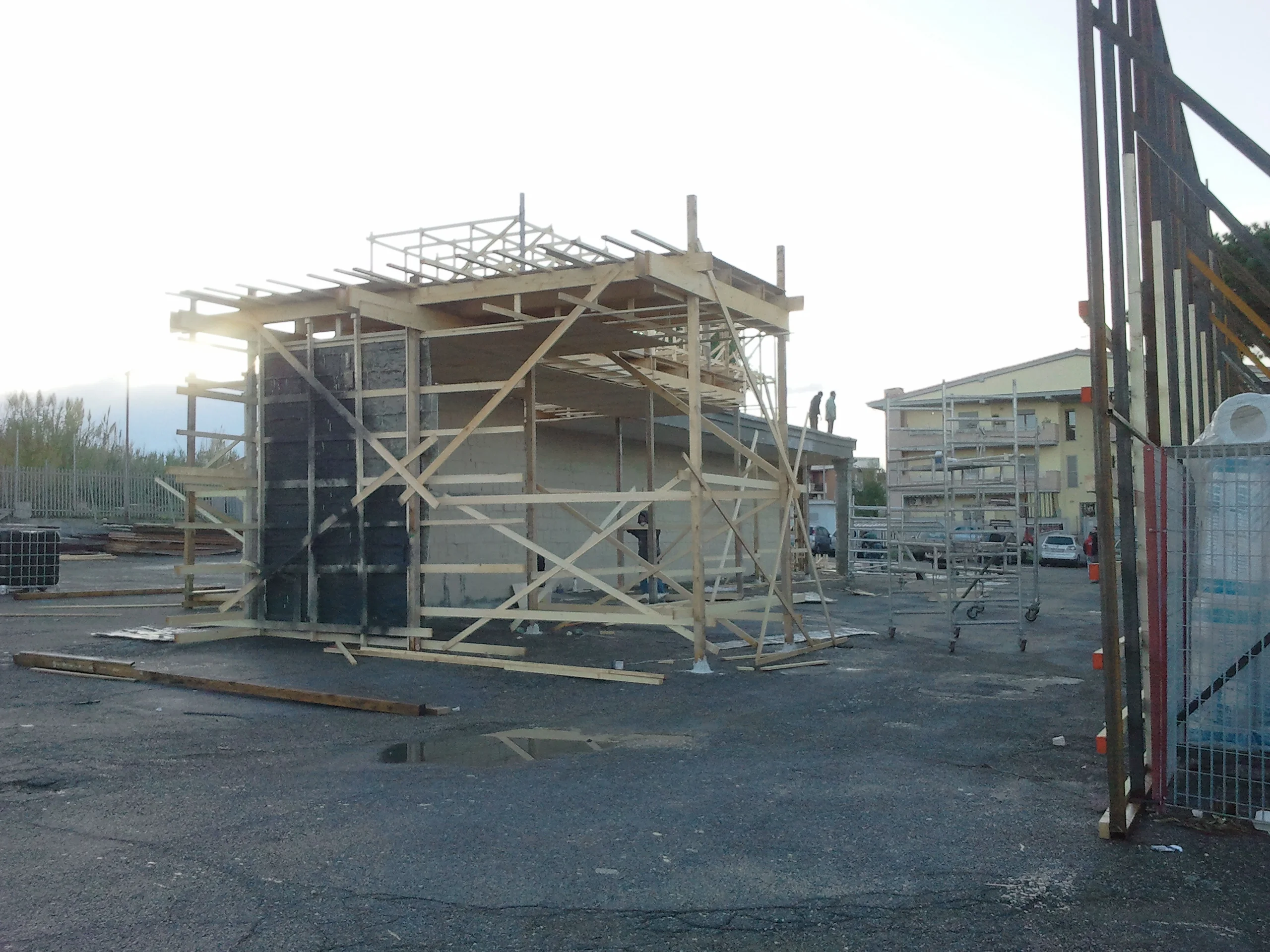
Working on a TV commercial means compression: the same amount of scenographic work as a film set, in a fraction of the time. Our Port of Genoa, 1760, was born and died in two weeks, on an industrial yard by the Tyrrhenian coast.
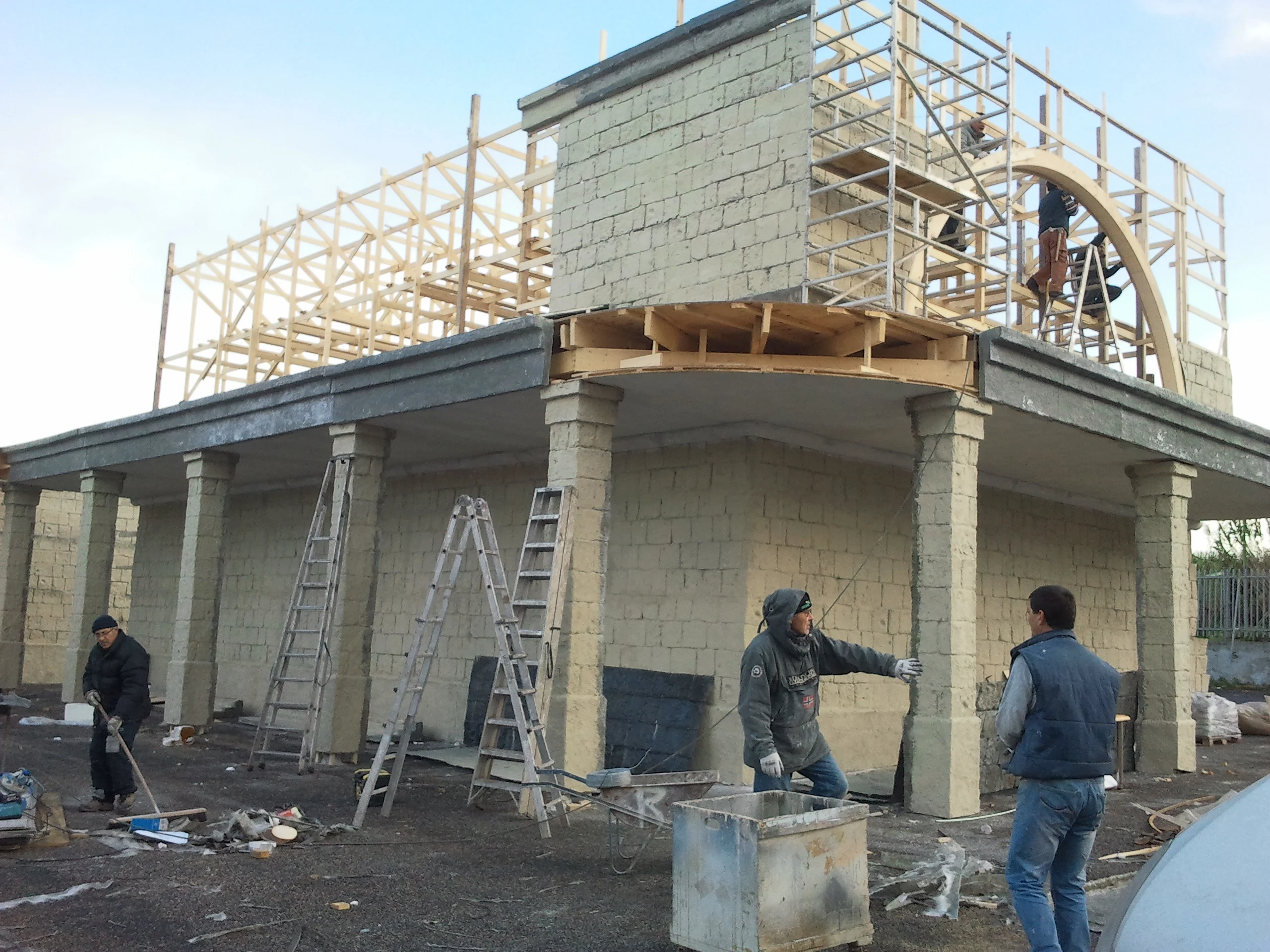
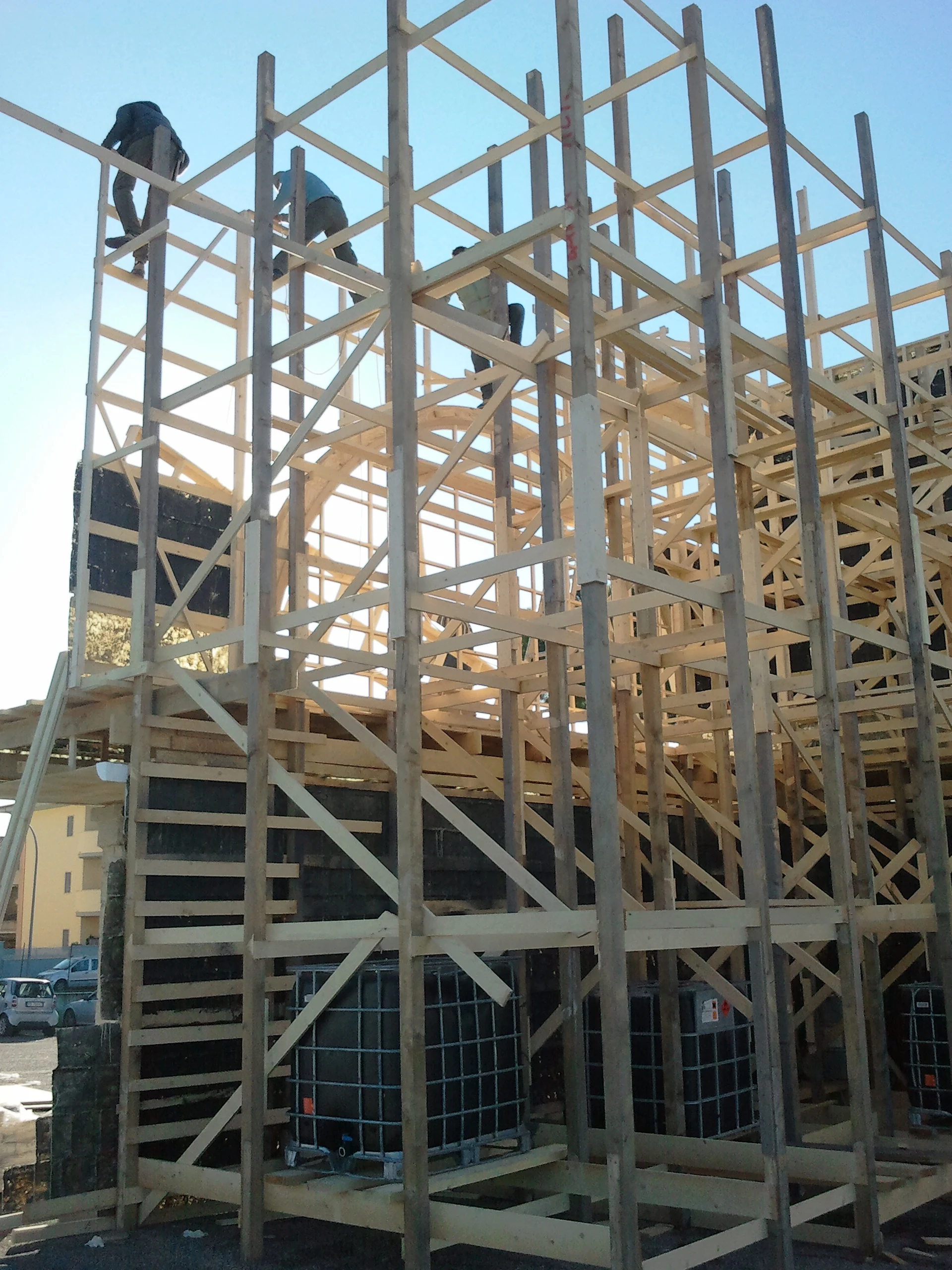
The treated-wood structures
The port scaffolding is built from solid treated timber with a brown impregnating stain: vertical posts, horizontal beams, crossed ladders, walkable gantries. Using real wood — not fake — was a shooting requirement: the camera sees the knots, the grain, and the real footholds of the actors up close. The structure carries its own weight and the crew's, with no visible hardware.
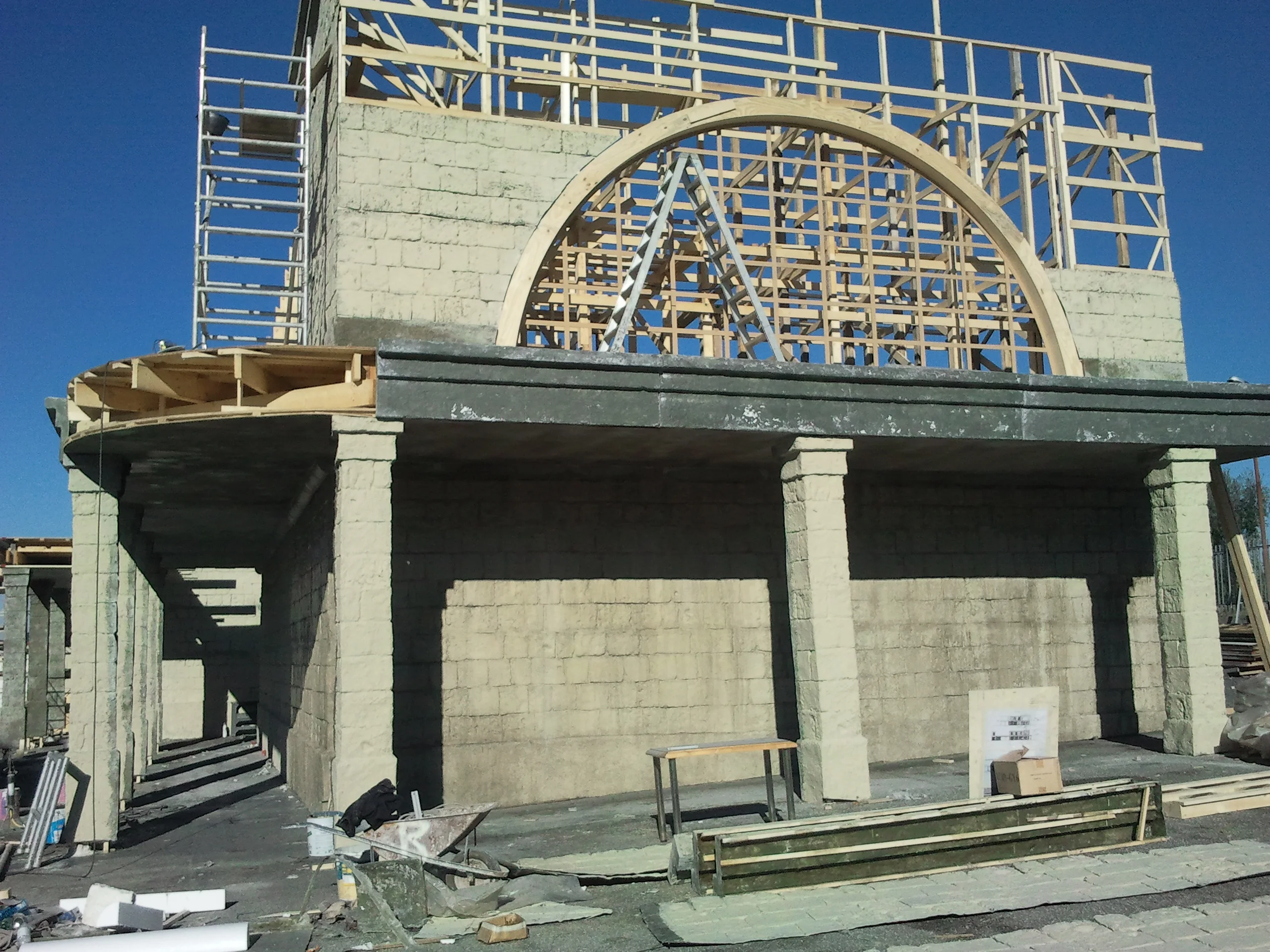
Patinated faux stone
The eighteenth-century architectural details — the sundial, the window frames, the decorative elements — are made in fibreglass over polystyrene cores, finished as lime-washed faux stone. The patina is laid down in successive glazes of diluted earths and blacks to simulate three centuries of ageing: damp staining low down, fading on the flats, deposits in the recesses.
Period accuracy
The MDCCLX sundial was drawn before being carved: the radiant sun at the centre, the Roman numerals from IV (four in the afternoon) up to XII and back down to VI in the morning, the "M" at the centre for meridies. The genuine eighteenth-century Ligurian sundials follow this same scheme — it isn't generic decoration, it's a quotation of a port's clockmaking culture.
10 days
on site, from 5 to 15 December 2012
MDCCLX
the date carved into the sundial — 1760
1:1
full scale, walkable by actors and crew
Second life
Struck, and kept in the workshop.
The set stood for the mid-December 2012 shoot and was then fully struck: that's the nature of commercial scenography — the client pays for the build for those two or three shoot days, not for the piece to remain.
The wooden structures were recovered, dismantled piece by piece and returned to the warehouse. The faux-stone carvings — the sundial, the cornices, the period elements — stayed in our workshops and entered the rental catalogue for other eighteenth-century period projects.
The glaze patination techniques used here — the diluted earths, the differential fading — are the same we apply to every historical set, from the Ancient Rome sets at Cinecittà to the facades of Gangs of New York. For a TV commercial, however, the constraint is different: the patina has to read in three seconds of footage, not withstand the prolonged scrutiny of a cinematic close-up.
Tech sheet
All production data
- Type
- Scenographic set for a TV commercial
- Brand
- Peroni
- Scenographic theme
- Port of Genoa · historical setting with buildings, scaffolds and period details
- Production period
- December 2012 · construction documented by photos from our archive between 5 and 12 December
- Materials and techniques
- Load-bearing treated-wood structures · wooden scaffolding · patinated faux-stone carvings · fibreglass decorative elements
- Iconic piece
- Roman sundial carved in faux stone, dated MDCCLX (1760), with Roman numerals arranged in a radiant pattern around the gnomon
- Our role
- Building the scenographic set for the commercial · constructing the wooden structures, carving the period elements, patinating the sundial and the architectural details
- Legacy
- Faux-stone carvings entered the rental catalogue for other period projects