The studio · capability · full-round portrait sculpture
Polychrome portraits.
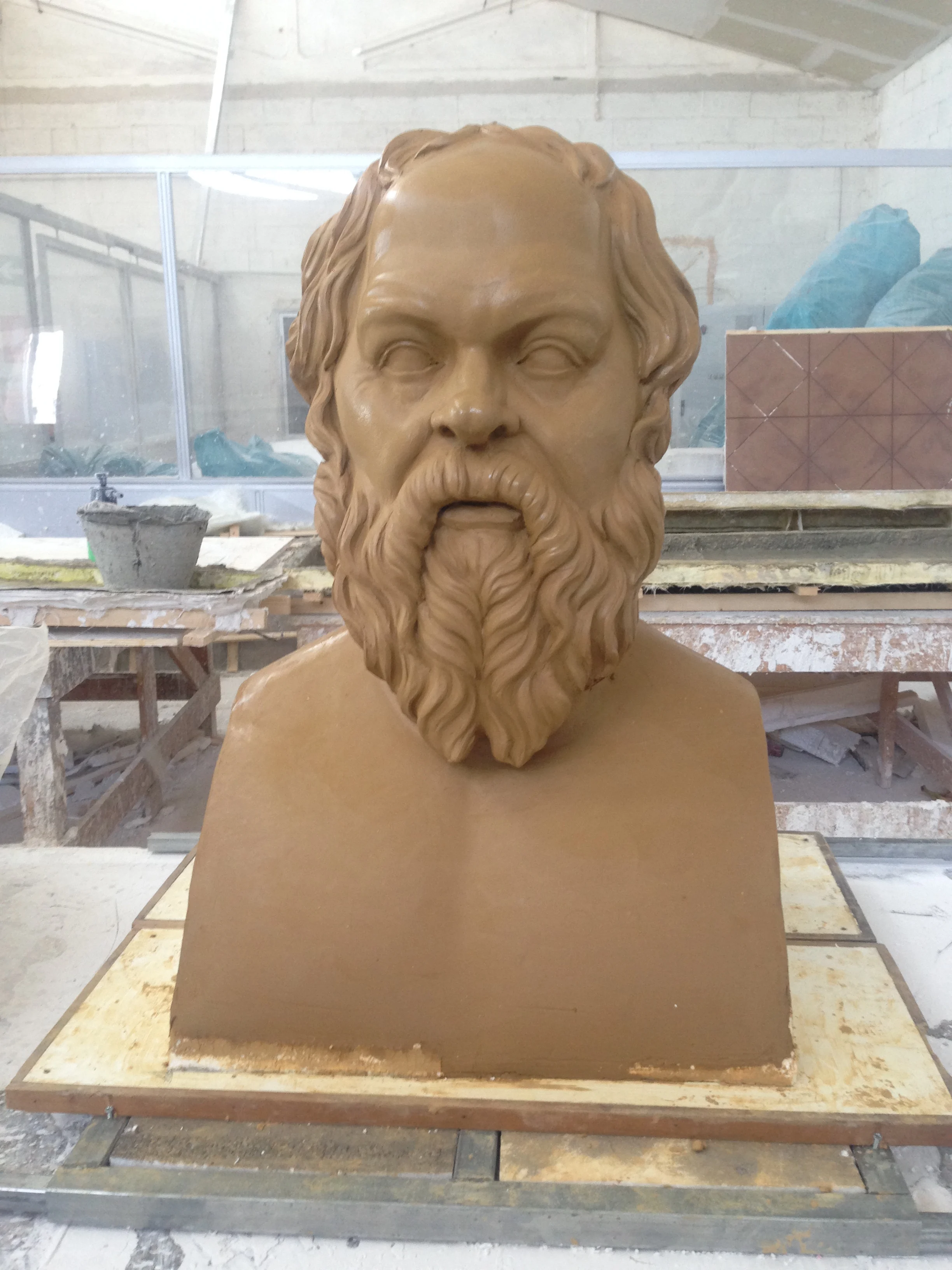
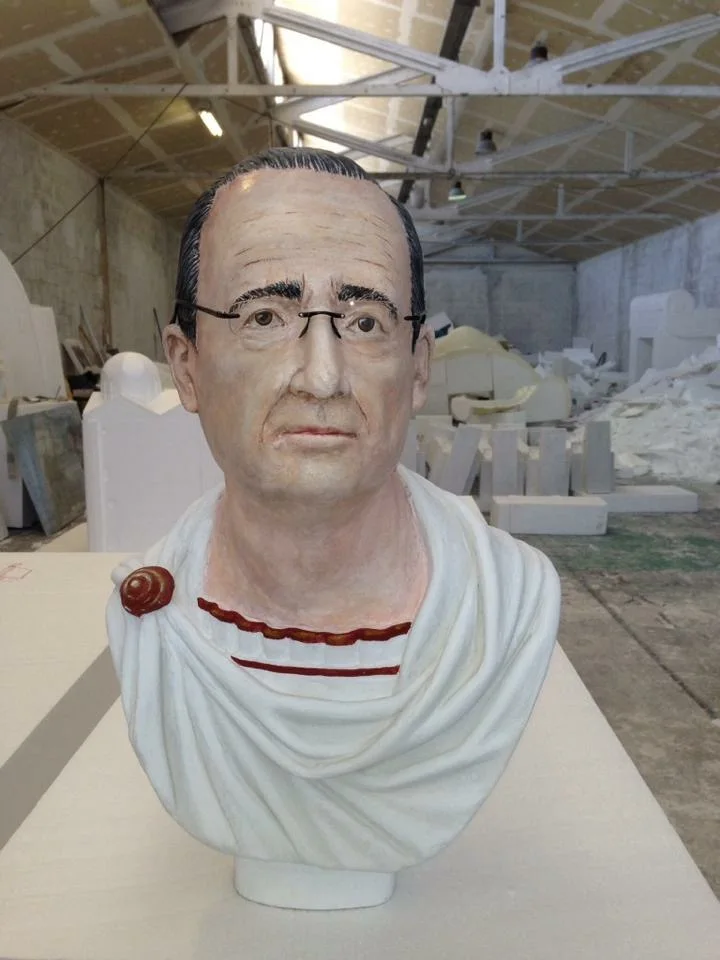
Sculpted faces, modelled hands, expressions fixed in fibreglass. Polychrome portraits are the most handcrafted work we produce — the one where the workshop delegates nothing to the robot.
Behind the scenes
How we work.
Face proportions
The human face follows precise proportional rules — those of Polykleitos' Canon, Leon Battista Alberti's treatises, Renaissance iconography. The sculptor starts from these and then modifies them to render the specific character: in cartoon work the eyes are exaggerated and the nose compressed, in realistic portrait we respect the subject's geometry.
Skin tones in glazes
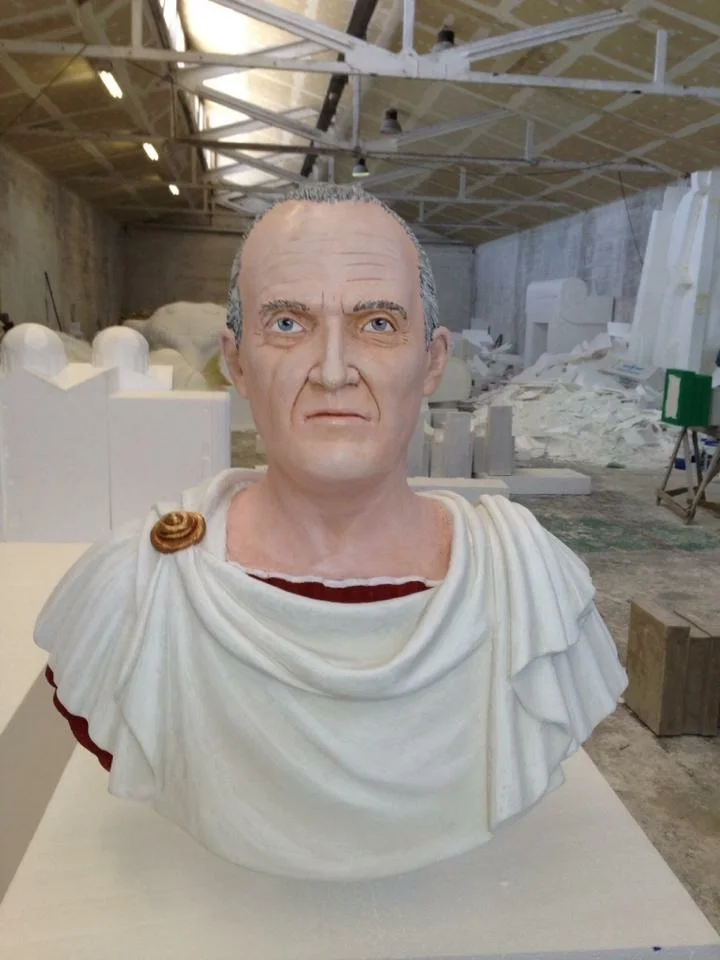
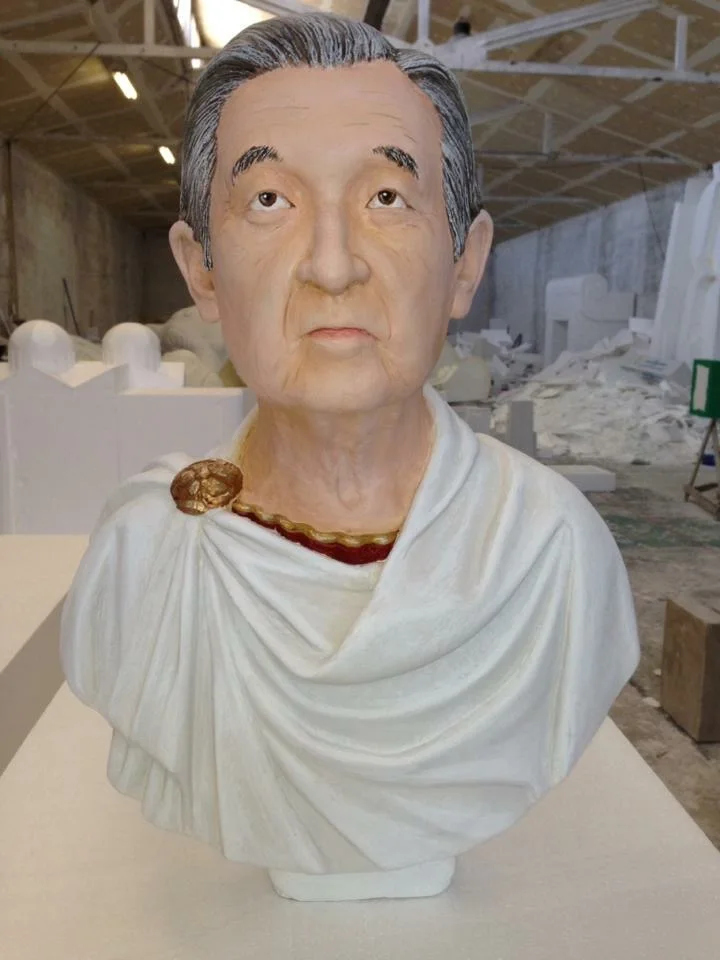
The skin tones of a polychrome face are not painted as flat colour. They are applied in successive glazes: first a rosy-ivory base, then cool shadows along the sides of the nose and under the cheekbones, then warm highlights on forehead and cheeks. The result is a material depth similar to oil painting.
Eyes and mouth
These are the two points where the portrait comes alive or dies. The eyes are painted in four layers: white of the sclera, coloured iris, black pupil, final white highlight of reflection. The mouth requires three shades of red, shadow of the lower lip, light on the Cupid's bow. These two details make the difference between a mannequin and a character.
Craft
the only capability where the workshop delegates nothing to the robot
~days
typical time for a full-round polychrome portrait
By hand
skin tones applied in successive glazes, never as flat colour
See it at work
In these projects.
polychrome portraits is a capability that recurs across our projects. You can see it applied in these works: