
Rainbow MagicLand · full-round sculpture · 2011
Winx Statues
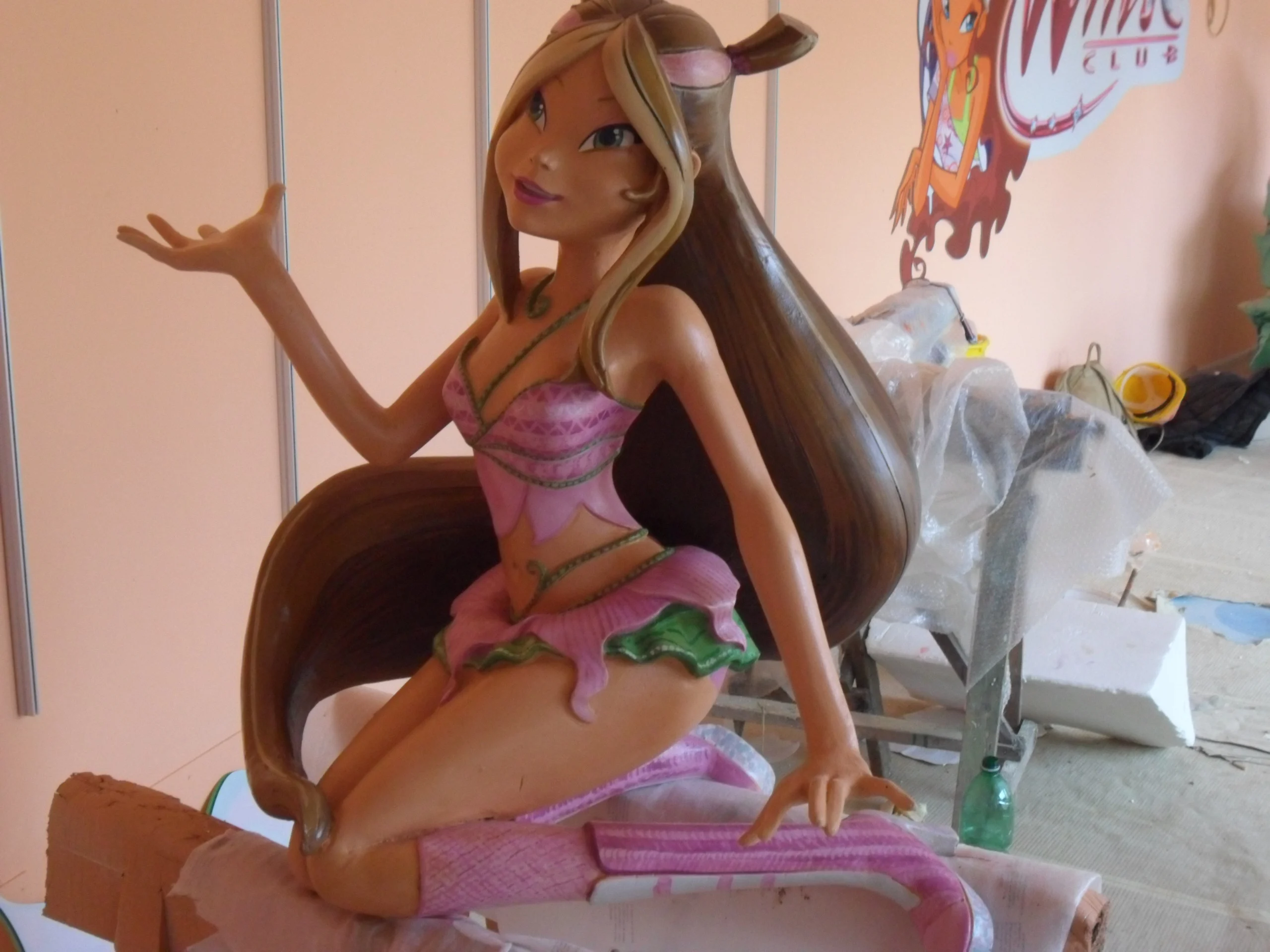
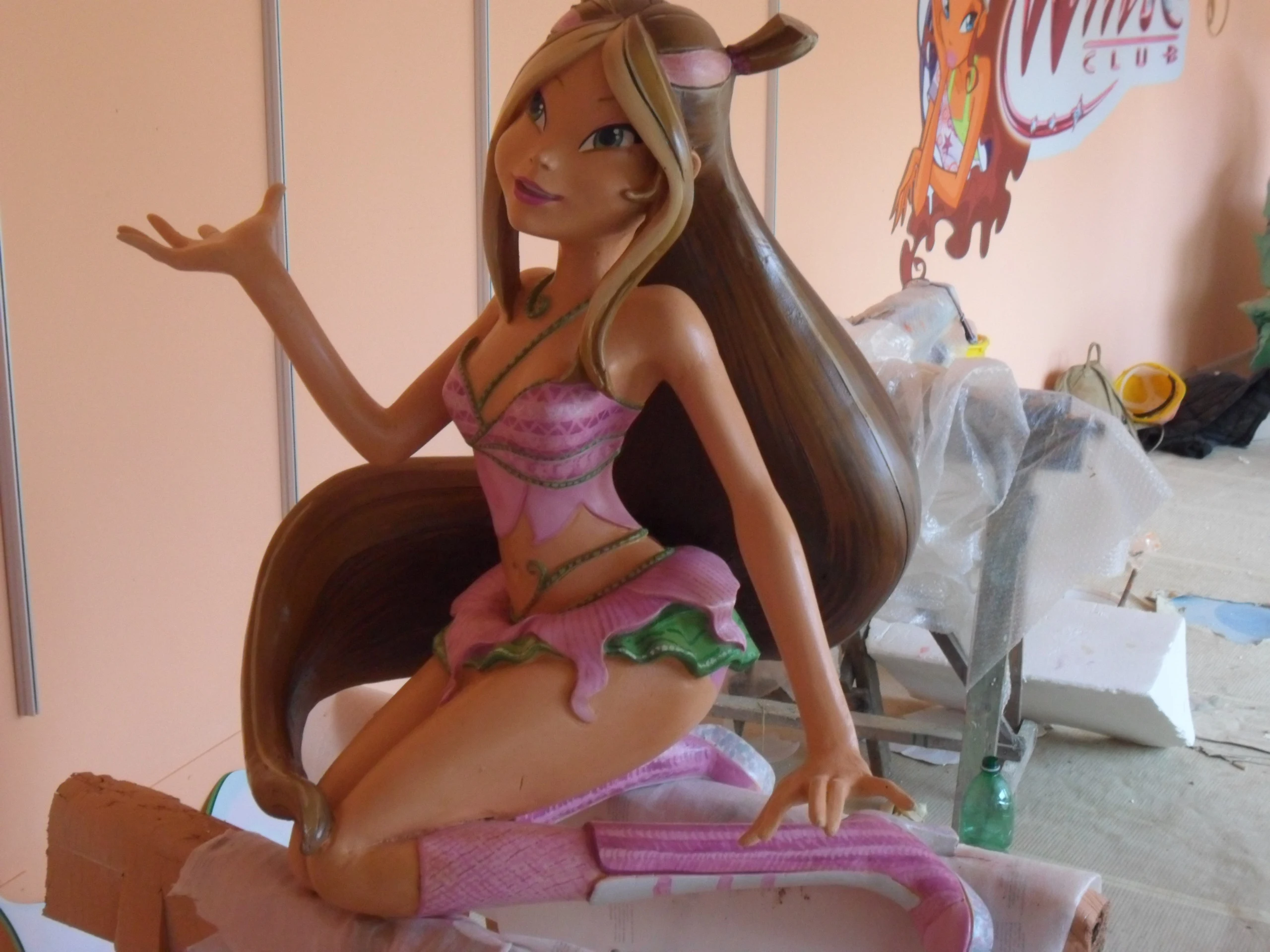
The six fairies of Alfea sculpted in full round: from clay to the painted piece, six months of work in our workshops.
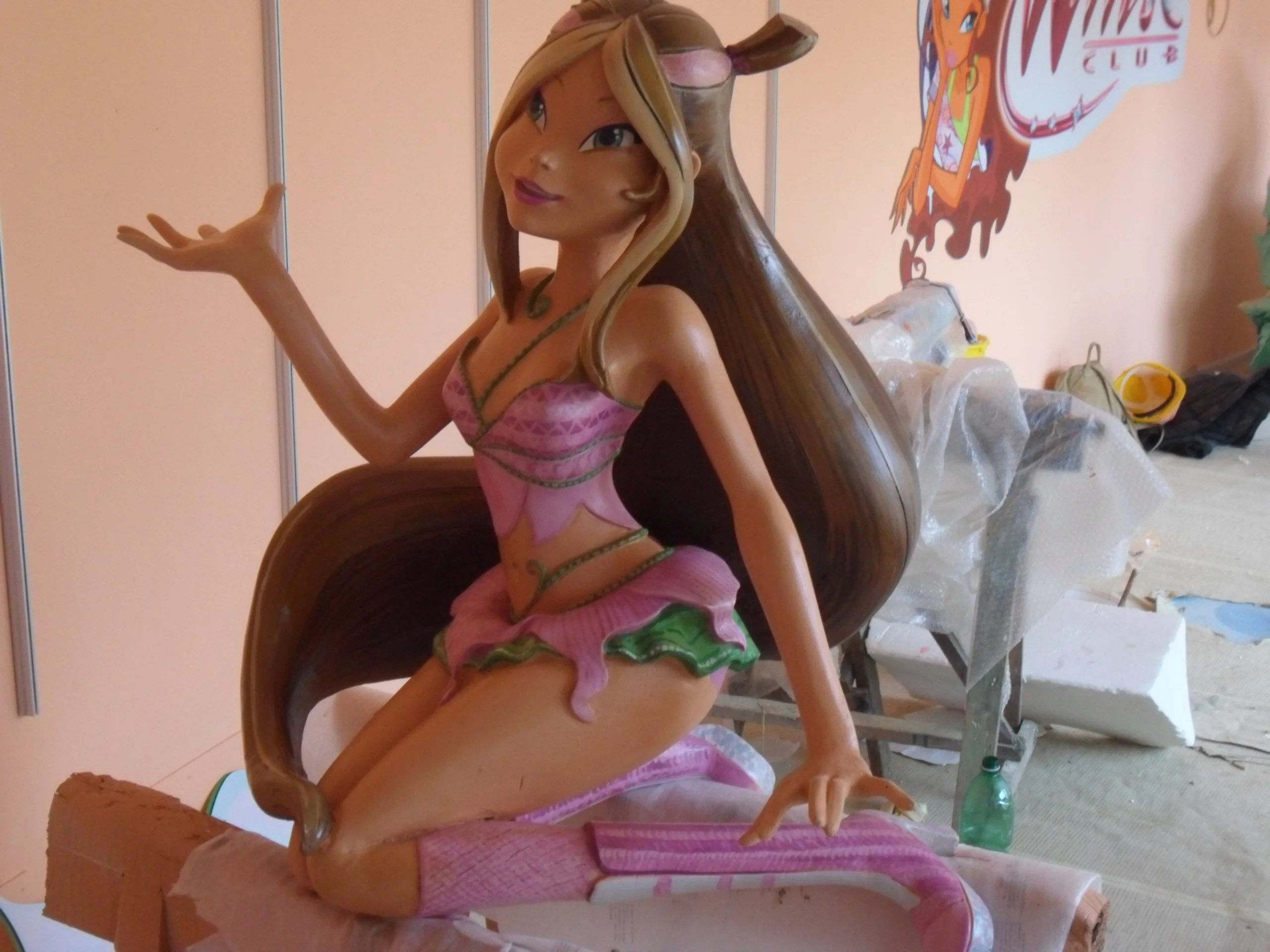
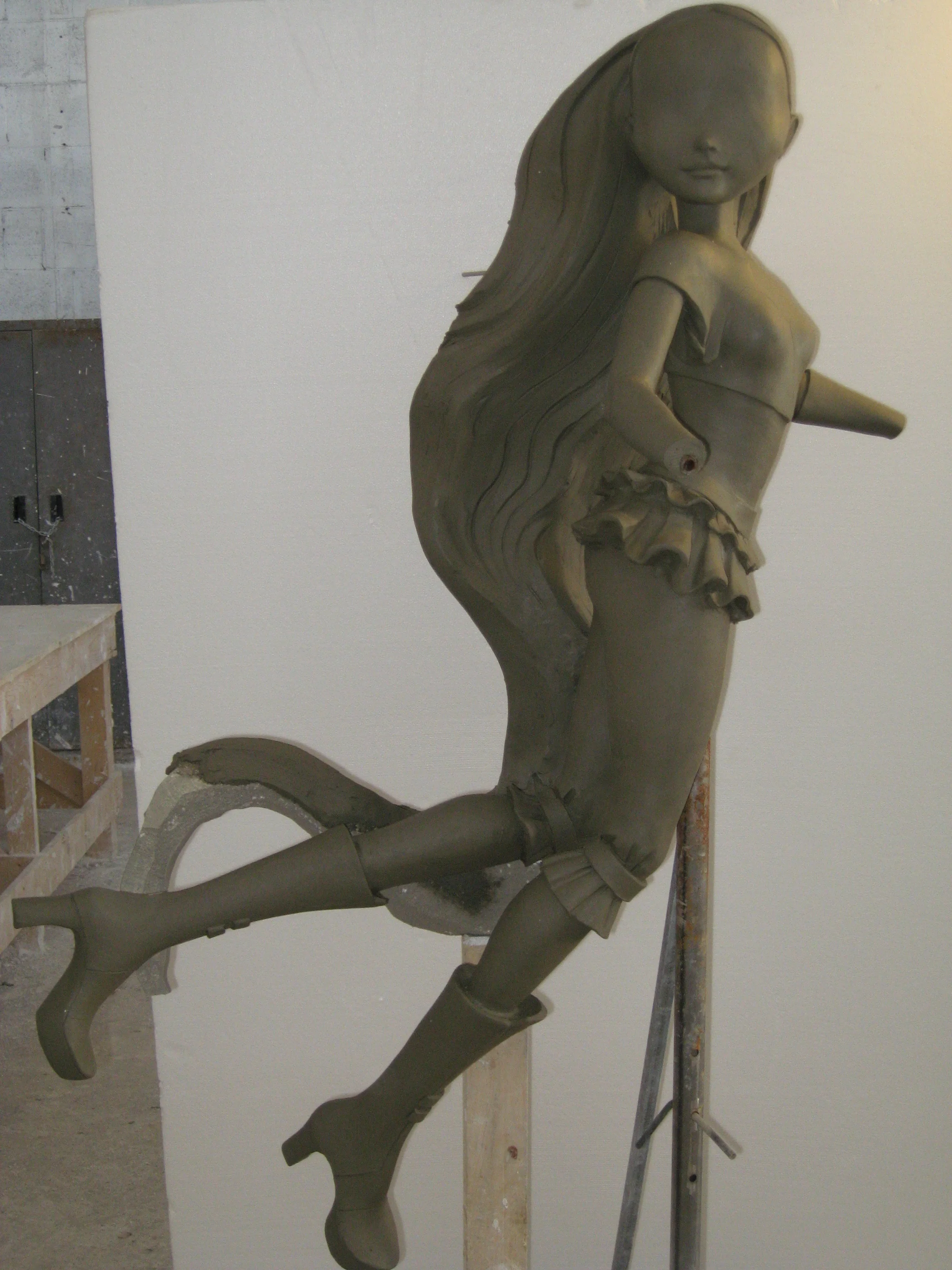
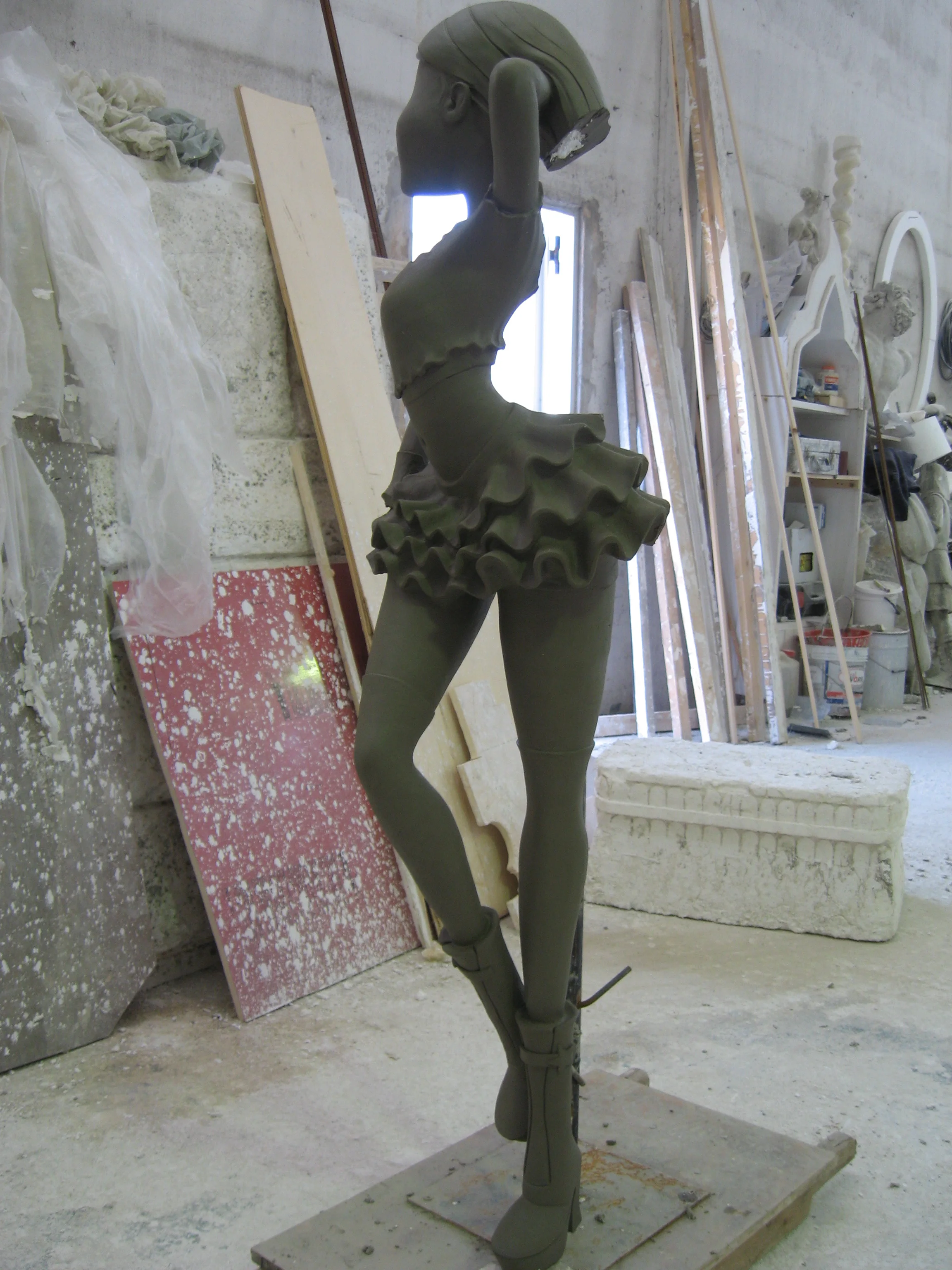
Behind the scenes
One fairy, six steps.
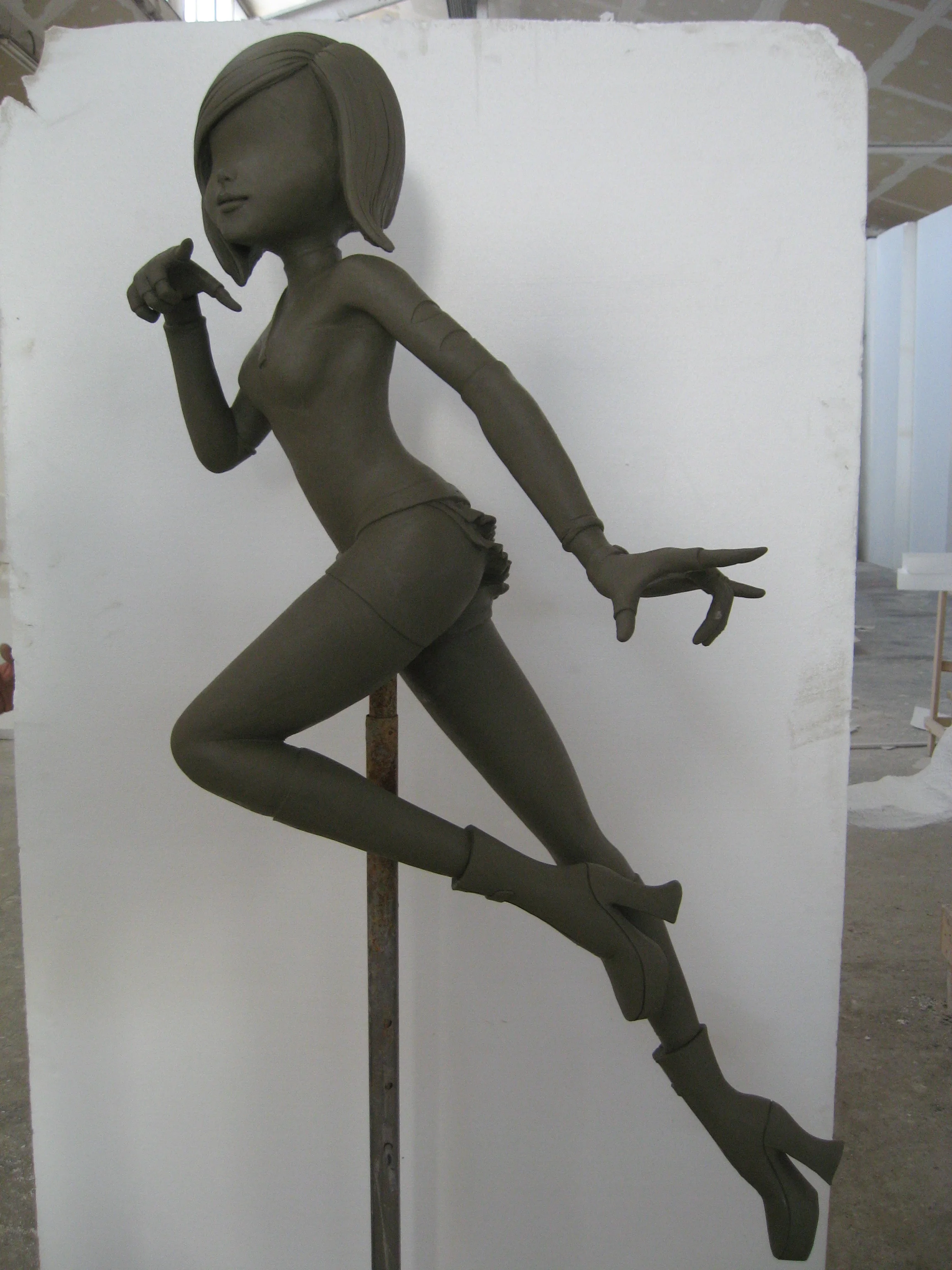
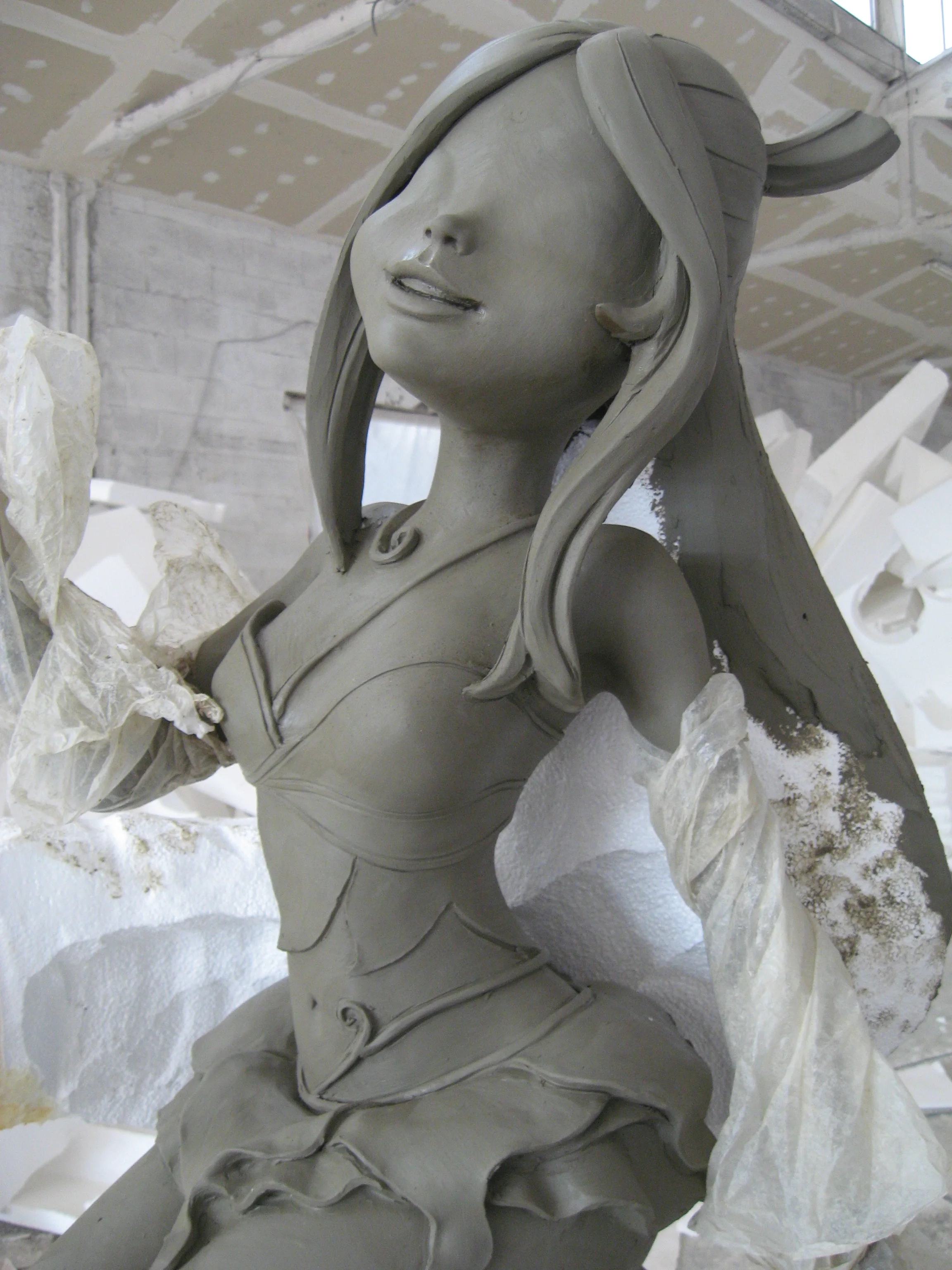
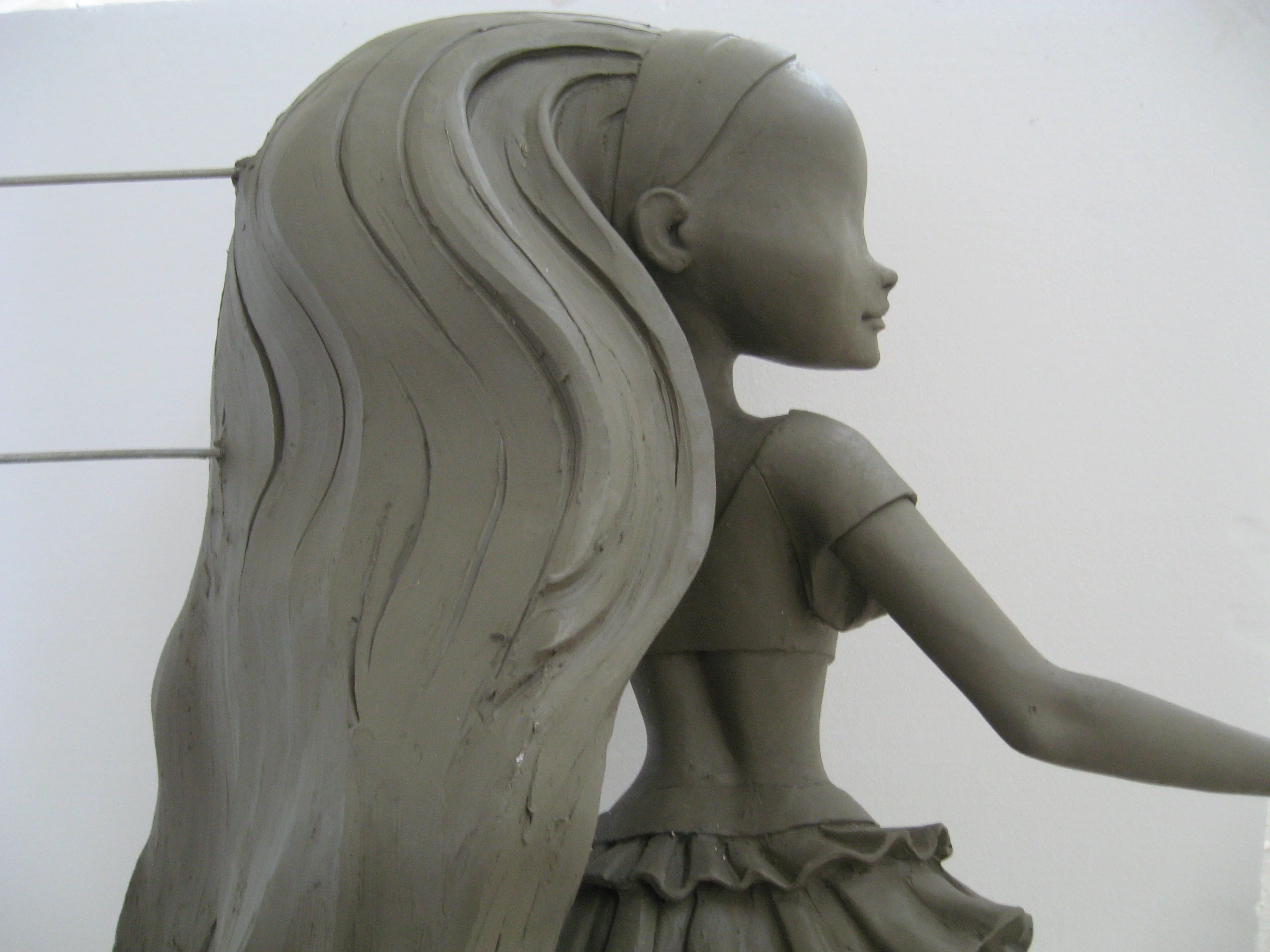
The production of a Winx statue goes through six standard phases in our workshop: (1) character study on the official Rainbow material — poses, proportions, costume, palette; (2) internal armature in steel supporting the weight and fixing the pose; (3) sculpting in modelling clay in full round, control of detail down to the face's expression and the skirt's fold; (4) silicone rubber mould with double wall, separated into three or four segments to open the mould; (5) fibreglass casting layered on a stainless-steel core; (6) finish and polychrome painting by hand, one statue at a time. The same process as traditional cinematic sculpture — portraits, statues of saints, period busts — applied to the 2004 animated cartoon.
six months one statue for each of the six fairies · Bloom, Stella, Flora, Musa, Tecna, Aisha · each sculpted from scratch, all with different dynamic poses
fibreglass first modelled in clay on steel core · double-wall silicone rubber mould · layered fibreglass casting
by hand one statue at a time, colour by colour · the direct legacy of the polychrome portraits of the Roman school of Cinecittà
Tech sheet
All production data
- Type
- Six full-round statues · artistic sculpture · polychrome finish
- Location
- Rainbow MagicLand · Valmontone (Rome) · installed at the park entrance and in the squares around the Castle of Alfea
- Commission
- Iginio Straffi's Rainbow Spa · 2010-2011 · for the park's opening
- Subjects
- The six fairies of Iginio Straffi's Winx Club: Bloom, Stella, Flora, Musa, Tecna, Aisha
- Techniques
- Sculpting in modelling clay · silicone rubber mould · fibreglass casting on stainless-steel core · hand finishing and painting
- Brand palette
- Fuchsia pink (costumes) · green (Flora) · purple and gold (Tecna) · water blue (Aisha) · yellow (Stella) · red (Bloom) · anthracite grey (Musa)
- Technical heritage
- The polychrome portraits of the Roman school — the Cinecittà tradition of the Sixties, applied to a 2004 animated-cartoon brand
- Park opening
- 25 May 2011
- Removal from the park
- 2019 onwards · with the ownership change to Pillarstone Italy (KKR) and the Winx brand's exit from the park
- Cluster
- Part of Rainbow MagicLand
- Our role
- Complete delivery of the six full-round statues: from character study on the Rainbow graphic bibles to clay sculpting, to the mould, to the fibreglass casting on steel core, to hand polychrome painting. Six unique pieces, six months of work, one statue per Winx. The photos from our archive document the clay sculpting and the finishing in the workshop, in front of the client's Winx Club logo.
- Second life
- Statues removed from the park from 2019 with the ownership change to Pillarstone Italy (KKR) and the Winx brand's exit · some preserved as archive, others dismissed · what remains is the polychrome portrait technique of the Roman school
Second life
When a statue
disappears with the brand.
The six Winx fairies — Bloom, Stella, Flora, Musa, Tecna, Aisha — were on stage at the park from 25 May 2011 until 2019: eight years as the Rainbow MagicLand's visual face at the entrance and in the squares around the Castle of Alfea. When in 2019 Iginio Straffi sells Rainbow Spa and the park passes under Pillarstone Italy (KKR) management, the Winx brand exits the park and the statues are removed — together with the trademark.
It is a fate opposite to that of the PopPixie houses, which instead survive the ownership changes because they function as play infrastructure for children. The Winx statues are only iconography, and when the brand disappears, they disappear with it.
For us, however, the technique remains. The six Winx statues were a pure exercise in polychrome portrait of the Roman school of Cinecittà applied to a 2004 animated cartoon brand. The same technique returns in the portraits for Ferretti's Labirinto Fellini installation, in the Cinecittà World scenography, and in all the other projects where a believable face at the visitor's scale is needed.