
Immersive exhibition · Macro La Pelanda, Rome · 2010
Labirinto Fellini.
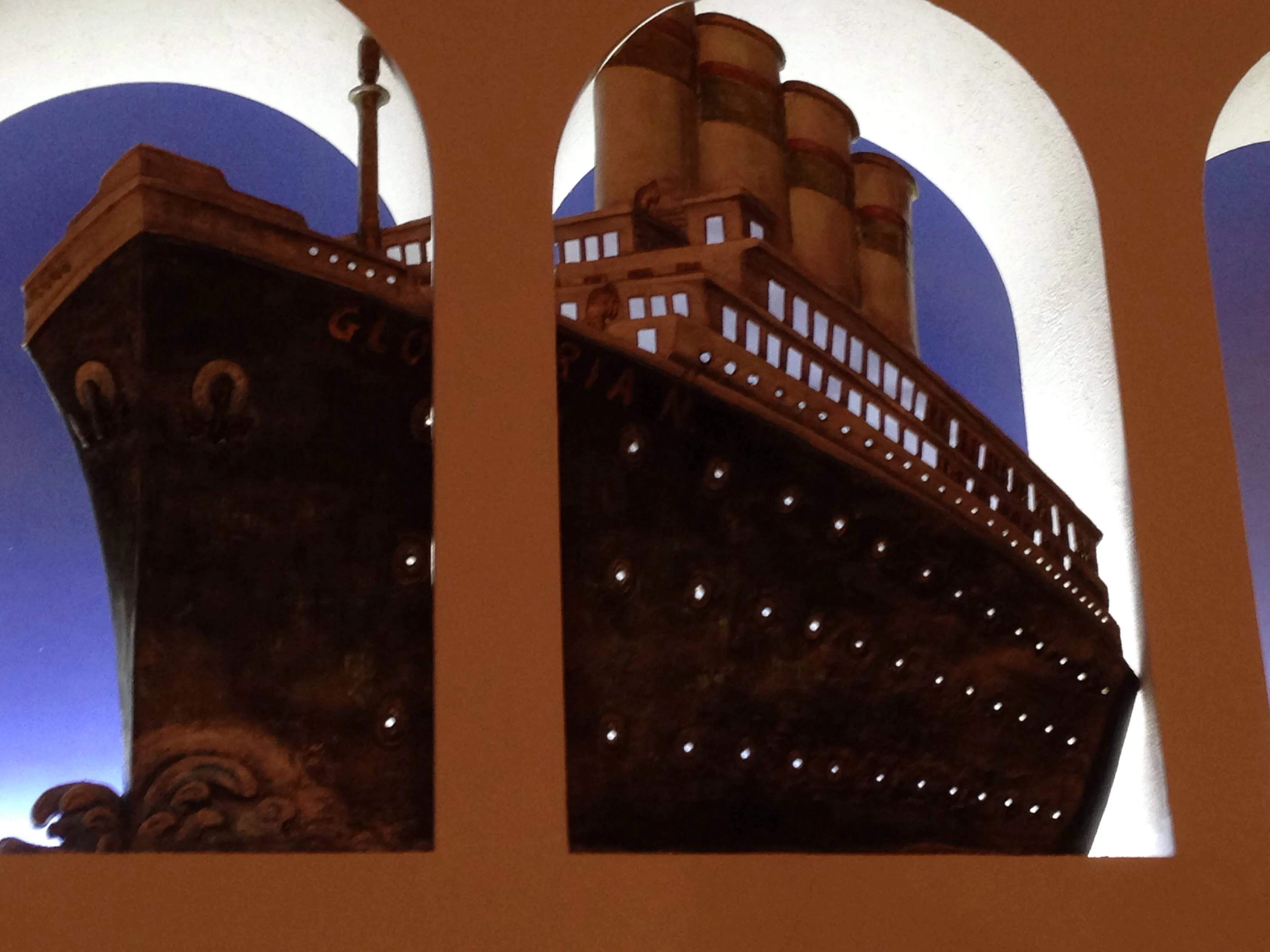
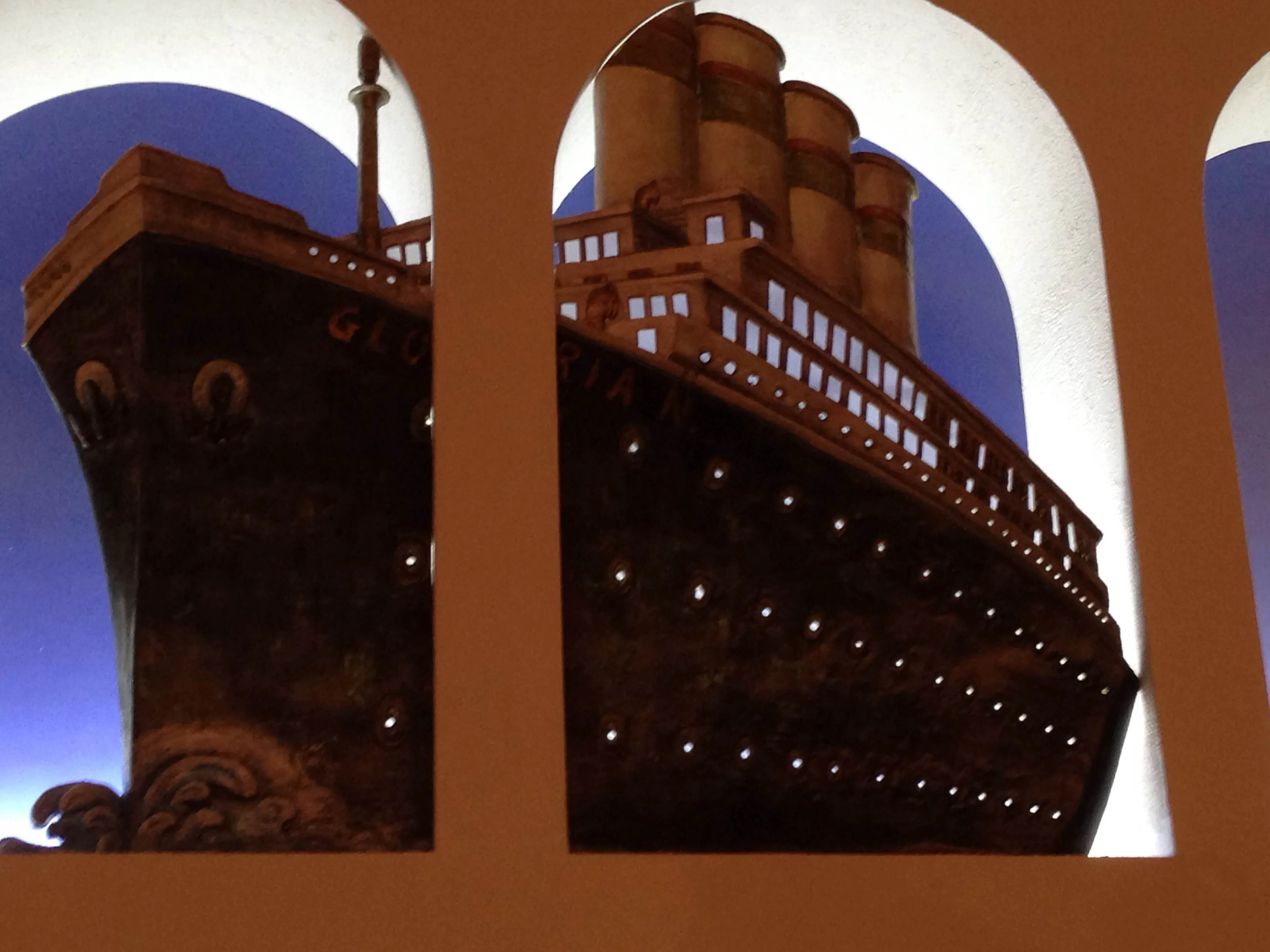
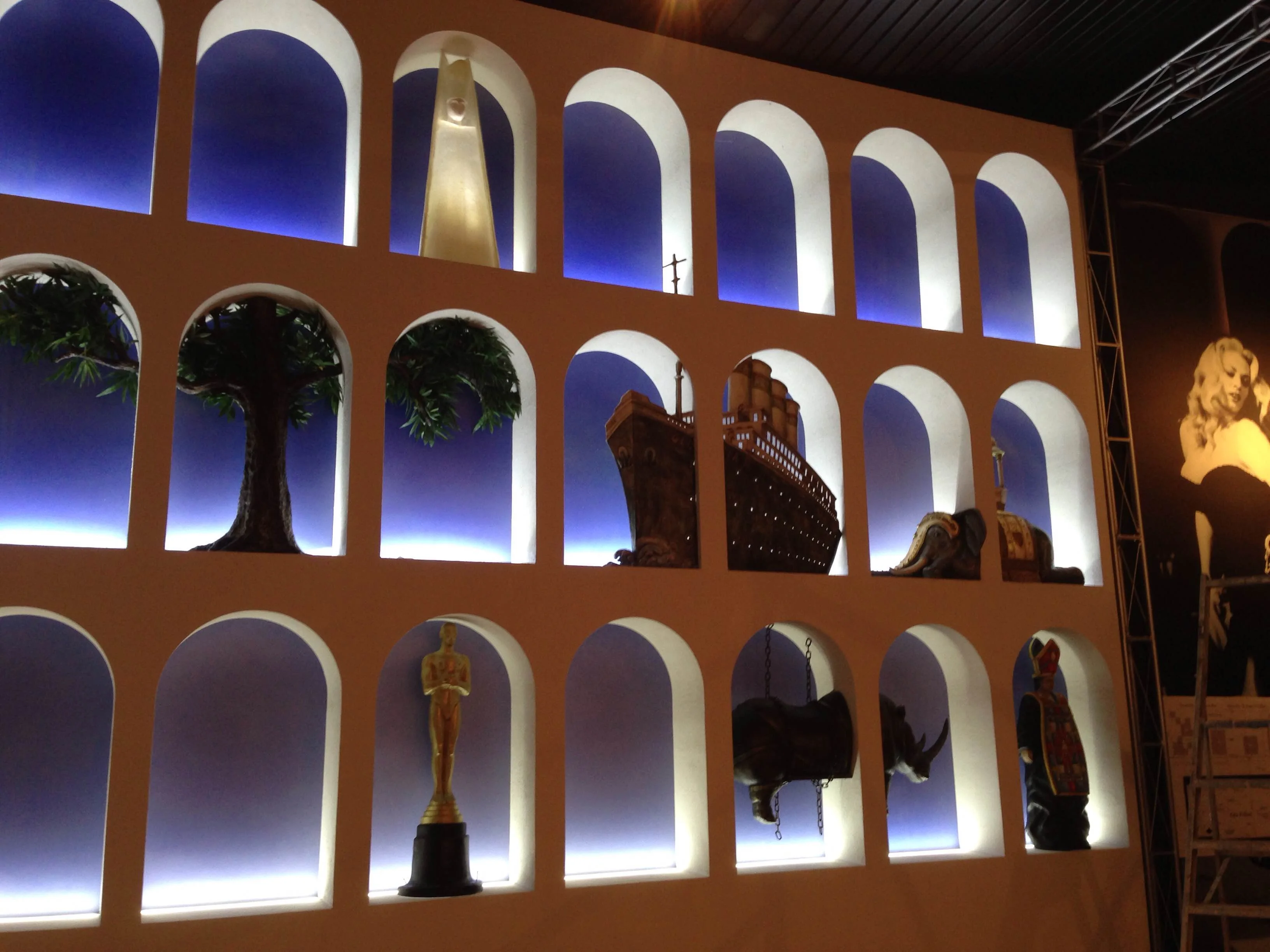
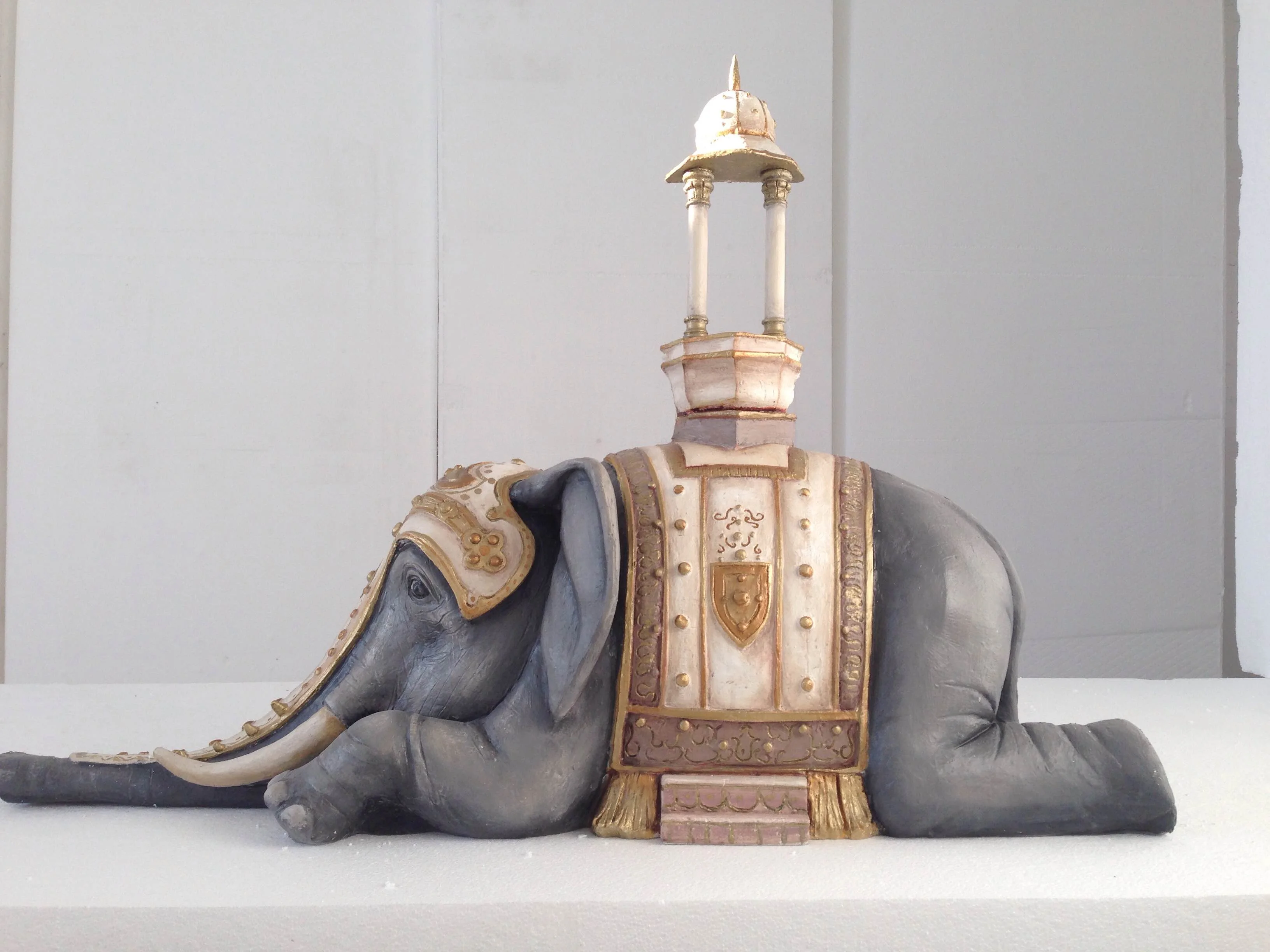
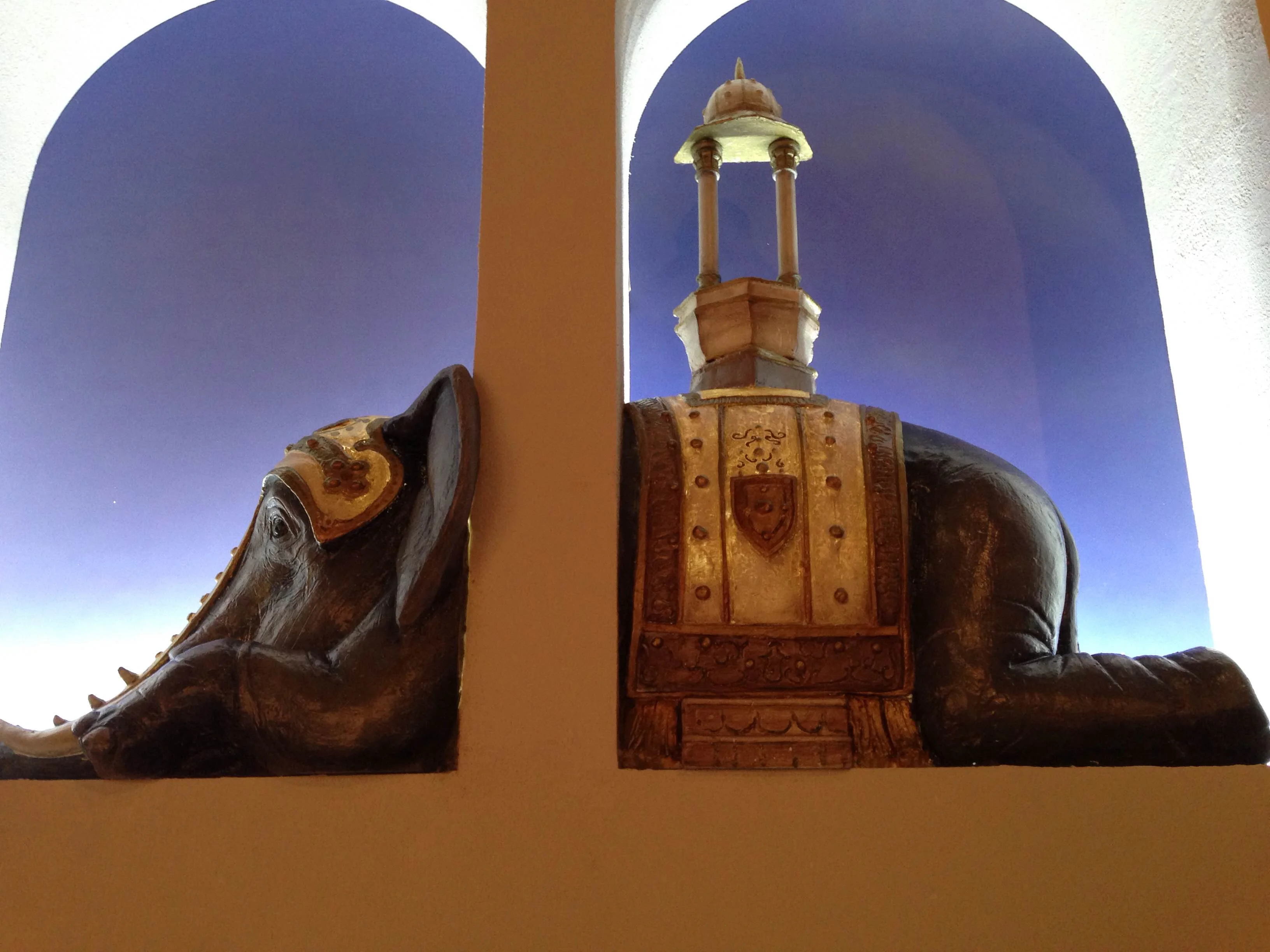
The immersive exhibition for Federico Fellini's ninetieth, curated by Oscar winners Dante Ferretti and Francesca Lo Schiavo at Macro La Pelanda. We contributed to the scenic sculptures: the Rex from Amarcord, the Maestro's elephants.
Behind the scenes
Under Ferretti's signature,
but with our hands.
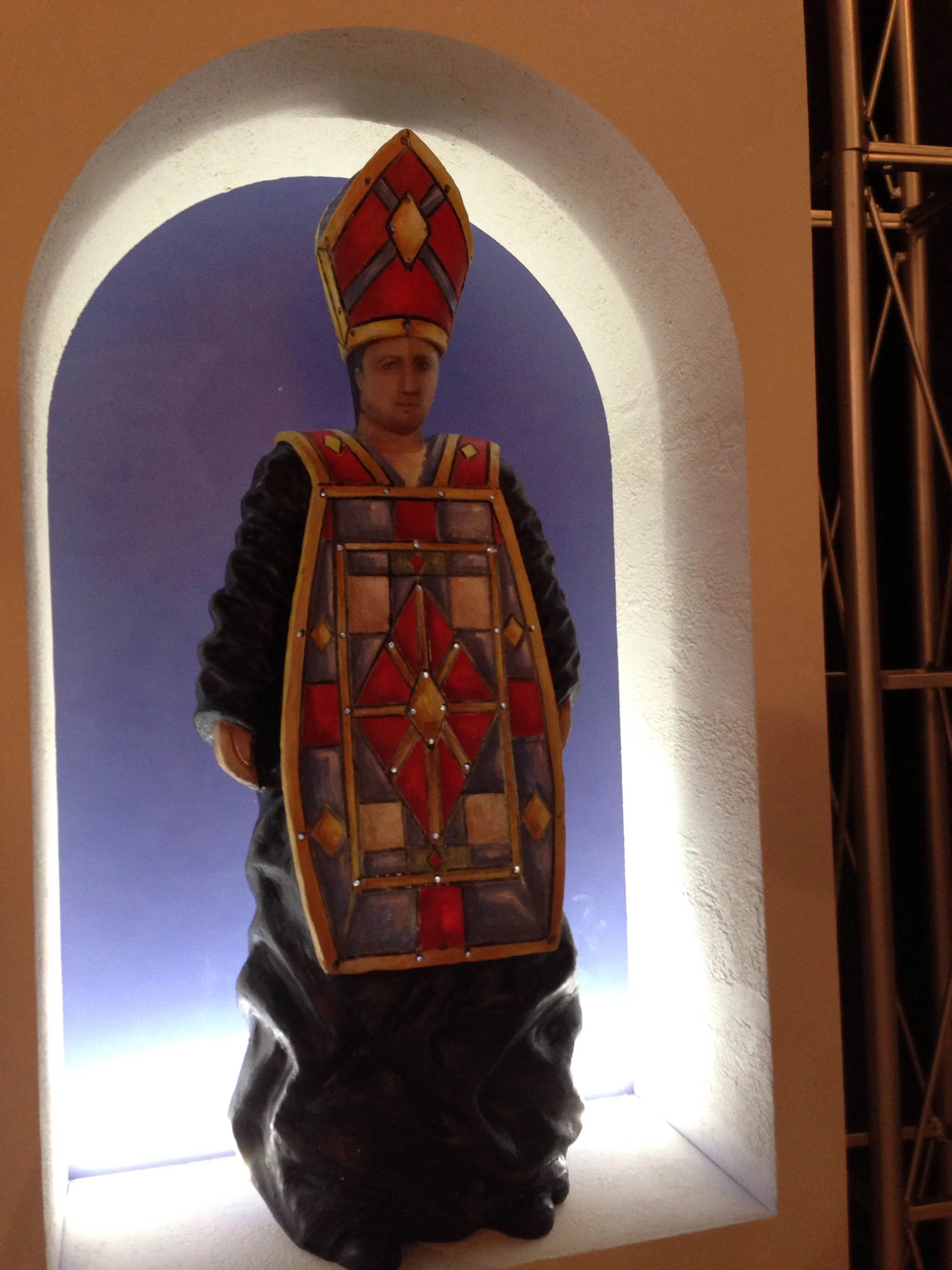
Working for a three-time Oscar-winning production designer means understanding his grammar: how he uses the frame, how he plays with scale, where he wants the detail and where he wants suggestion instead. We delivered the rough and finished pieces to the Pelanda according to his design.
Clay modelling
The elephant is born as a full sculpture in clay in the workshop: the same technique of the statues for cinema from the Roman school of Cinecittà. Clay allows us to model freely the volumes and the details — the pleated skin, the grain of the back, the curve of the trunk — before moving to the reproduction in scenic material.
Fibreglass over steel armature
From the clay we make the silicone rubber mould, from which the fibreglass is cast with polyester resins. Inside, a steel armature gives the piece the rigidity to hold up in the exhibition without deforming and the reduced weight for transport from the workshop to the Pelanda. It's the same technique as the statues for theme parks, but with the level of finish of cinema.
Polychromy by hand
The gilded harness on the elephant's flanks is patinated by hand with successive glazes: a warm bronze base, then a glaze of gold, finally targeted highlights of brightness on the relief. The faux sheet metal is one of the typical exercises of our craft — making people believe that the metal was hammered by hand by an ancient Persian artisan.
3,000 sqm
the extent of the Pelanda installed
93 days
of opening, from 30 October 2010 to 30 January 2011
6× Oscars
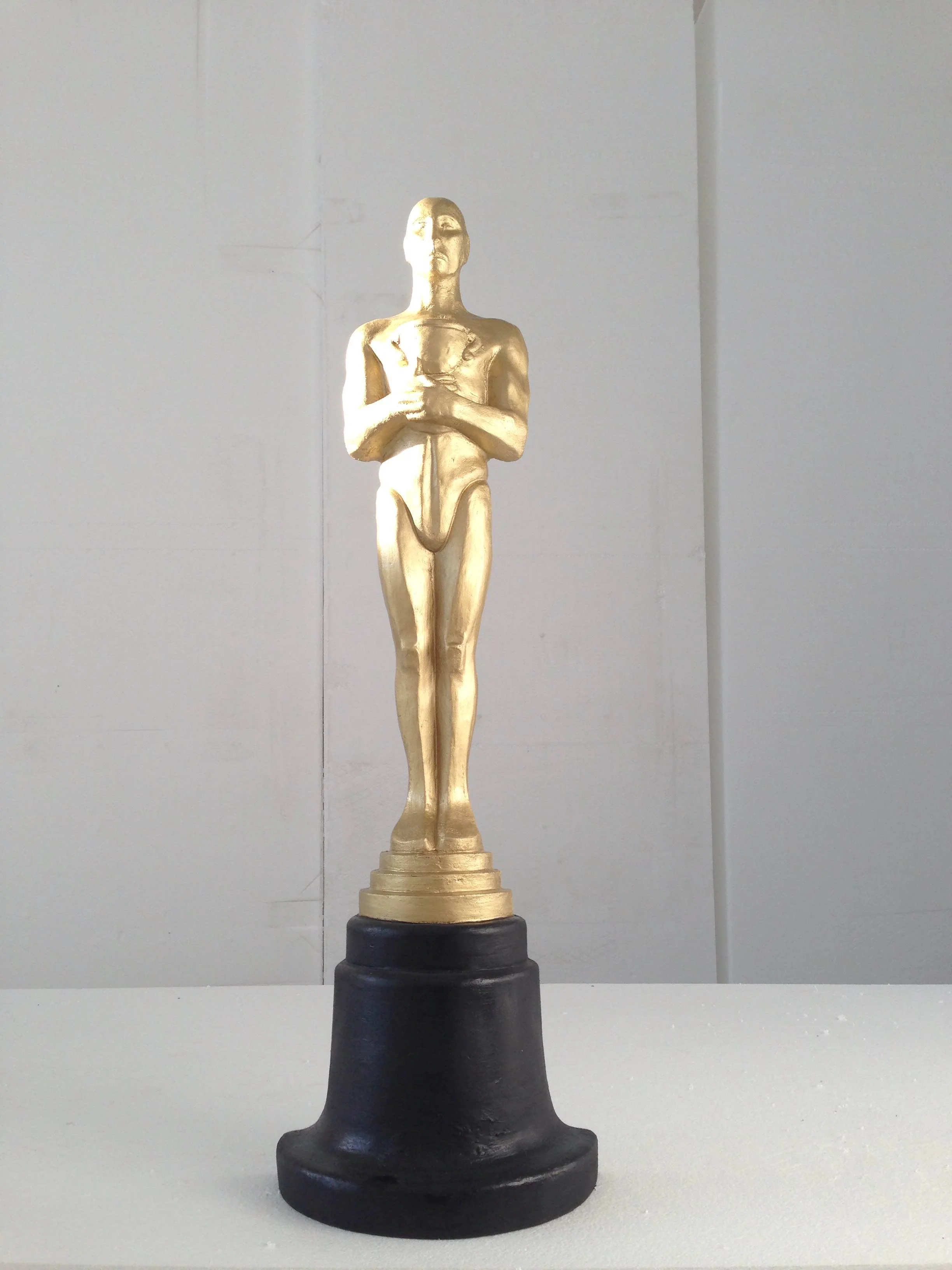
the statuettes of curators Ferretti + Lo Schiavo at the time of the exhibition
Second life
From an archive exhibition,
to a workshop method.
Labirinto Fellini closes its doors on 30 January 2011. The sculptures are dismantled, some return to MACRO's storage, others come back to our workshops. Giovanni Gianese's rhinoceros is later exhibited in other exhibitions dedicated to the Maestro, a sign of the museum-grade quality that scenography reached.
For us the most important legacy is not the single piece, but the method: how you work under the direction of an Oscar-winning production designer, how his sketches are translated into a piece that holds at real scale, how to make a "faux sheet metal" harness believable within centimetres of the visitor's eye. That method is the same thing we apply for the Cinecittà World sets and for the statues of the theme parks like Rainbow MagicLand.
In 2020, exactly ten years after Labirinto Fellini and for the centenary of the Maestro's birth, Rome again celebrates Fellini with Felliniana at Cinecittà — another exhibition with archive scenography. The initiatives on Italian auteur cinema remain, and our craft continues to be called upon.
Tech sheet
All production data
- Type
- Immersive museum installation · full-scale scenography dedicated to the cinema of Federico Fellini
- Exhibition title
- Labirinto Fellini
- Dates
- 30 October 2010 — 30 January 2011
- Occasion
- Ninetieth anniversary of Federico Fellini's birth · fiftieth anniversary of La Dolce Vita · offshoot of the 2010 Rome Film Festival
- Venue
- Macro La Pelanda · Piazza Orazio Giustiniani 4, Rome · former Testaccio Slaughterhouse · 3,000 sqm of exhibition spaces
- Concept and immersive installation
- Dante Ferretti and Francesca Lo Schiavo — production designers each winners of three Oscars at the time of the exhibition
- "La Grande Parata" section
- Curated by Sam Stourdzé · archive materials, magazine covers, photographs, clips, drawings by the Maestro
- Rhinoceros from E la nave va
- Rebuilt by Giovanni Gianese (credited by the specialised press)
- Our contribution
-
Scenic sculptures for the immersive installation. Among the pieces:
- Ocean liner Rex — the monumental silhouette of the ship from Amarcord (1973), produced as a wing to be framed through the museum's arches
- Ceremonial elephant in the round · sculpted in clay, reproduced in fibreglass over a steel armature, finished polychrome by hand · harness in faux gilded sheet metal, pavilion/shrine on its back
- Other sculptures and scenography from the Maestro's films
- Techniques
- Clay sculpting · silicone rubber moulding · fibreglass casting over steel armature · polychrome finish by hand · scenic painting in glazes for faux gilded sheet metal effects · flat shaped silhouettes for the Rex
- Opening hours
- Tuesday to Sunday, 4:00 PM – midnight · ticket € 7 full / € 5 reduced
- Legacy
- The polychrome sculpting techniques — tradition of the Roman school of Cinecittà — applied under Ferretti's direction to the tribute for one of the greatest authors of Italian cinema