
Exhibitions, events, museums · Milan · May — October 2015
Expo Milano 2015.
For the World Expo — more than twenty-one million visitors — we built scenography and installations for the pavilions of the "Feeding the Planet" theme.
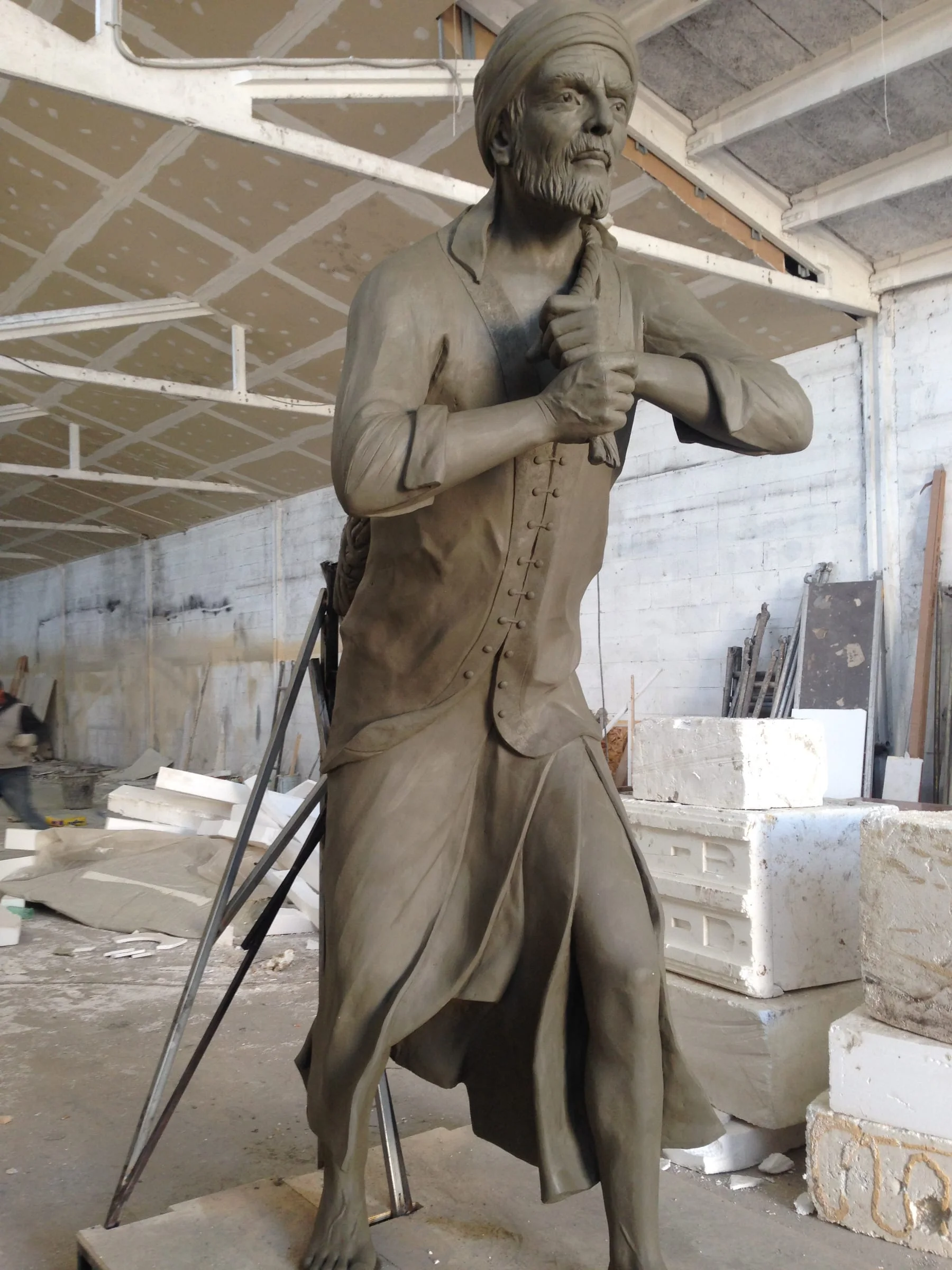
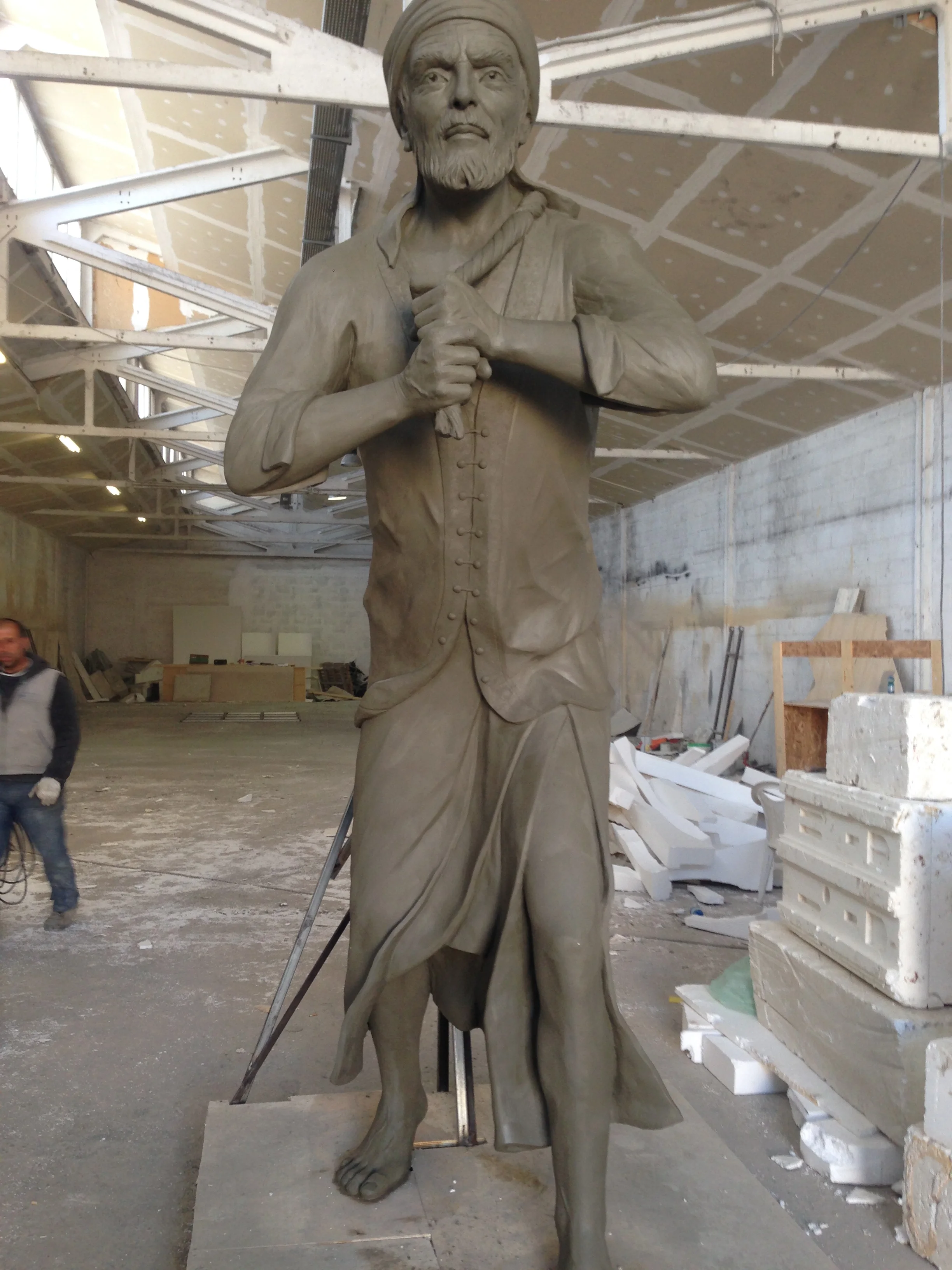
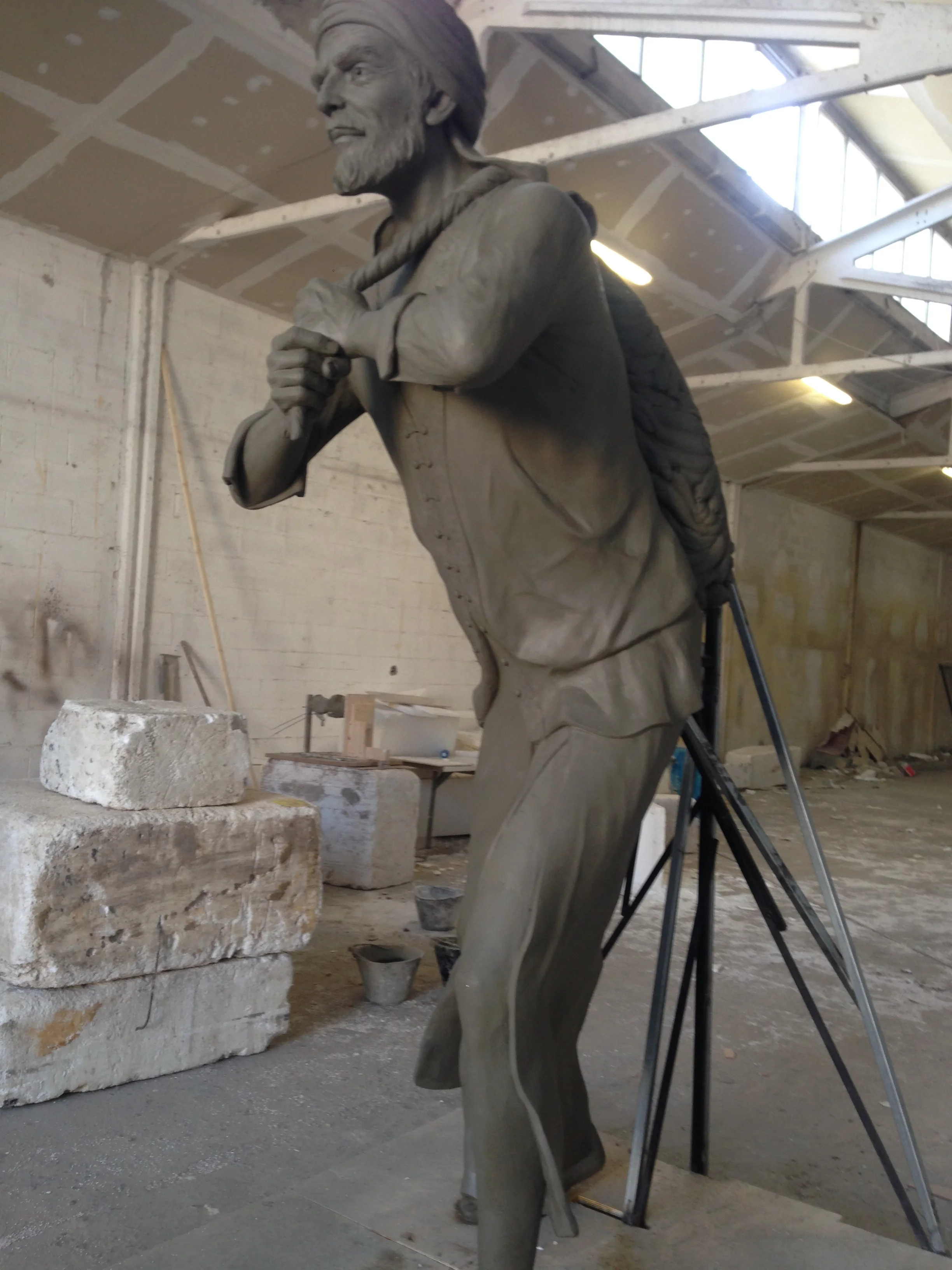
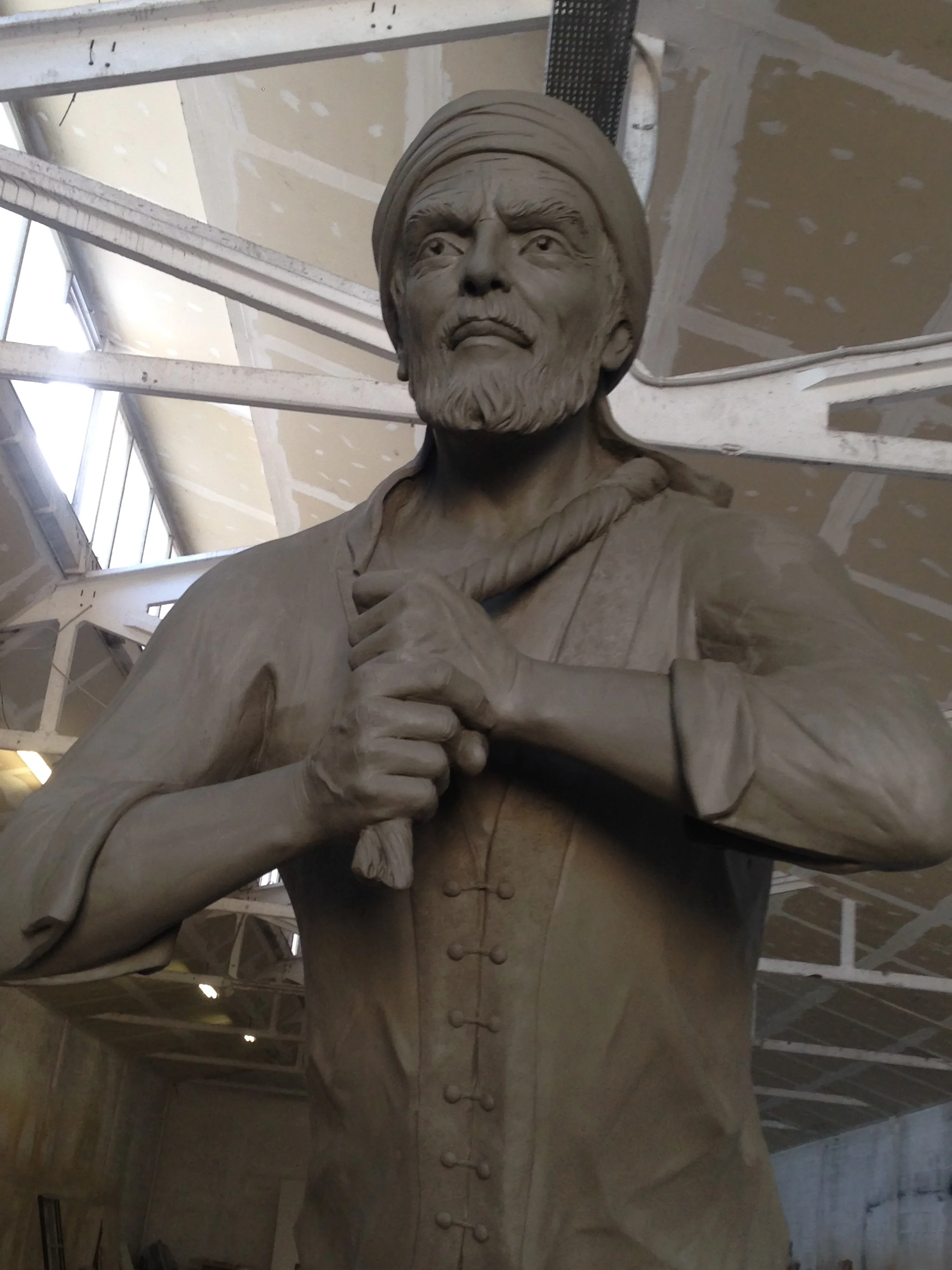
Behind the Qatar statue
Four months
in our workshops.
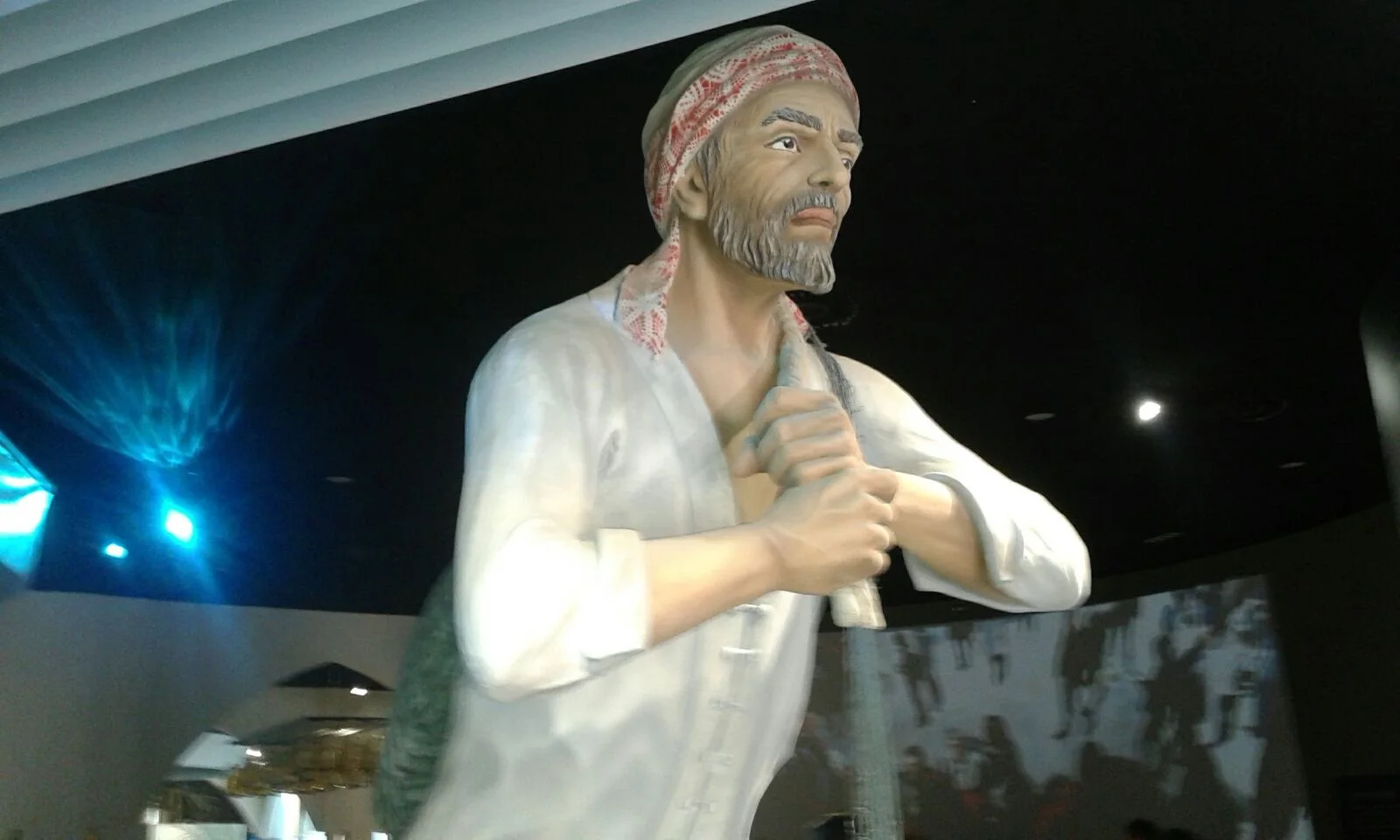
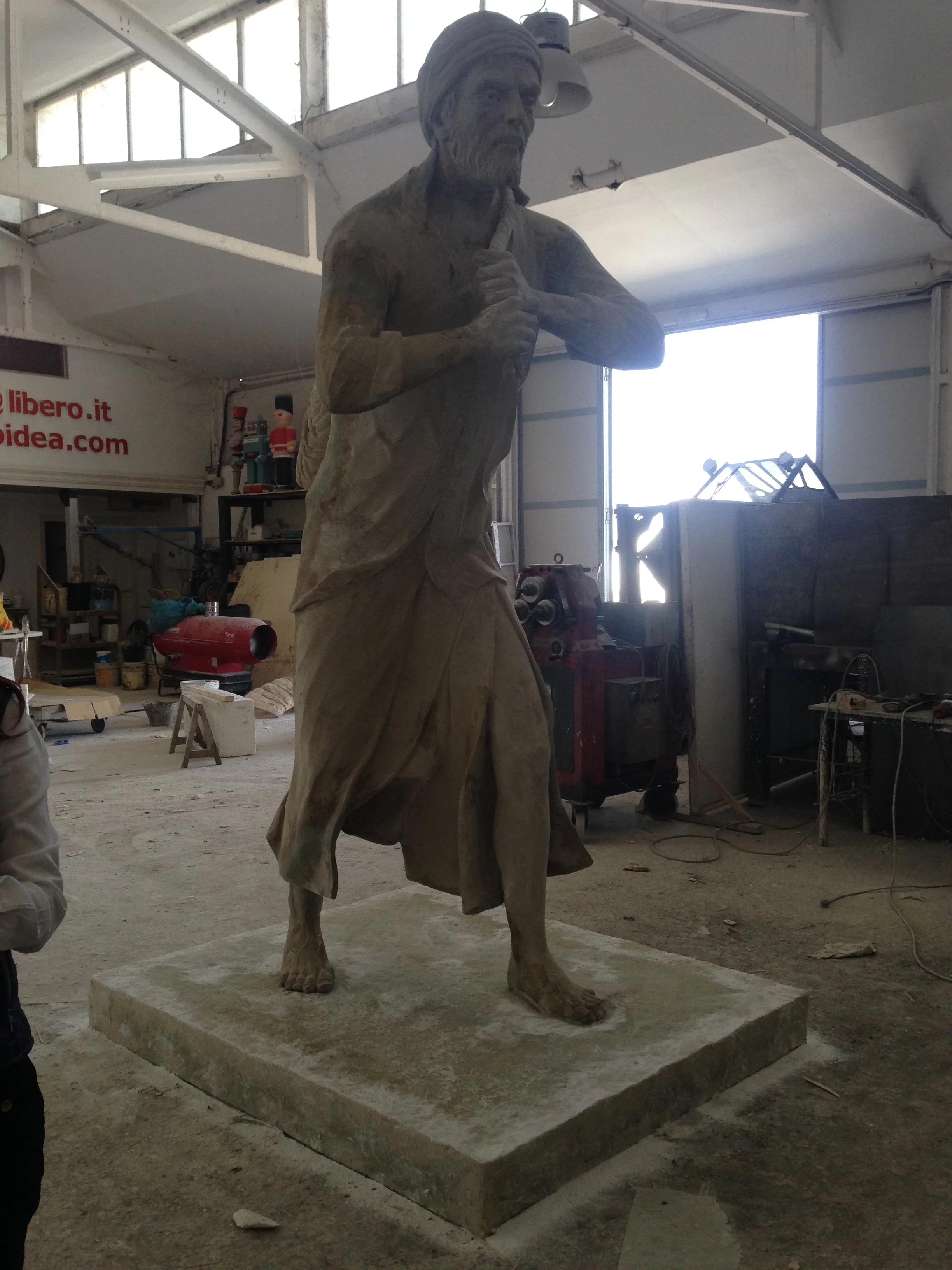
From the clay sketch to the final piece hand painted and installed in the pavilion. The workshop photos document the work month by month.
Behind the scenes
Three pavilions,
three countries, three techniques.
Our signature at Expo Milano 2015 runs across three different clients — Italy, Oman, Qatar — with three distinct technical grammars: the organic sculpting of the golden bees, the faux cement stone of the Reef Balls, the trompe-l'œil woven reed of the Jereer facade.
The golden bees of the Italy Pavilion
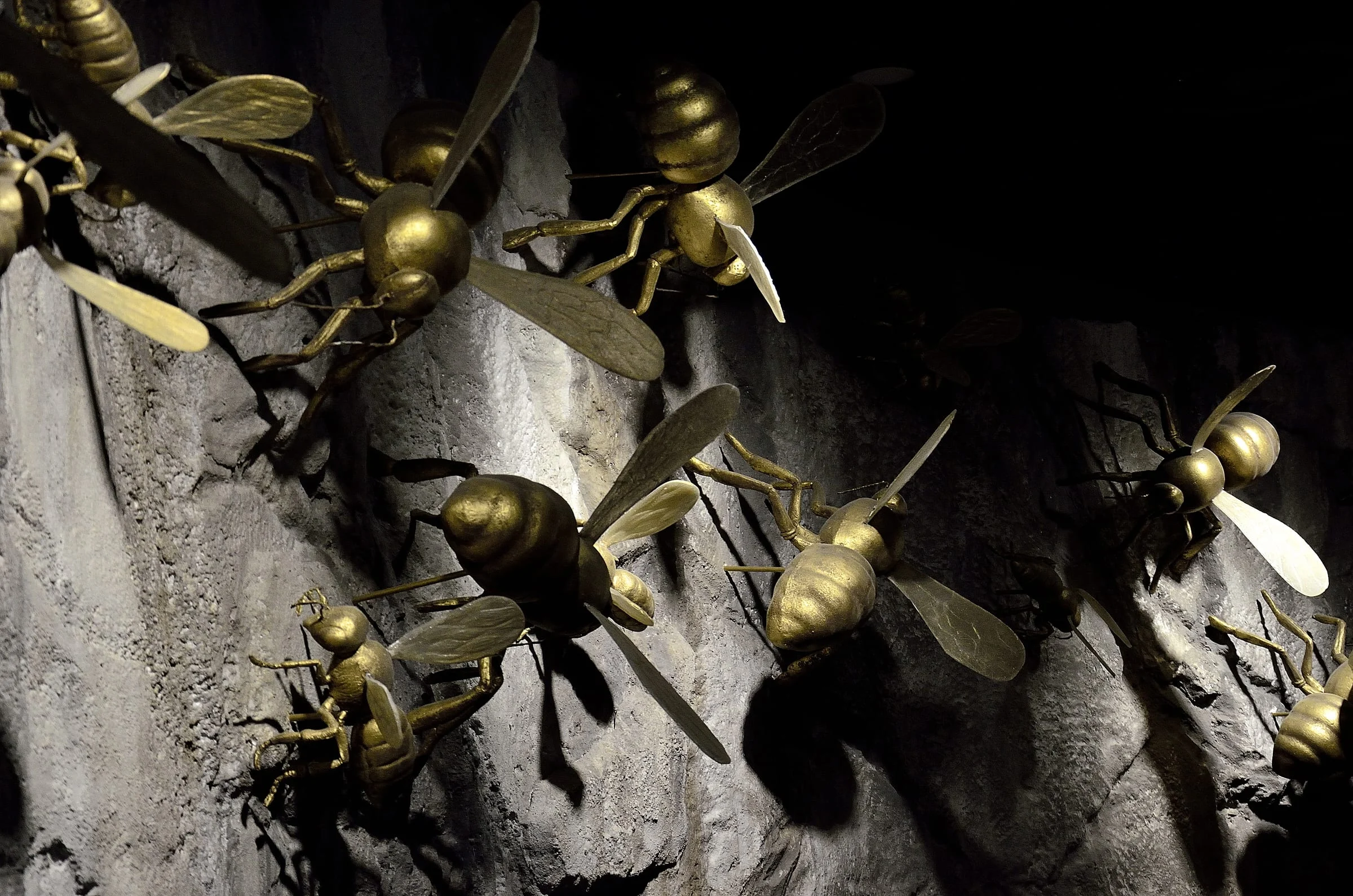
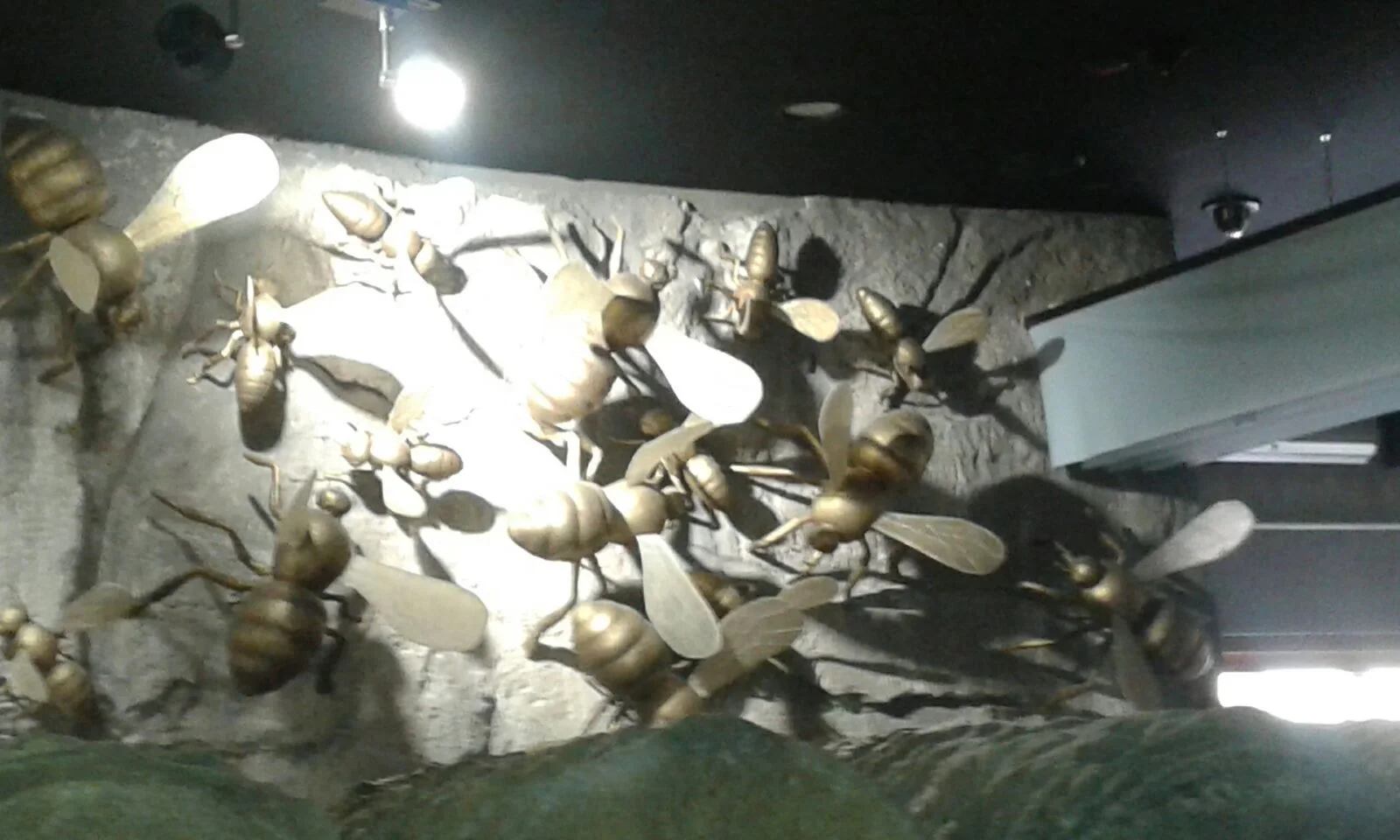
For the section on biodiversity and pollination of the Italy Pavilion, bees in the round enlarged to visitor-scale. Golden banded bodies, translucent wings, a rock wall in faux stone as natural flight environment. The sculpting of the bee's abdominal fur is the detail that middle-school kids recognised from their science textbook.
The Reef Balls of the Oman Pavilion
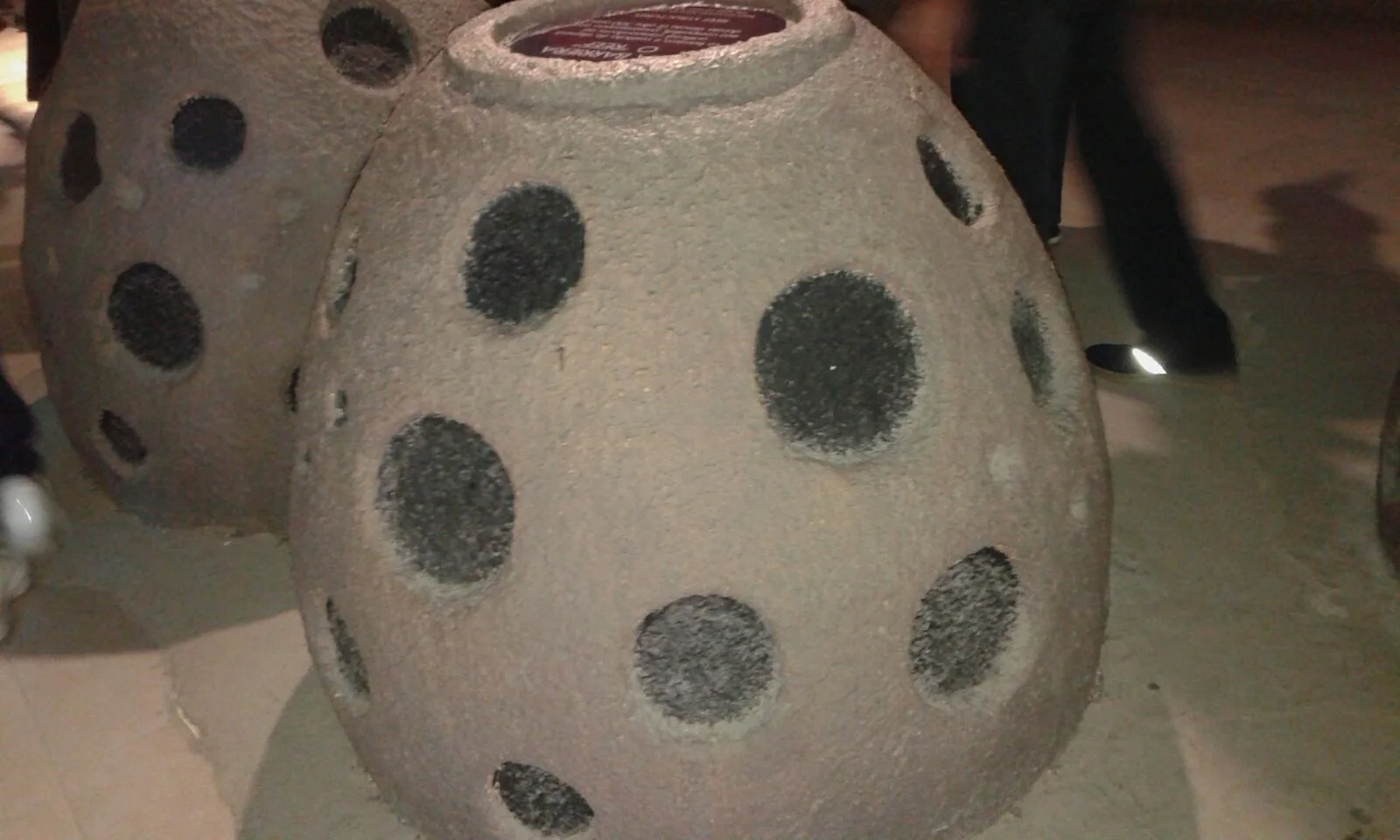
For the Pro-Creator project of ocean marine repopulation, the scenographic Reef Balls are in faux marine cement stone: grey bell-shaped forms with side holes for the passage of undersea fauna. It is the scenographic copy of the real structures that are lowered onto the Oman seabed to rebuild the coral reef.
The Qatar Jereer cladding
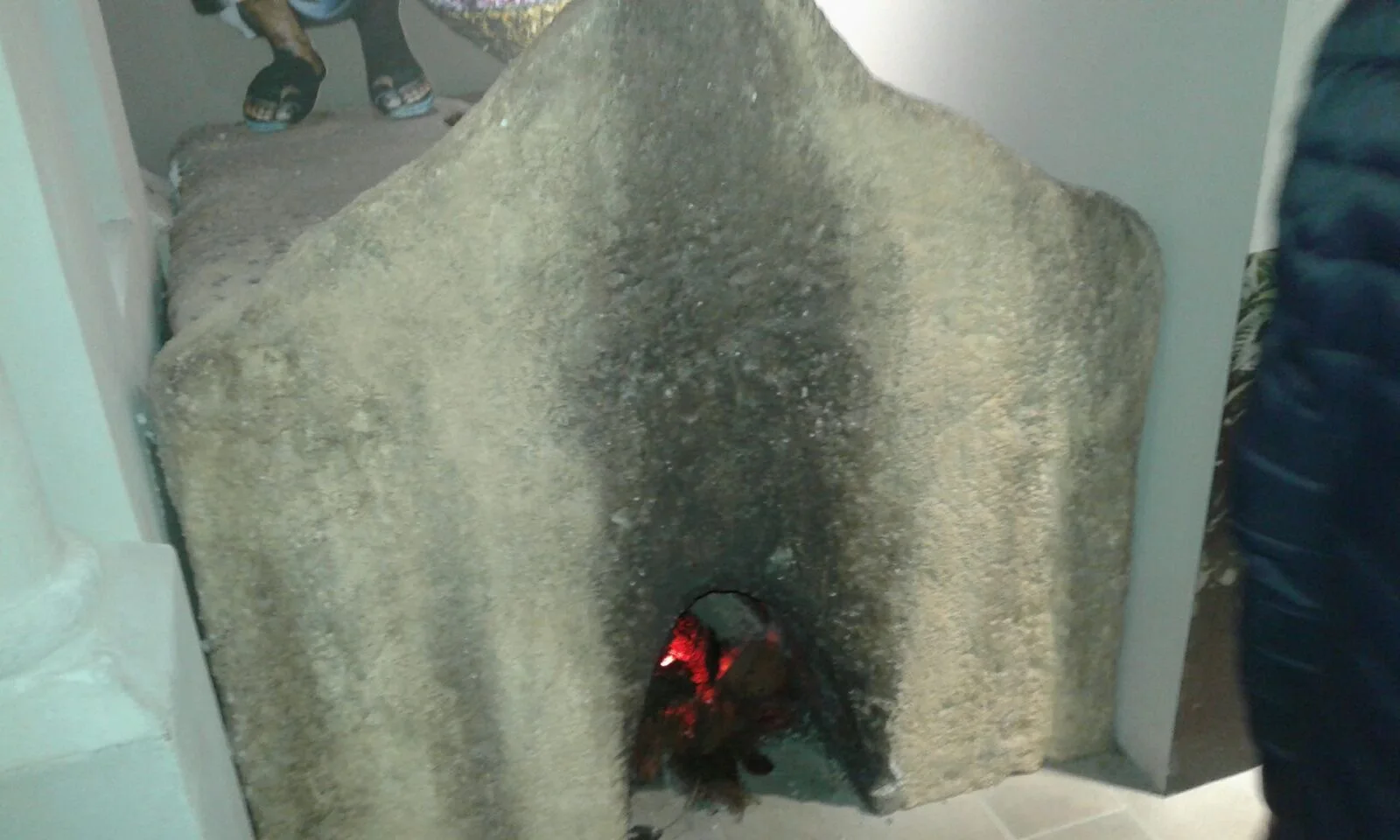
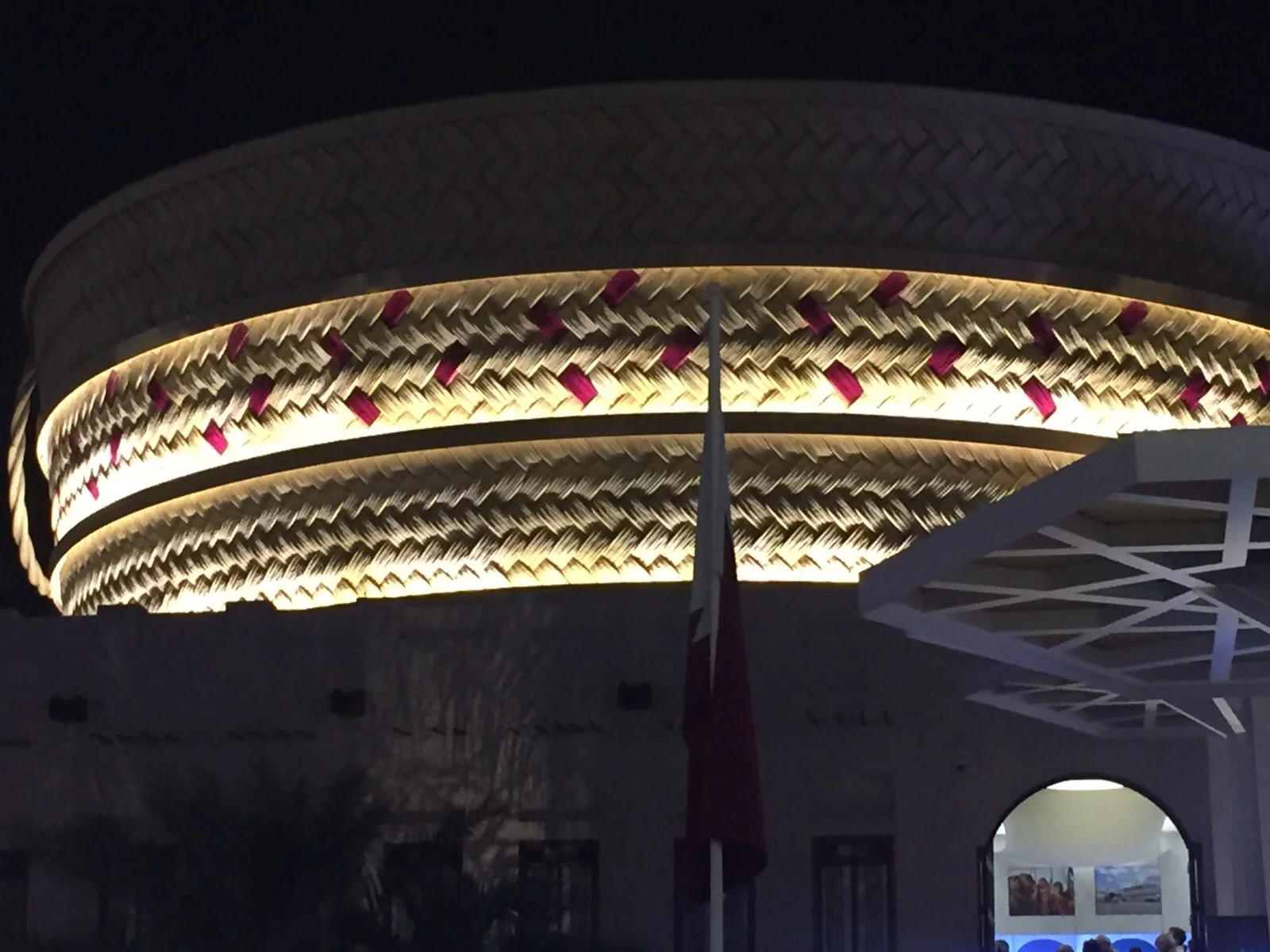
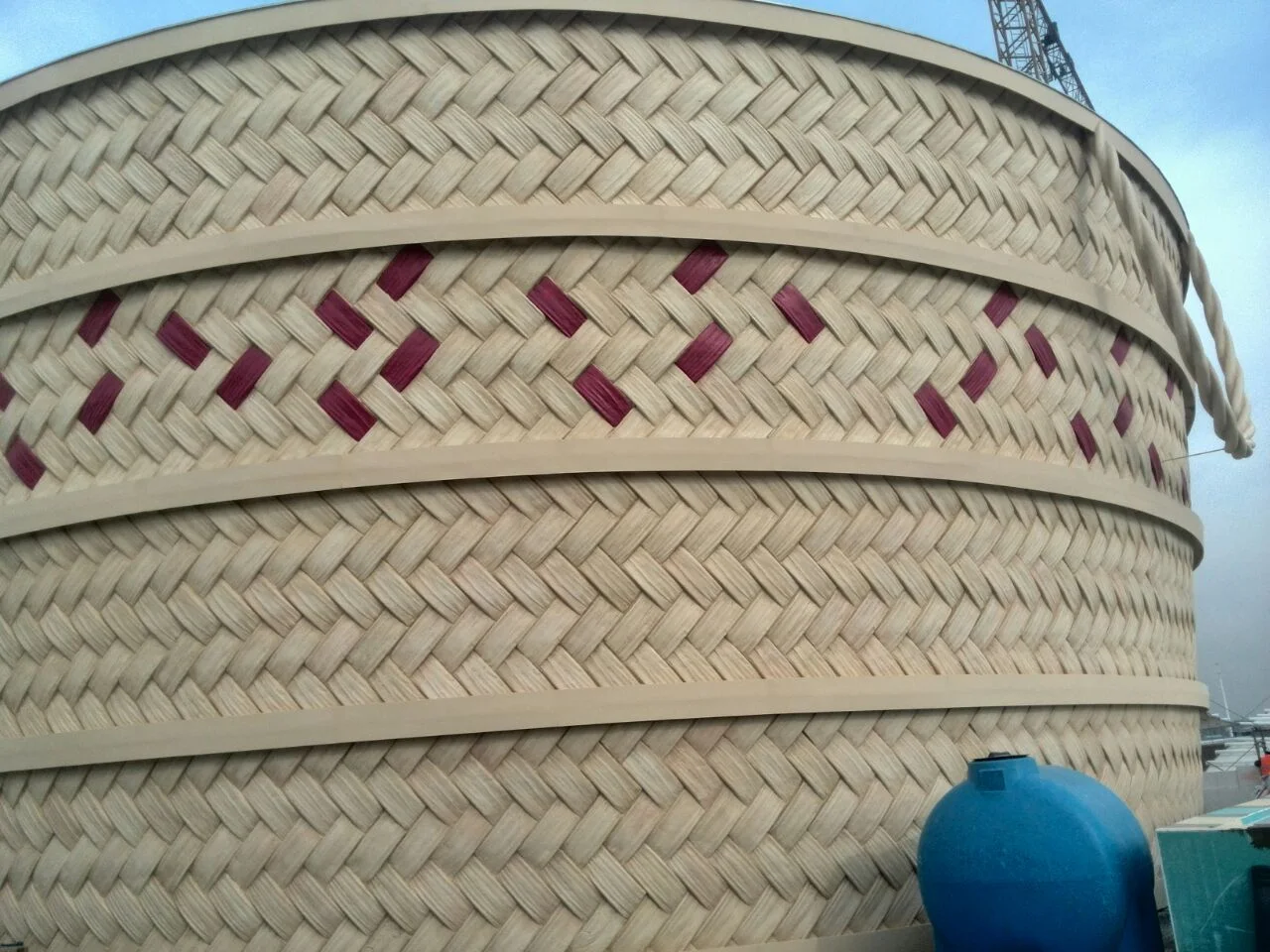
For the Qatar Pavilion we built the "Jereer" cladding of the facade — a replica of the palm-leaf woven basket with burgundy inserts from the Qatari flag. The technique is the trompe-l'œil of woven reed: the basket looks made of real leaves but is painted fibreglass. The statue of the Qatari man with red-checked keffiyeh closes the pavilion's national identity.
21.5 M
visitors in six months · 145 participating countries
3
pavilions ours: Italy, Oman, Qatar
6 months
of continuous exhibition · 1 May — 31 October 2015
Tech sheet
All production data
- Type
- Scenography and installations for World Expo pavilions
- Location
- Expo Milano 2015 exhibition site · Rho-Pero (Milan)
- Event duration
- 1 May — 31 October 2015 · six months of exhibition
- Expo theme
- "Feeding the Planet, Energy for Life" — food as a planetary issue
- Total visitors
- Over 21.5 million in six months · 145 participating countries
- Works produced for the pavilions
-
- Italy Pavilion · giant golden bees sculpted in the round · translucent wings, golden banded bodies, faux-stone rock wall — installation in the biodiversity and pollination route
- Oman Pavilion · scenographic Reef Balls for the Pro-Creator marine repopulation project · grey bell-shaped forms in faux marine cement stone, side holes for the fauna
- Qatar Pavilion · monumental statue of the Qatari man (fisherman-farmer with red-checked keffiyeh) · Jereer cladding of the facade reproducing the palm-leaf woven basket with burgundy inserts from the flag
- Techniques
- Fibreglass on stainless-steel core · hand-applied polychrome finish · material trompe-l'œil (faux stone, faux woven reed, faux organic relief)
- Required resistance
- Six months of continuous exhibition · over 21 million visitors · continuous public contact (children, close-up photographs), variations of temperature and humidity
- Second life
- Pavilions dismantled at the end of the event · some sculptures (bees, Qatari statue) kept in our workshops for reuse
Second life
Six months of exhibition,
a lifetime in our repertoire.
Expo Milano 2015 closed on 31 October with a historic result for the World Expos held in Italy. The pavilions were dismantled in the following months and the Rho-Pero exhibition site entered a new phase — today it is the MIND Milano Innovation District, a hub for biotech research.
For us, Expo 2015 remains one of the most visible moments of our work for large public events. Some sculptures came back to our workshops and entered the repertoire: the techniques of organic sculpting for the bees, of faux marine cement stone for the Reef Balls, of trompe-l'œil woven reed for the Jereer cladding have become a stable part of our scenography for later exhibitions, events and pavilions.